
There is a specific quality of late July and early August that is unlike any other moment in the culinary year.
The abundance is at its maximum. The tomatoes are everywhere — more than can be eaten, more than can be preserved, more than the most devoted cook can use without a specific effort to use everything. The corn is exactly right. The peaches are at the specific moment of peak ripeness that comes once a year and lasts perhaps two weeks. The herbs are growing faster than they can be cut. The eggplant and the peppers and the summer squash and the cucumbers are producing with an indifference to human capacity that the gardener recognizes as both gift and challenge.
And underneath all of this abundance — present but not yet dominant, felt rather than seen — is the awareness that this will not last.
The late summer cook occupies a specific emotional position that is unlike any other in the year. They are cooking in the fullest moment of the season while simultaneously cooking against the season’s end — making the most of what is here now because the awareness of its departure has already arrived.
This combination of abundance and imminence is what makes late summer cooking both the most pleasurable and the most purposeful cooking of the year. Every meal made from peak-season ingredients is both a celebration and a form of preservation — not just of the food itself but of the flavor of the moment, the specific quality of this particular summer that will not come back in exactly this form.
The Abundance That Asks to Be Used
The gardener or the dedicated farmers market shopper in late July faces a specific challenge that is the most pleasurable kind of challenge available in food.
Too much of everything that is excellent.
The tomato plant that has been restrained all summer produces, in the heat of late July, at a pace that outstrips any reasonable ability to consume. The single zucchini plant that seemed modest in June becomes, in August, a generator of squash that appears to produce overnight. The cucumber vine that was carefully tended produces, at its peak, more cucumbers in a week than a household of four can eat in reasonable preparations.
This abundance is not a problem to be managed. It is an invitation to cook differently — to approach the kitchen with the specific creativity that constraint and abundance simultaneously produce, to ask what these specific ingredients most want to become rather than what recipe can be found for them.
The cook who approaches this abundance with the freezer and the canning jar as primary tools is preserving the summer’s flavors for the winter — a noble and practical impulse whose results will be appreciated in January. The cook who approaches it as an opportunity for immediate creativity produces meals that could not be made at any other moment in the year — meals that are specifically of this week, this abundance, this intersection of ingredients that will not coincide in exactly this way again.
Both approaches are worth pursuing simultaneously.
The Preparations That Honor the End of Summer
The late summer kitchen has its own repertoire — preparations that are specifically suited to the ingredients at their peak and that honor the season by using them in forms that showcase their quality most completely.
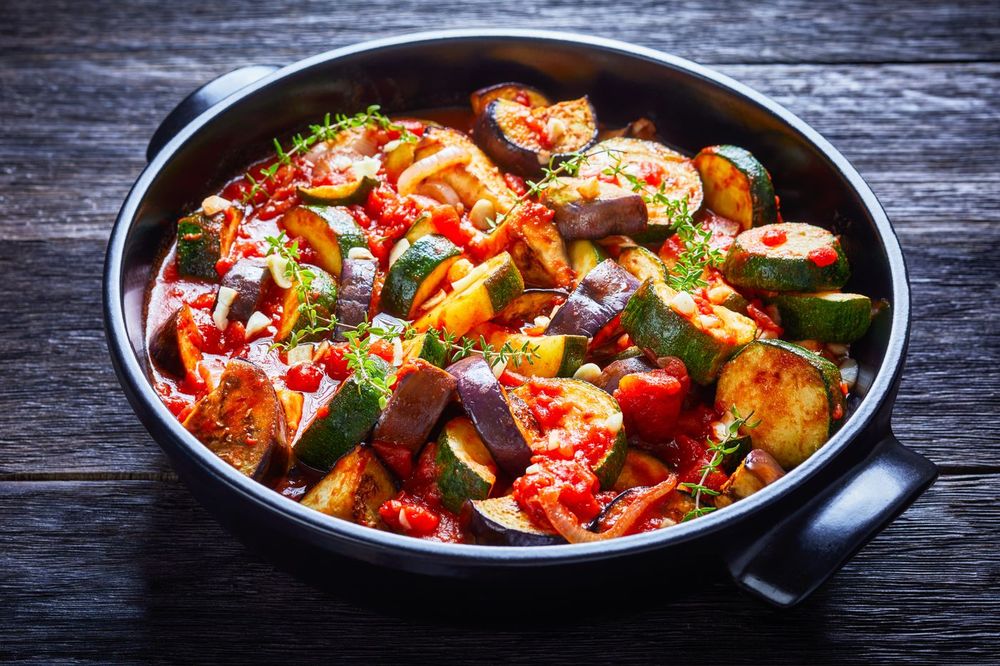
The large-format vegetable preparation — the ratatouille, the caponata, the Turkish imam bayildi — is perhaps the most quintessentially late summer preparation available. It uses multiple summer vegetables simultaneously, requires long, slow cooking that concentrates their flavors, and produces something that is better the next day and the day after — meaning that a single cooking session produces meals across the week.
The ratatouille made properly — not the French Laundry composed version of concentric slices, which is beautiful but labor-intensive, but the traditional Provençal version of separately cooked vegetables combined and finished together — is a preparation that rewards the quality of its ingredients and the patience of its cook. Each vegetable is cooked separately until it reaches its individual ideal state, then combined with the others and cooked further until the whole has become unified. The tomato that was the bright, acidic element at the beginning becomes the sweet, concentrated background note that ties everything together. The eggplant that was firm and slightly bitter becomes silky and rich. The zucchini that was crisp becomes tender without becoming mushy.
This is a preparation that can only be made well with peak-season ingredients — because it depends on the tomato’s sweetness and the eggplant’s richness and the pepper’s specific character to produce the result that defines the dish. An out-of-season ratatouille is a different and lesser preparation. The peak-season version is one of the essential dishes of the summer table.
The Tomato at Its Most Concentrated
In the final weeks of the tomato season — the weeks when the abundance is at its peak and the awareness of the season’s end is sharpening — there are preparations that use the tomato in ways that honor its quality at this specific moment.
The fresh tomato sauce made in quantity and frozen — the simplest sauce, made from the best tomatoes with nothing but good olive oil and garlic and basil, cooked for twenty minutes and frozen in portions — is the most direct way of carrying peak-season tomato flavor into the winter. Each portion, thawed in January or February and heated over pasta, is a specific and vivid reminder of August in a way that canned tomatoes, however good, are not.
The tomato conserva — the long-cooked, deeply concentrated tomato paste made by cooking down kilograms of tomatoes for hours until they reach a thick, almost dark paste — is the most intense concentration of tomato flavor available from fresh tomatoes. It is a traditional preparation of southern Italian cooking, made when the tomato season is at its peak and when the abundance allows for the significant reduction that the preparation requires. A tablespoon of good tomato conserva added to a winter braise produces a depth of tomato flavor that no commercial paste can replicate.
And the simply preserved whole tomato — blanched, peeled, packed into jars with a small amount of salt and acid, processed according to safe canning technique — is the most direct form of late summer tomato preservation. These tomatoes, opened in winter and used in soups and sauces and braises, carry the specific flavor of summer in a form that is more complete and more vivid than the processed commercial alternative.
The Stone Fruit That Must Be Acted Upon
The stone fruit of late summer — the peaches and nectarines and plums and apricots that have been building toward their peak since June — arrives at its maximum quality for a window of days or weeks that closes faster than anticipated and then is gone until next year.
The peach that is perfect today will be past perfect in two or three days. The plums that are at their best this week will be overripe by next week or unavailable as the season ends. The window of action is narrow.
The cook who has bought more stone fruit than can be eaten immediately — who has brought home a full flat of peaches from the farmers market because the price reflected abundance and the quality was extraordinary — faces a specific and pleasurable obligation.
The jam that preserves the peak-season peach in a form that holds for months is one of the most rewarding late summer kitchen projects. Not the full preserve that requires significant equipment and technique, though that is worth doing when the equipment and knowledge are available. The refrigerator jam — cooked in small batches, without pectin because the fruit at peak ripeness contains its own, stored in jars in the refrigerator for three to four weeks — is a preparation that most cooks can accomplish in thirty minutes and that produces something that commercial jam cannot replicate because it is made from fruit at actual peak quality rather than from fruit selected for processing characteristics.
The roasted stone fruit — halved, pitted, placed cut-side down in a hot pan with butter and sugar until caramelized, then finished in the oven until completely tender — transforms the fruit that is past its raw eating peak into something that is specifically better cooked than it would have been raw. The caramelization that the heat produces from the fruit’s own sugars is a different and more complex sweetness than the raw fruit’s natural sweetness, and the texture of the fully roasted stone fruit — collapsed, yielding, intensely flavored — is one that the raw fruit could not provide.
The Last Herbs of Summer
As August progresses, the herb garden that has been producing generously through the summer begins to signal its intention to change character.
The basil that has been prevented from flowering by regular harvesting will eventually produce flowers despite the cook’s efforts — and the moment it begins to bolt, the quality of the remaining leaves diminishes. The window for fresh basil at its best is closing.
The cilantro, if it has survived the heat of midsummer, is finishing its productive period. The dill that has been used through the summer is approaching the end of its leaf production.
The cook who recognizes these signals acts on them with the same urgency that the stone fruit at peak ripeness demands. The basil that is about to bolt is the best basil for pesto — its essential oil concentration is at its highest in the moment before the plant redirects its energy to flowering. A large batch of pesto made from this basil, frozen in portions and covered in olive oil, preserves the specific intensity of peak-season basil in a form that is available through the winter.
The herb oil — made by blanching and immediately shocking in ice water the herbs that are finishing their productive period, then blending with neutral oil and straining — produces a vivid, brilliantly colored oil that captures the chlorophyll and the aromatic compounds of the fresh herb in a form that holds for weeks in the refrigerator and months in the freezer.
The Bittersweet Quality of the Late Summer Kitchen
There is an emotional dimension to late summer cooking that has no precise equivalent in any other season’s kitchen.
The spring kitchen is hopeful — the first asparagus, the first strawberries, the first herbs of the year produce a specific quality of anticipation and relief that the winter is over and the abundance is beginning.
The peak summer kitchen is celebratory — the maximum expression of the season’s gifts, the moment when everything is at its best simultaneously and the cooking required is simply the task of not ruining what the season has provided.
But the late summer kitchen is bittersweet — aware of the peak that is passing, cooking with a quality of urgency and intention that the more relaxed weeks of early summer didn’t require. Every meal made now from peak-season ingredients is a meal that will not be possible next month. The ratatouille that uses all the summer vegetables together. The tomato sauce made from the best tomatoes of the year. The peach jam that tastes of this specific summer.
This bittersweet quality — this combination of pleasure and awareness of the pleasure’s passing — is what makes late summer cooking particularly vivid and particularly meaningful. The food tastes more specifically of itself when the cook is aware that it is not indefinitely available. The tomato eaten in August, with the knowledge that the season is ending, tastes of more than its flavor compounds.
It tastes of time.
The Takeaway
The late summer kitchen is the most urgent kitchen of the year — not in the stressful sense of urgency, but in the sense of a moment that is worth fully inhabiting because it will not last.
Cook the ratatouille while all the summer vegetables are at their peak. Make the tomato sauce and fill the freezer. Preserve the stone fruit while the window is open. Harvest the basil before it bolts and turn it into pesto. Let the abundance of the season be honored by using it completely rather than letting it pass uneaten.
And eat as many fresh summer tomatoes with salt and olive oil as the season allows.
Because next month, there will be nothing that tastes like this.