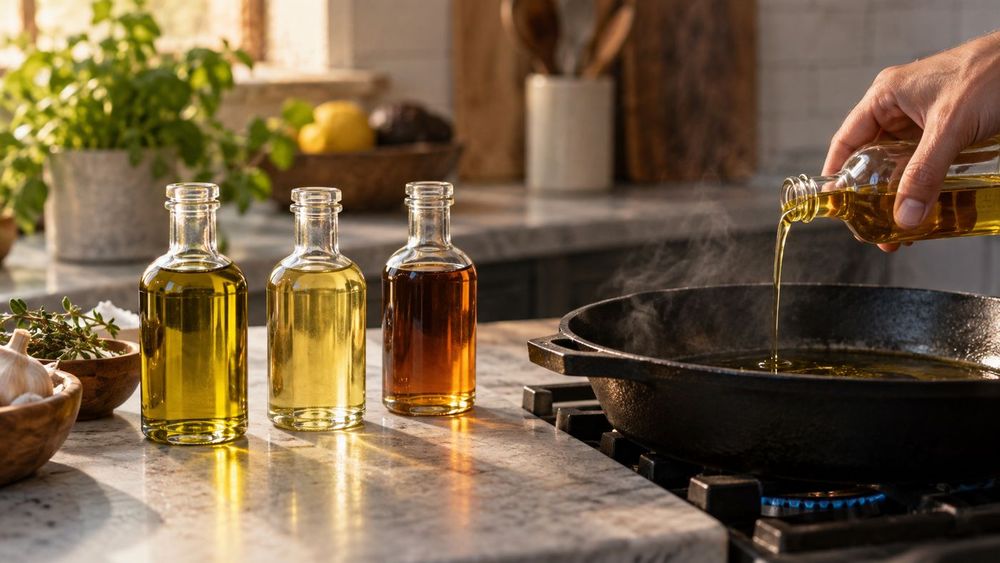

Pour olive oil into a screaming-hot pan meant for a stir-fry, and there's a good chance the kitchen fills with smoke before the food even starts cooking. Use a neutral oil like avocado or peanut in the same pan, and nothing happens except food searing properly.
Both are cooking oils. Both are considered healthy. The difference in behavior comes down to a specific number most people have never checked.
What Smoke Point Actually Measures
Smoke point is the temperature at which an oil starts to visibly break down, releasing smoke and, along with it, an acrid flavor and potentially harmful compounds that weren't present in the oil moments before.
Once an oil crosses that threshold, it's no longer behaving the way a recipe expects it to. The fats begin degrading, flavor compounds turn bitter, and the oil stops doing its job as a clean cooking medium.
Every oil has a different threshold, and that threshold is the real reason certain oils work for certain techniques and fall apart in others.
Why Refinement Level Changes Everything
Two bottles labeled "olive oil" can behave completely differently under heat, and the difference usually comes down to processing, not the olives themselves.
Extra virgin olive oil retains more of the plant compounds and impurities responsible for its flavor and color, but those same compounds break down at relatively low heat, giving it a smoke point often around 375°F. Refined oils go through processing that strips out many of those compounds, raising the smoke point significantly — refined avocado oil, for instance, can handle heat well past 500°F.
Neither version is inherently better. They're built for different jobs.
Why High-Heat Cooking Needs a Different Oil Than a Salad Dressing
The oils prized for flavor — extra virgin olive oil, toasted sesame oil, unrefined walnut oil — tend to have lower smoke points precisely because the compounds responsible for their flavor are the same ones that break down under high heat.
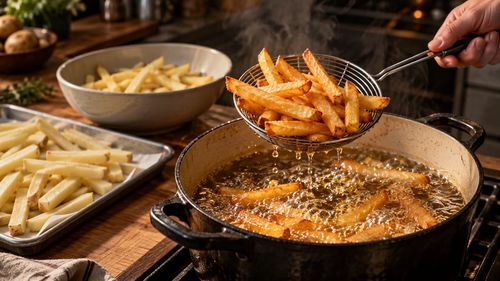
Reaching for a delicate, flavorful oil for high-heat searing or deep-frying wastes both the oil's flavor and its integrity, since the heat destroys the very thing that made it worth using in the first place. Those oils are better suited to finishing a dish or dressing something raw, where their flavor survives intact.
Matching the Oil to the Technique
A few reliable pairings make this easier to remember without memorizing exact temperatures.
High-heat searing, stir-frying, or deep-frying: refined avocado, peanut, or vegetable oil
Medium-heat sautéing: refined olive oil or refined coconut oil
Low-heat cooking or finishing a dish: extra virgin olive oil, toasted sesame oil
No heat at all — dressings, drizzling: any flavorful, unrefined oil
Getting this pairing wrong doesn't necessarily ruin a dish, but it usually means either wasted flavor or a smoky, bitter result that wasn't supposed to be there.
Why Reused Oil Behaves Differently Over Time
An oil's smoke point isn't fixed forever — it actually drops each time the oil is heated and reused, since repeated heating breaks down some of its structure permanently.
This is part of why oil used for frying multiple batches can start smoking at a lower temperature than it did the first time, even though the label never changed. Oil that's been reused several times is a poor choice for anything requiring high, stable heat, regardless of what its original smoke point was.
The Takeaway
Smoking oil isn't a sign of a bad cook or a broken stove. It's usually a sign that the wrong oil met the wrong amount of heat.
Once smoke point is factored into the decision, choosing an oil stops being about brand preference and starts being about matching the tool to the job — the same logic already applied to knives, pans, and everything else in the kitchen.