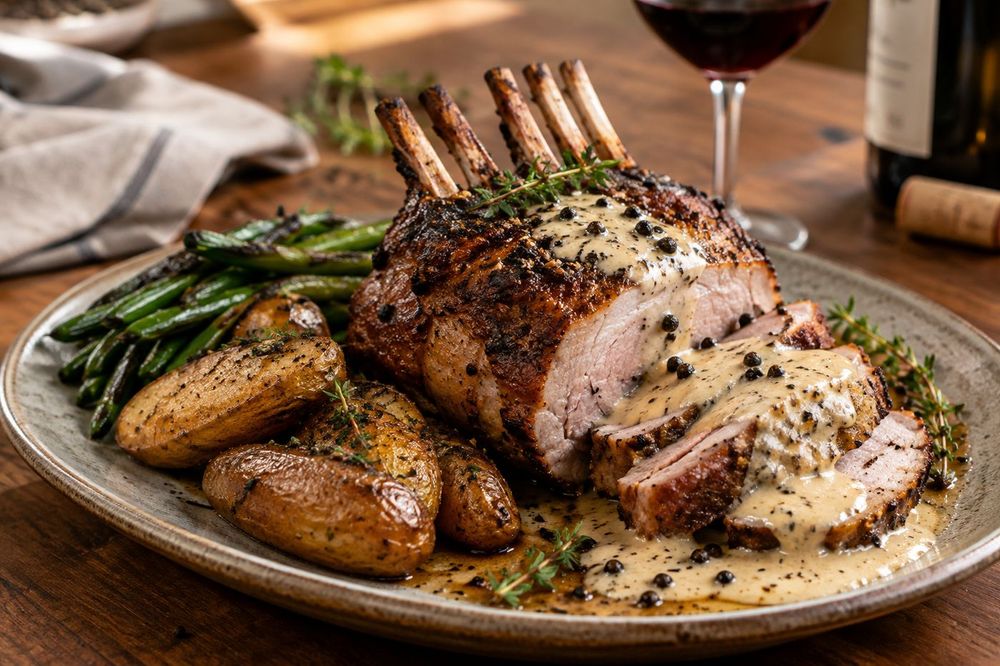



There's a particular satisfaction in watching a rack of pork emerge from the oven with a golden, caramelized exterior, knowing the interior has stayed juicy because you respected the internal temperature curve rather than rushing it. That's the appeal of this dish — it rewards patience and precision, two qualities I find myself returning to again and again in the kitchen.
Peppercorn sauce is one of those classic French bistro components that seems intimidating until you understand its mechanics: a reduction of stock and cream, anchored by the sharp, resinous heat of cracked peppercorns, brought together with a touch of acidity to keep it from feeling heavy. Once you understand the ratios, it becomes a reliable tool you can apply to any number of proteins.
This particular pairing of pork and peppercorn works because the natural sweetness of the meat contrasts against the sauce's spice, creating a push-pull that keeps every bite interesting. It's technical without being fussy, and that balance is exactly what I look for in a midweek recipe worth repeating.
What follows is a full breakdown — the reasoning behind the technique, the flavor architecture, and the wine that ties it all together.
The Inspiration Behind This RecipeRack of pork doesn't get nearly the attention it deserves compared to its beef counterpart, the prime rib. Yet structurally, it behaves in much the same way: a bone-in roast benefits from even heat distribution and a resting period that redistributes juices throughout the meat. I wanted to develop a recipe that treated pork with the same reverence typically reserved for more expensive cuts.
The peppercorn sauce was a natural pairing decision — it's assertive enough to stand up to pork's richness without masking it, and it has the kind of restaurant-quality presence that makes a home-cooked meal feel like an occasion.
A Brief History of Peppercorn SauceSauce au poivre traces its roots to classical French cuisine, traditionally built to accompany steak. The technique — deglazing a pan with brandy or wine, then enriching with cream — is a textbook example of French sauce-making logic: extract flavor from the fond, layer in acidity, then round it out with fat.
Applying this sauce to pork rather than beef is a smaller deviation than it might seem. Pork's fat content and mild sweetness make it an excellent canvas for the sauce's spice and richness, arguably even more forgiving than beef because the flavors have more room to develop without competing against an already dominant protein.
Why This Cooking Method WorksRoasting a bone-in rack at a moderate oven temperature, then finishing with a rest period, allows the muscle fibers to relax and reabsorb moisture that would otherwise be lost if the meat were cut immediately. The bone itself acts as an insulator, slowing heat penetration near the center and helping prevent overcooking.
Building the sauce separately, using the pan drippings as a flavor base, means you're not compromising the roast's exterior sear by trying to multitask in a single pan. This two-track approach — roast in the oven, sauce on the stovetop — is standard technique for a reason: it produces cleaner results with less risk of error.
Flavor Profile: What to ExpectExpect layered complexity rather than a single dominant note. The pork itself is mild and slightly sweet, providing a neutral backdrop. The sauce brings sharp pepper heat, a rounded creaminess from the reduction, and a subtle tang from the deglazing liquid that keeps the richness in check.
Texturally, the seared crust of the roast contrasts with the silky sauce, while cracked peppercorns add intermittent bursts of heat that keep the palate engaged bite after bite.
Tips for Making the Best Rack of Pork with Peppercorn SauceUse a meat thermometer without exception — pork is forgiving but not infinitely so, and pulling it at the right internal temperature is the single biggest factor in success. Rest the roast for a full ten to fifteen minutes before carving; this is not optional. When building the sauce, use freshly cracked peppercorns rather than pre-ground pepper, since much of the aromatic oil dissipates quickly once ground. Finally, don't skip the deglazing step — that fond is where most of the roast's flavor lives.
Wine Pairing Guide- Pinot Noir — bright acidity and soft tannins complement pork's sweetness without overwhelming the peppercorn spice.
- ★ Côtes du Rhône (Grenache-Syrah blend) — the peppery, spiced character of this blend mirrors the sauce directly, creating a seamless pairing.
- Zinfandel — its jammy fruit and slight spice hold up well against the sauce's heat.
- Chardonnay (lightly oaked) — for those preferring white, the buttery texture echoes the cream sauce nicely.
- Malbec — a bolder option that adds dark fruit depth for those who want more weight on the palate.
Roasted fingerling potatoes or a simple parmesan risotto both work beautifully here, soaking up any extra sauce. A green vegetable — haricots verts or broccolini — adds textural contrast and a touch of brightness to offset the dish's richness.
If you're planning a broader Wine Wednesday spread, this pairs surprisingly well alongside a lighter starter like the Filet Mignon with Bearnaise Sauce from a previous week — both showcase how a well-built sauce can define a protein-forward dish.
Storage, Reheating, and Make-Ahead TipsStore leftover pork and sauce separately in airtight containers for up to three days. Reheat the pork gently, covered, at low oven heat to avoid drying it out, and warm the sauce slowly over low stovetop heat, whisking to re-emulsify if it separates. The sauce can be made a day ahead and reheated just before serving.
Why This Recipe Deserves a Spot in Your Wine Wednesday RotationThis is the kind of dish that proves elegance doesn't require obscure techniques or hard-to-find ingredients — just attention to detail and a willingness to let classic methods do the work. Once you've made peppercorn sauce a few times, it becomes second nature, and that's exactly the kind of accessible luxury worth building into a regular rotation.
![[#~image_alt_1~#]](/_next/image?url=https%3A%2F%2Fd3klpa3rfwubzz.cloudfront.net%2Fmedia%2FAPI%20Uploads%2FDDH%2F0d1edbef0a3e3a1617b8861fc748e6b4_046d66667b.jpg&w=1920&q=75)