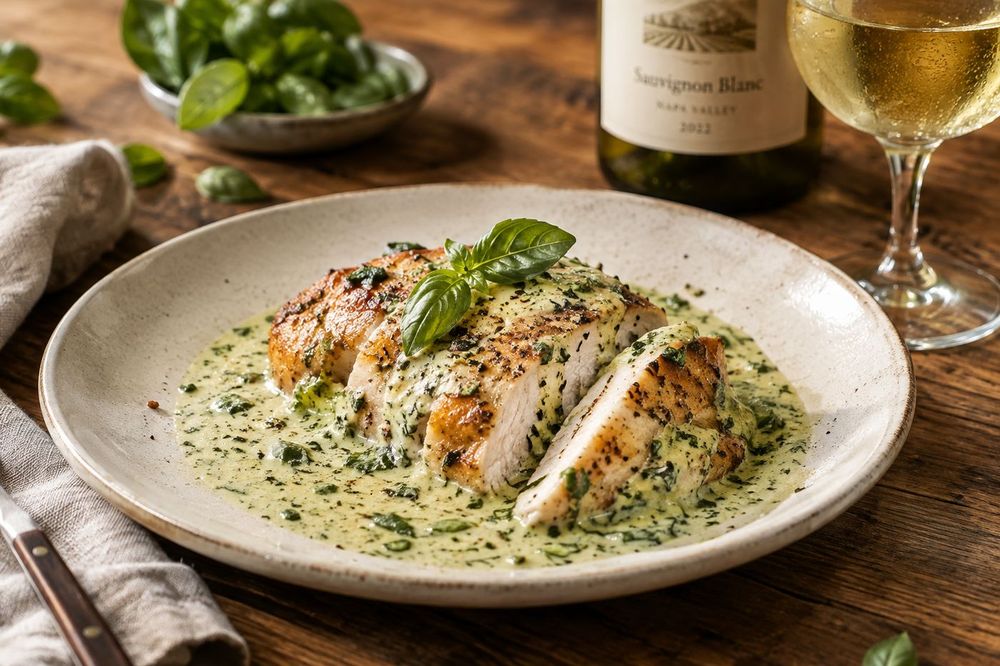



There's a particular satisfaction in watching a sauce transform from a simple pan of aromatics into something silky and cohesive, and that's exactly what happens with this basil cream sauce. The technique is straightforward, but the result tastes like it required far more effort than it did — which is precisely the kind of dish I like to develop for midweek cooking.
Chicken breasts are forgiving proteins when treated correctly, and here they serve as a canvas for a sauce built on reduction, fat, and fresh herbaceous brightness. The basil isn't an afterthought stirred in at the last second; it's integrated early enough to infuse the cream while still retaining its color and aromatic punch when finished at the end.
This is a dish about balance — richness tempered by acid, cream anchored by garlic, and the whole thing brightened by fresh basil rather than dried. That balance is what makes it worth pairing thoughtfully with wine, and what makes it a strong candidate for regular rotation.
The Inspiration Behind This RecipeI wanted a cream sauce that didn't lean exclusively on Parmesan or heavy reduction for flavor, but instead used fresh herbs as the structural backbone. Basil cream sauces appear across French and Italian home cooking in various forms, but they're often relegated to pasta. Applying the same technique to seared chicken breasts creates a dish that feels like a restaurant entrée without restaurant-level effort.
The goal was a sauce assertive enough to stand on its own, not simply a vehicle for cream, and basil's natural affinity for garlic and lemon made it the obvious anchor.
A Brief History of Cream-Based SaucesCream sauces trace back to French mother sauce traditions, particularly velouté and béchamel derivatives, where dairy fat was used to carry and mellow bold flavors. Italian cooking adopted similar techniques regionally, especially in the north, where cream-based preparations are more common than the tomato-forward dishes associated with southern Italy.
Basil's incorporation into cream sauces reflects a more modern culinary instinct — pairing an herb traditionally used raw or briefly cooked (as in pesto) with a medium that can showcase its aromatic oils without overcooking them into bitterness.
Why This Cooking Method WorksSearing the chicken first establishes a fond — the browned bits left in the pan — which becomes the flavor foundation for the sauce. Deglazing with wine or broth lifts those compounds, and building the cream sauce directly in that same pan means every reduction step concentrates flavor rather than diluting it.
Finishing the basil off-heat, or very briefly on low heat, preserves its chlorophyll and volatile aromatic compounds, which degrade quickly under prolonged cooking. This two-stage basil addition — some early for infusion, some late for brightness — is what separates a flat sauce from a vibrant one.
Flavor Profile: What to ExpectThe dish delivers a rich, savory cream base punctuated by sharp basil aromatics and a subtle garlic backbone. Acidity from a splash of white wine or lemon keeps the richness from becoming heavy, while the seared chicken contributes a caramelized depth that grounds the entire plate.
Tips for Making the Best Chicken in Basil Cream SaucePound the chicken breasts to an even thickness for consistent cooking. Don't skip the resting step after searing — it keeps the meat juicy while you build the sauce. Use fresh basil, not dried; the flavor difference here is not subtle. Reduce the cream slightly before finishing to ensure it coats the chicken rather than pooling thin on the plate.
Wine Pairing Guide- Chardonnay (unoaked or lightly oaked) — its acidity cuts through the cream while echoing the sauce's richness. ★
- Sauvignon Blanc — bright and herbaceous, it mirrors the basil's freshness.
- Pinot Grigio — light-bodied and clean, a safe crowd-pleasing option.
- Vermentino — coastal minerality that complements the garlic and cream.
- Light Pinot Noir — for those who prefer red, its soft tannins won't clash with the dairy.
A simple starch like buttered orzo or roasted fingerling potatoes absorbs the sauce beautifully without competing for attention. Steamed green beans or a lightly dressed arugula salad add textural and color contrast against the richness of the dish.
If you're building out a full Wine Wednesday spread, this pairs surprisingly well alongside our Smothered Asiago Chicken with Spinach & Mushrooms — both dishes share a cream-forward profile, but the basil here offers a lighter, more herbaceous counterpoint if served as a rotating weekly option.
Storage, Reheating, and Make-Ahead TipsRefrigerate leftovers in an airtight container for up to three days. Reheat gently over low heat, adding a splash of cream or broth to loosen the sauce, which will thicken considerably once chilled. Avoid microwaving on high, as it can cause the cream to separate.
Why This Recipe Deserves a Spot in Your Wine Wednesday RotationThis dish embodies exactly what a good midweek meal should be: technically sound, genuinely impressive, and achievable without a full evening in the kitchen. It's the kind of recipe that elevates an ordinary Wednesday into something worth lingering over, glass in hand.
![[#~image_alt_1~#]](/_next/image?url=https%3A%2F%2Fd3klpa3rfwubzz.cloudfront.net%2Fmedia%2FAPI%20Uploads%2FDDH%2F886980e3599ea497afbd862730cbb865_f317f0412c.jpg&w=1920&q=75)