
An old kitchen rule says to let food cool completely on the counter before refrigerating it — otherwise, the thinking goes, it'll warm up the fridge, spoil other food, or somehow go bad itself. That advice has been repeated so consistently it feels like settled science.
Modern food safety guidance actually says something closer to the opposite, and the reasoning behind the shift explains a real gap between old kitchen wisdom and what actually keeps food safe.
Where the Original Advice Came From
The instinct to cool food before refrigerating isn't baseless. Older refrigerators, especially decades ago, had limited cooling capacity, and a large pot of hot food really could raise the internal temperature of the whole appliance, putting other food at risk.
That concern made sense for the equipment people actually had at the time. It became a rule passed down through generations, long after the technology it was designed around had changed significantly.
Why the Danger Zone Matters More Than Fridge Temperature
Food safety agencies focus on what's called the "danger zone" — the range between roughly 40°F and 140°F where bacteria multiply fastest, sometimes doubling in number in as little as 20 minutes.
The longer food sits in that range, the more time bacteria have to multiply to potentially unsafe levels. Cooling food slowly on the counter, especially something dense like a pot of chili or a casserole, can keep the center of the dish in the danger zone for hours — far longer than modern refrigeration guidance considers safe.
What Modern Refrigerators Actually Handle Fine
Most refrigerators made in the last couple of decades are built with enough cooling capacity to handle hot food without meaningfully endangering everything else inside.
Current USDA guidance actually recommends refrigerating food within two hours of cooking, specifically because that window limits how long food spends in the danger zone. Waiting for a large pot to cool fully on the counter often blows past that window entirely, especially for thick or dense dishes that cool slowly by nature.
Why Size and Shape Matter More Than Temperature Alone
The real risk with hot food isn't the heat itself — it's how slowly that heat dissipates from the center of a large, dense container.
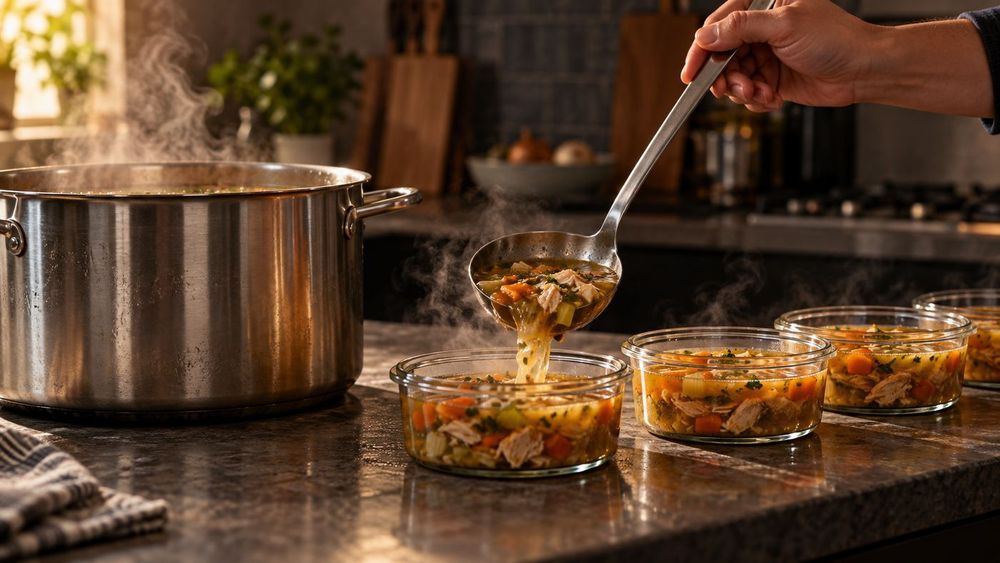
A deep pot of soup can take many hours to cool to a safe temperature all the way through, even sitting in a relatively cool kitchen. Splitting food into smaller, shallower containers before refrigerating dramatically speeds up cooling, since heat escapes faster from a wider, thinner layer than a tall, narrow one.
This detail matters more than whether the food felt "too hot" to put in the fridge in the first place.
How to Actually Handle Hot Food Correctly
A few adjusted habits align better with what actually keeps food safe, without requiring a fancier fridge.
Divide large batches of soup, stew, or chili into smaller, shallow containers before refrigerating
Refrigerate food within two hours of cooking, rather than waiting for it to fully cool
Leave a little space between containers in the fridge for airflow
Skip covering food tightly until it's had a few minutes to release initial steam, to avoid trapping excess condensation
None of these require special equipment, just a slightly different sequence than the one a lot of people grew up watching.
The Takeaway
The old advice to cool food on the counter first wasn't wrong for the fridges it was designed around. It's just outdated for the ones most kitchens actually have now.
The real risk was never really about the fridge overheating. It was always about how long food lingers in a temperature range where bacteria thrive — and waiting longer to refrigerate usually makes that problem worse, not better.