
Wood or Plastic: Which Cutting Board Is Actually Safer?

Wood or Plastic: Which Cutting Board Is Actually Safer?

Blog

You Might Also Like...

Rack of Pork with Peppercorn Sauce

Rack of Pork with Peppercorn Sauce

Juicy roasted rack of pork in a bold peppercorn sauce, paired with the ideal midweek red for elegant, effortless dining.

Your Panini Press Is Hiding Five Real Dinners

Your Panini Press Is Hiding Five Real Dinners

That dusty sandwich press in your cabinet can grill way more than lunch. Five dinners, zero extra gadgets.

Slow Cooker Queso Chicken Tacos

Slow Cooker Queso Chicken Tacos

Creamy, cheesy slow cooker queso chicken shredded into tacos — a lazy-day Taco Tuesday win with zero fuss.

Aldi's Frozen Pretzel Bites Are Secretly Five Dinners

Aldi's Frozen Pretzel Bites Are Secretly Five Dinners

That bag of Aldi pretzel bites in your freezer isn't just a snack — it's five weeknight dinners in disguise.

Spicy Seasoned Pretzels Recipe

Spicy Seasoned Pretzels Recipe

Crunchy, spice-tossed pretzels that make the perfect zippy Monday snack for movie nights or lunchboxes.

logo
  • Beverages
  • Eats▾
    • Appetizers
    • Entrees
    • Salads
    • Soups
    • Vegan
  • Desserts
  • Blog
  • About Us▾
    • Team
​
​
Sign Up
  • Beverages
  • Eats▾
    • Appetizers
    • Entrees
    • Salads
    • Soups
    • Vegan
  • Desserts
  • Blog
  • About Us▾
    • Team
  • ​

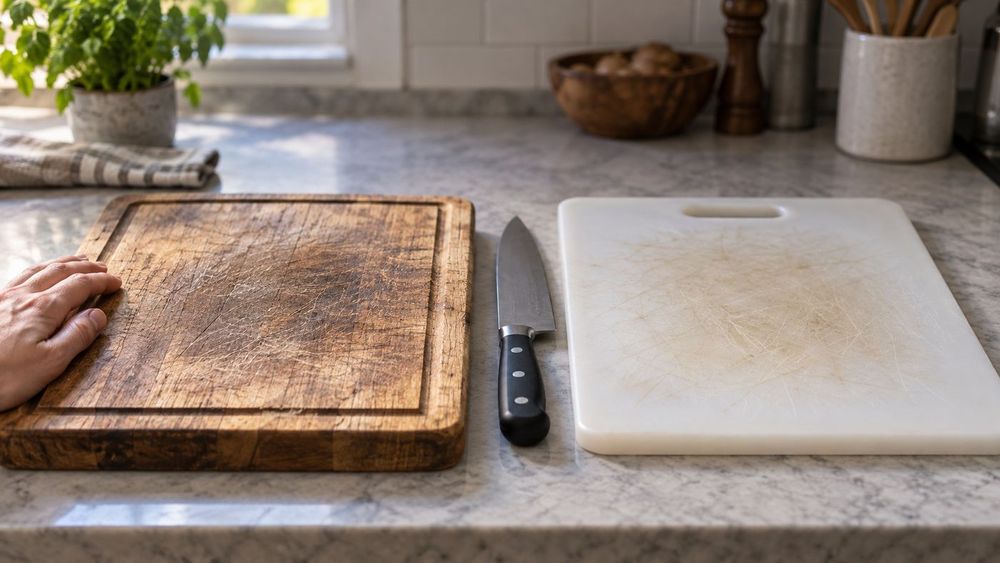
Wood cutting boards look like they should be a food safety nightmare. Knife scars, visible grooves, the kind of surface that seems built to trap bacteria and hold onto it. Plastic boards look clean, smooth, and easy to sanitize by comparison.

Multiple studies over the past few decades have found the opposite of what that instinct suggests, and the reason comes down to what's actually happening at a microscopic level.

What Researchers Actually Found

A widely cited study from food scientists at UC Davis in the 1990s directly compared bacteria survival on wood versus plastic cutting boards and produced a genuinely surprising result: bacteria deliberately introduced onto wood surfaces died off within minutes, while the same bacteria on plastic survived and, in some cases, multiplied.

That finding has been revisited and generally supported by later research, even as the exact mechanism has been debated and refined. The headline conclusion has held up: new, clean wood isn't the bacterial liability it appears to be.

Why Wood Seems to Actively Fight Bacteria

Wood is porous, but that porosity works differently than it seems like it should. Rather than simply trapping bacteria on the surface, wood tends to draw liquid — and the bacteria in it — down into the material, away from the surface, where it becomes trapped and eventually dies off, likely due to a combination of dehydration and natural antimicrobial compounds present in many wood types.

Plastic, by contrast, doesn't absorb anything. Bacteria introduced onto a plastic surface stays exactly where it landed, sitting in any knife groove or scratch until it's physically washed away.

Why Knife Scars Matter More on Plastic Than Wood

Both materials develop cuts and grooves from repeated knife use over time, but those grooves behave very differently depending on the material.

Grooves in plastic can shelter bacteria from a standard wash, since soap and water don't always reach deep into narrow plastic scratches effectively. Grooves in wood, meanwhile, are part of the same absorption process that already tends to pull bacteria away from the surface and toward where it eventually dies off.

An old, heavily scarred plastic board is often a bigger risk than an old, heavily scarred wood one — despite plastic's reputation as the more sanitary choice.

Where Plastic Still Has a Real Advantage

None of this makes wood universally better. Plastic boards can go through a dishwasher, which sanitizes far more thoroughly and consistently than hand-washing a wood board, which should never go in a dishwasher since heat and prolonged water exposure will warp and crack it.

For high-volume, high-risk tasks — raw poultry prep in particular — many food safety guidelines still recommend a dedicated, dishwasher-safe plastic board specifically because of that easier, more thorough sanitizing process, even if wood's natural properties are working in its favor otherwise.

How to Actually Use Either Material Safely

The material matters less than a few consistent habits, regardless of which board ends up on the counter.

Use separate boards for raw meat and produce, regardless of material
Wash wood boards by hand with hot soapy water immediately after use, and dry them standing up
Replace plastic boards once they develop deep, hard-to-clean grooves
Occasionally oil wood boards to prevent cracking, which can create new bacteria-trapping surfaces

Both materials can be used safely. Both can also become genuinely risky if neglected long enough.

The Takeaway

Wood's reputation as the less sanitary cutting board choice doesn't hold up particularly well against the research. If anything, its natural properties give it a quiet advantage that clean-looking plastic doesn't share.

The material was never really the deciding factor in kitchen safety. How a board gets cleaned, and how often it gets replaced once it's worn out, matters far more than which material it started as.

More Recipes

Blog

05 October 2026

Dunkin' Launches Its 2026 Halloween Menu

Dunkin' has launched its 2026 Halloween menu with new Green Apple Dunkin' Zero drinks and Purple Marshmallow Cold Foam, available now....

Blog

05 October 2026

Costco's Orange Chicken Bag Is Secretly Five Dinners

That frozen orange chicken bag at Costco isn't just a side dish — it's five real dinners in disguise....

Blog

04 October 2026

PepsiCo Foods Announces Price Increases

PepsiCo Foods is raising prices on chips, dips, and sodas, reversing an earlier pledge to cut costs on popular snack brands....

Blog

04 October 2026

Why Marinades Don't Actually Penetrate Meat the Way You Think

Marinades barely move past the surface of meat, no matter how long you wait. Here's what's actually happening, and what really works....

Blog

04 October 2026

TJ's Cauliflower Gnocchi: One Bag, Five Dinners

That green bag in your freezer can do way more than a sad side dish. Five real dinners, one Trader Joe's staple....

Blog

03 October 2026

Cinnabon Offers $1 Rolls for Cinnamon Roll Day

Cinnabon Rewards members can get $1 Classic Rolls on Oct. 4 for National Cinnamon Roll Day, plus a beverage deal Oct. 2-3....

Blog

03 October 2026

The Viral Tortilla Wrap Fold: One Trick, Endless Lunches

TikTok's tortilla-folding trick turns one wrap into a sealed, sauce-proof lunch bomb. Here's how to actually pull it off....

Blog

03 October 2026

Why Restaurant Fries Taste Different Than Homemade Ones

Restaurant fries stay crisp through a whole meal. Homemade ones go soft fast. Here's the two-step method that fixes it....

Blog

02 October 2026

Black Truffle Menu Returns to Shake Shack

Shake Shack's Black Truffle menu is back for a limited time, along with new Mac & Cheese Bites and a truffle sauce add-on....

Blog

02 October 2026

Why Putting Hot Food Straight in the Fridge Isn't the Mistake You Think It Is

The old rule to cool food before refrigerating is outdated. Here's what modern food safety guidance actually recommends instead....

Blog

02 October 2026

Aldi's $6 Meatball Bag Is Secretly Five Dinners

One bag of Aldi's frozen meatballs, five totally different weeknight dinners — no extra store trips required....

Blog

02 October 2026

Whole Foods' 365 Rice Bowls: One Freezer Aisle, Five Dinners

That stack of 365 frozen rice bowls at Whole Foods can become five totally different weeknight dinners....

Blog

01 October 2026

Kroger Tests 24-Hour Stores at 6 Locations

Kroger is piloting 24-hour store hours at six locations in Ohio and Indiana, and shoppers are already hoping it expands....

Blog

01 October 2026

Your Electric Kettle Can Basically Cook Dinner

That thing you only use for tea? It's secretly a dinner shortcut. Here's how to put it to work....

Blog

01 October 2026

Why Some Cooking Oils Handle Heat and Others Just Smoke

Olive oil smokes in a hot pan. Avocado oil doesn't. Here's the science of smoke point, and how to match oil to cooking method....
Terms and ConditionsDo Not Sell or Share My Personal InformationPrivacy PolicyPrivacy NoticeAccessibility NoticeUnsubscribe
Copyright © 2026 Daily Dish