
Homemade french fries almost always disappoint in the same specific way — they taste fine right out of the fryer, then go soft and limp within minutes, long before the plate's even empty. Restaurant fries somehow hold their crunch for the length of an entire meal.
The gap isn't about better potatoes or a secret seasoning. It's almost entirely about a step most home cooks skip without realizing it exists.
The Double-Fry Method Most Recipes Leave Out
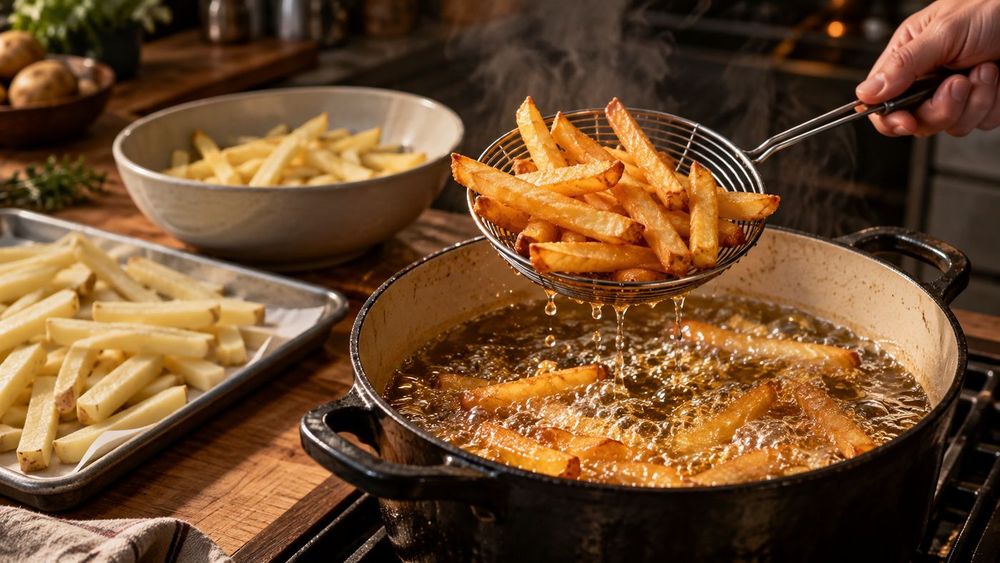
Restaurants fry potatoes twice, at two different temperatures, and each fry is doing a completely different job.
The first fry, at a lower temperature — typically around 325°F — cooks the inside of the potato through without browning the outside much at all. The second fry, at a much higher temperature, closer to 375°F, is what actually builds the crisp, golden exterior. Skipping straight to one high-heat fry, the way most home recipes do, forces a single step to do two jobs it was never built to handle well.
Why One Fry Isn't Enough
Frying raw potatoes at high heat browns the outside quickly, but the inside often hasn't finished cooking by the time the exterior is already golden — creating fries that look done but taste undercooked and starchy at the center.
Lowering the heat to compensate solves that problem but introduces a new one: the exterior never gets hot enough, long enough, to develop a proper crust. Either way, a single fry is a compromise. The two-stage method sidesteps the trade-off entirely by handling each job separately.
What's Actually Happening Inside the Potato
The low-temperature first fry gently cooks starch throughout the potato, softening the interior fully while forming a light, stable outer layer that isn't yet crisp.
Resting between fries — often at room temperature or even in the fridge — allows moisture to redistribute and the surface to dry out slightly, which matters more than it sounds like it should. That drier surface is part of what allows the second fry to crisp so effectively, since less surface moisture means less steam getting in the way of proper browning.
Why Potato Variety Also Matters
Not every potato produces the same result, even with the double-fry method done correctly.
Starchy potatoes like russets have less water content and more starch than waxy varieties like red or new potatoes, which makes them fry up fluffier on the inside and crisper on the outside. Waxy potatoes hold their shape well but tend to stay denser and less airy, making them a weaker choice for classic crispy fries.
How to Actually Make Restaurant-Style Fries at Home
None of this requires special equipment beyond a thermometer and a pot deep enough for oil.
Cut russet potatoes into even sticks and soak in cold water for at least 30 minutes to remove excess surface starch
Fry at 325°F until soft but pale, about 4–5 minutes, then remove and let rest
Raise oil temperature to 375°F and fry a second time until deeply golden, about 2–3 minutes
Salt immediately after the second fry, while the surface is still hot enough for it to stick
The extra step and the resting time in between are what actually separate a soggy homemade fry from one that holds its crunch on the way to the table.
The Takeaway
Restaurant fries aren't better because of a secret ingredient or professional equipment most kitchens don't have. They're better because of a two-step process that takes a little more time but asks nothing complicated of the cook.
Once that second fry gets added back in, the gap between homemade and restaurant fries mostly disappears — along with the soggy, limp texture that's frustrated home cooks for as long as fries have existed.