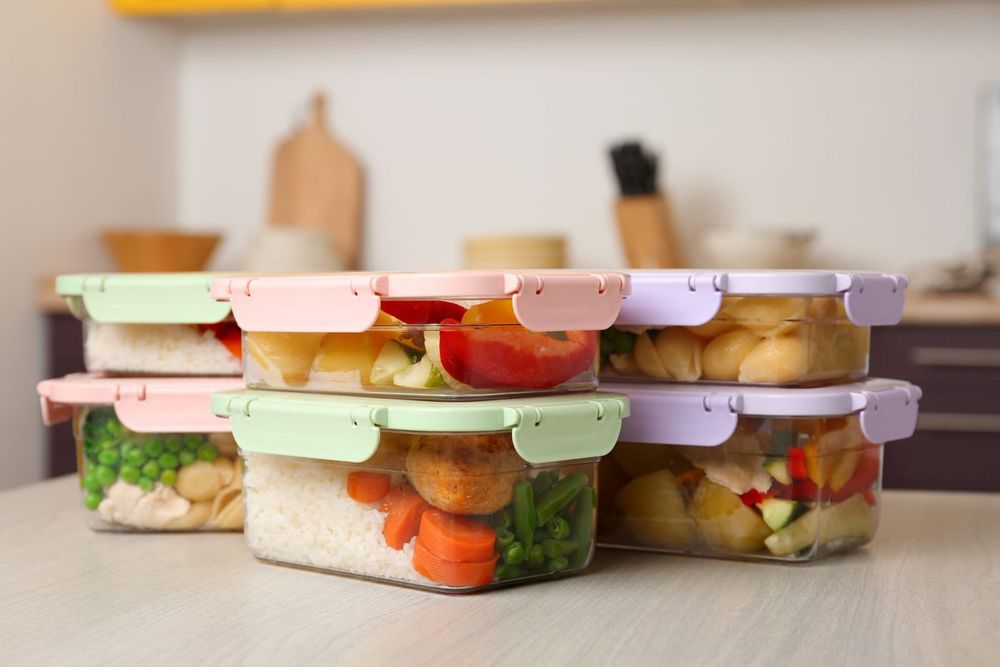

There is a practice that the most efficient and most consistently well-fed home cooks share — one that is not a diet, not a meal plan in the regimented sense, not a system that requires special containers or color-coded organization or the particular discipline that most systems eventually demand and most people eventually abandon.
It is a practice of one day.
Sunday — or whatever day functions as the transition between the week’s end and its beginning — spent in the kitchen with a specific quality of unhurried attention. Not cooking elaborate meals. Not batch-cooking every meal for the week ahead in a way that produces identical lunches and dinners that are practical but joyless. Something more organic than that — a few hours of productive cooking that produces not finished meals but components, foundations, building blocks that make every other meal of the week faster, easier, and better than it would have been without them.
The Sunday cook is not a system. It is a habit — and the difference between those two things is the difference between something that lasts and something that doesn’t.
What the Sunday Cook Produces
The goal of the Sunday cooking session is not a set of finished meals in containers. It is a refrigerator stocked with cooked components that can be assembled into different meals across the week — a pantry in the refrigerator, stocked with the building blocks of good eating rather than the finished products.
The distinction matters. Finished meals lose their quality over days in a way that cooked components do not. A complete pasta dish stored in the refrigerator is, by Wednesday, a compromised version of what it was on Sunday — the pasta has absorbed the sauce, the texture has degraded, the freshness that made it worth eating has faded. A container of cooked grains, a jar of roasted vegetables, a portion of braised beans — each of these is as useful on Thursday as it was on Sunday, because it is an ingredient rather than a finished dish, waiting to be combined with fresh elements into something that tastes made today rather than stored since the weekend.
The Sunday cook produces, typically, three to five components that represent the foundations of the week’s eating. Grains in enough quantity to serve as the base of several lunches and dinners. A large batch of legumes that will appear in different forms across multiple meals. Roasted vegetables that will serve one night as a side dish and another night as the primary ingredient in a grain bowl or a frittata. A protein — braised, roasted, or poached — that will be eaten whole one night and repurposed the next. A large-format sauce or condiment that will season and tie together whatever is assembled from the other components.
The Grain That Becomes Everything
Of all the components worth cooking on Sunday, grains are perhaps the most versatile — the ones that appear most frequently in the week’s meals in the most different forms.
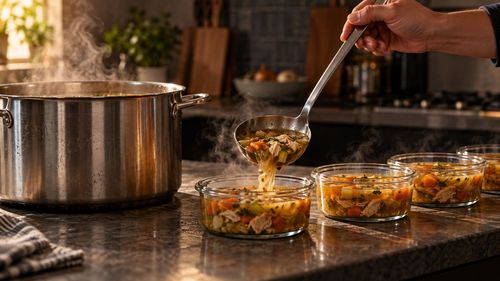
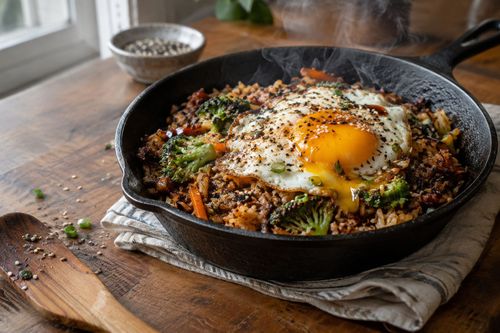
Farro cooked on Sunday becomes the base of a grain bowl on Monday, the addition to a soup on Wednesday, and the foundation of a warm salad with whatever vegetables are at their best on Friday. Cooked rice becomes fried rice, a bowl topped with a fried egg, a side for whatever protein is made later in the week. Cooked lentils become soup, become the protein component of a salad, become a spread for toast with olive oil and lemon.
The specific grain chosen for Sunday cooking should reflect the week’s likely cooking — what cuisines will probably appear, what the weather suggests, what the farmers market or grocery store offered this week. The cook who shops first and cooks second — who lets the ingredients available dictate the cooking rather than planning the cooking and then shopping for it — produces a Sunday session that is responsive to what is actually good right now rather than what was planned in the abstract.
The grain cooked on Sunday should be cooked simply — in well-salted water, without strong flavoring — so that it is a neutral canvas for the different seasonings and preparations it will be part of across the week. A grain cooked with garlic and thyme is committed to that flavor profile. A grain cooked in plain salted water belongs to any flavor direction the week requires.
The Roasted Vegetable as the Week’s Most Flexible Ingredient
The batch of roasted vegetables produced on Sunday is worth protecting as an investment — both in the quality of the vegetables chosen and in the attention brought to their preparation.
The specific vegetables worth roasting in quantity for the week ahead are those that hold well in the refrigerator without significant textural degradation. Root vegetables — carrots, beets, parsnips, turnips — roast beautifully and hold for a week without meaningful quality loss. Winter squash in the cooler months. Summer squash and zucchini in the warmer ones — though these are best eaten within three or four days of roasting. Cauliflower and broccoli. Eggplant. Bell peppers.
Roasting these vegetables simply — with olive oil, salt, and enough heat to produce caramelization — keeps them versatile. The roasted carrot that was seasoned only with salt and olive oil can become the component of a Moroccan-spiced grain bowl on Monday, a simple side dish on Tuesday, and the addition to a frittata on Wednesday. The same carrot roasted with cumin and coriander on Sunday is committed to that flavor profile for the week — less versatile, though perhaps more delicious in the right context.
The Sunday roasting session should use the oven at its highest temperature and should not crowd the pan — the same principles of vegetable roasting that produce caramelized, flavorful vegetables always apply, and the batch size is not a reason to compromise on technique.
The Braised Thing That Gets Better Every Day
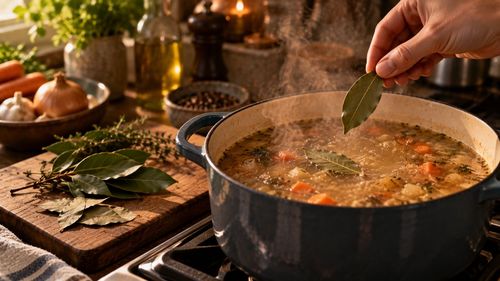
The Sunday cook’s most valuable long-duration preparation is the braise — the slow-cooked protein or legume that requires several hours of largely passive cooking time and that, as discussed at length in these pages, consistently improves over the days that follow its preparation.
A Sunday braise of chickpeas — simmered low and slow with aromatics until completely tender and deeply flavored — produces a versatile component that becomes a main course with yogurt and flatbread on Sunday evening, a salad component on Tuesday, a soup addition on Wednesday, and a spread for toast on Thursday. The braising liquid, reduced slightly, becomes a sauce or a dressing that ties several of these preparations together.
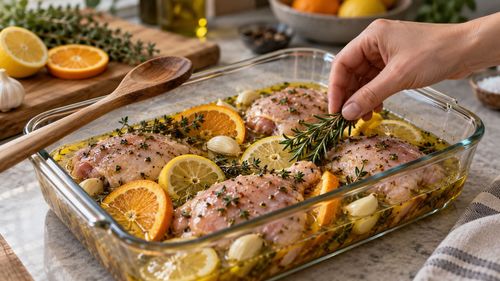
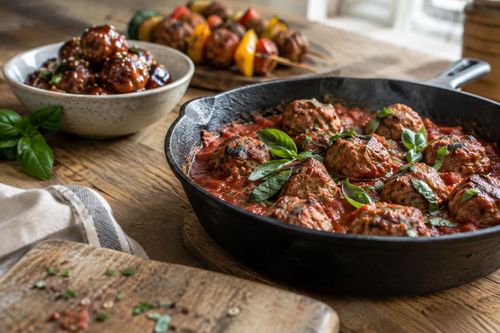
A Sunday braise of chicken thighs — cooked in white wine with aromatics until falling from the bone — produces pulled chicken that serves over rice on Sunday, in tacos on Tuesday, in a simple pasta on Wednesday, and in a grain bowl on Thursday. The braising liquid becomes the sauce for the pasta and the dressing for the grain bowl.
The specific protein chosen for Sunday braising should be one that repurposes easily — that adapts to different flavor directions rather than being committed to a single one. Pulled or shredded protein is the most versatile form because it absorbs whatever flavors it is combined with in subsequent meals.
The Sauce That Unifies the Week
Every Sunday cooking session benefits from the production of at least one large-format sauce or condiment that will season and tie together the components assembled across the week.
Not a complex sauce that commits every meal to a specific flavor profile — but a versatile base that can serve as a dressing, a marinade, a finishing element, a dipping sauce, or a condiment depending on what it accompanies.
A large batch of good vinaigrette — made with the right ratio of acid to fat, properly emulsified, seasoned carefully — will dress every salad, grain bowl, and roasted vegetable dish of the week. It will marinade a protein and finish a soup. It will be used and replenished and serve as the invisible seasoning that ties disparate components into coherent meals.
A large batch of good salsa verde — the Italian sauce of chopped herbs, capers, anchovies, and olive oil — serves the same unifying function for a different flavor direction. It is the finish for a grilled protein, the dressing for a roasted vegetable, the condiment that makes a simple grain bowl taste like something specific.
The Sunday sauce is the seasoning layer that transforms a collection of neutral components into meals that have a point of view — that taste like they were made for a specific occasion rather than assembled from whatever was in the refrigerator.
The Mental Space the Sunday Cook Creates
Beyond the practical benefits — the faster weeknight meals, the less decision-making under pressure of hunger, the better quality food throughout the week — the Sunday cooking session produces something less tangible but equally significant.
Mental space.
The weeknight cook who opens the refrigerator at seven in the evening and finds only raw ingredients faces the full cognitive burden of the meal simultaneously: deciding what to make, executing the preparation, managing the timing, cleaning up the result. This burden, repeated daily, is one of the primary reasons people default to takeout or convenience food — not laziness but decision fatigue, the specific exhaustion of making too many decisions under conditions of hunger and time pressure.
The weeknight cook who opens the refrigerator and finds cooked grains, roasted vegetables, braised protein, and a jar of vinaigrette faces a different situation. The decisions have already been made. The preparation has already happened. What remains is assembly — a fifteen-minute task rather than a forty-five-minute one, a creative act rather than a logistical one.
This mental space is not a small thing. It is the difference between a week of cooking that feels sustainable and enjoyable and a week that feels like an obligation. The Sunday investment — two to three hours in the kitchen during a time when it is pleasant to be in the kitchen — creates the conditions for the rest of the week to feel easy.
The Takeaway
The Sunday cook is not a system that requires discipline to maintain. It is a habit that sustains itself — because the benefits of having invested in the Sunday kitchen are immediately and consistently apparent in the quality of every meal that follows.
Cook the grains. Roast the vegetables. Braise the protein. Make the sauce.
Then let the week assemble itself from what the Sunday produced.
The refrigerator stocked with cooked components is not a meal plan. It is a possibility space — a collection of ingredients that can become different meals depending on what the week requires.
That flexibility, sustained by one morning of unhurried cooking, is one of the most practical gifts any cook can give themselves.
And it starts on Sunday.