
There is an ingredient that sits on the counter of almost every serious cook — not in the pantry, not in the refrigerator, not in the cabinet where things are stored until they are needed. On the counter. Within reach at all times. Present at every cooking session regardless of what is being made.
It is not a specialty ingredient. It is not expensive. It is not seasonal or regional or difficult to source. It is available in every grocery store in every city in the country for less than a dollar and has been for as long as grocery stores have existed.
It is the lemon.
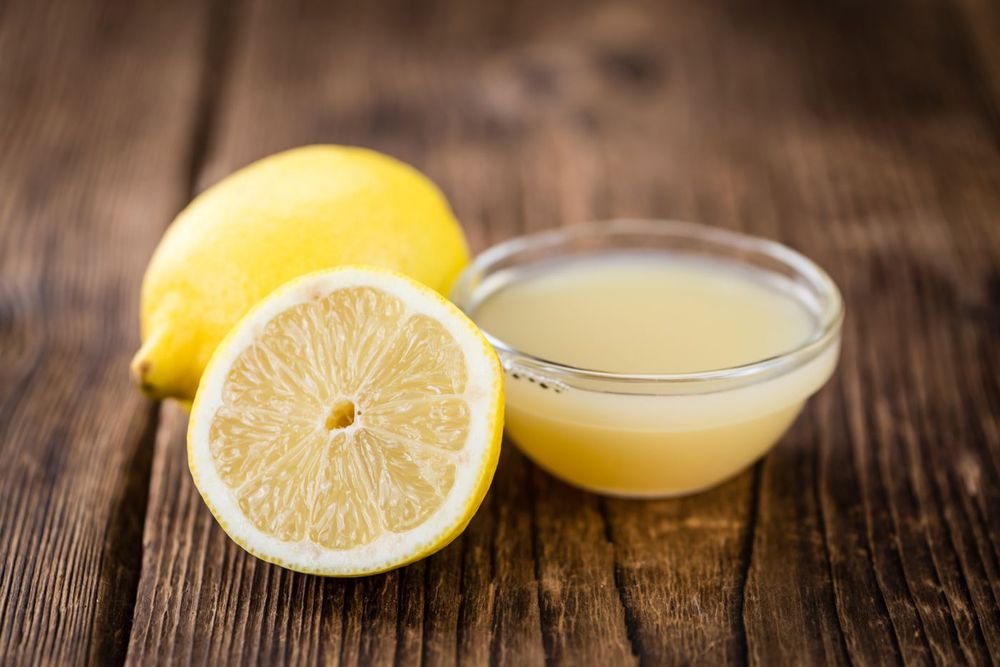
Not lemon juice from a bottle. Not citric acid powder. Not the squeeze of something that approximates the flavor without achieving it. The actual lemon — the whole fruit, sitting in a bowl on the counter, ready to be cut and squeezed at the moment when a dish needs what only a lemon can provide.
The lemon is the most important finishing ingredient in professional cooking and the most consistently absent ingredient in home cooking. Understanding why professional kitchens treat it as essential — understanding specifically what it does and when it is needed and why nothing else does the same thing — changes how any cook approaches the final moments of making a dish.
What Acid Does That Salt Cannot
The most common response to a dish that tastes flat or incomplete is to add salt. This response is often correct — underseasoning with salt is one of the most common problems in home cooking, and salt’s ability to amplify and round flavors is real and significant.
But there is a specific kind of flatness that salt cannot fix — a one-dimensionality that is not about salt levels but about the absence of acid. A dish that has been correctly salted but lacks acid tastes heavy, muted, slightly dull. The flavors are present but they are not vivid. They are not reaching forward. They are sitting at the back of the palate rather than announcing themselves.
Acid does something to flavor that salt does not. Where salt amplifies — makes everything more present and more vivid — acid brightens. It lifts. It adds a forward momentum to flavor that pulls it toward the front of the mouth and makes it register more immediately.
The specific mechanism is physical as much as chemical. Acid increases salivation, which distributes flavor compounds more broadly across the taste receptors. It cuts through fat that coats the palate, resetting the baseline and allowing the next flavor to register cleanly. And the volatile aromatic compounds released by citrus interact with the other aromatic compounds in the dish, adding a dimension that was not present before.
A braised dish that has been cooking for three hours and tastes correct but somehow flat — squeeze a lemon over it at the end and taste again. The dish that seemed complete reveals that it was not. The brightness the acid adds is not the flavor of lemon — it is the flavor of everything else in the dish, suddenly more present.
This is what acid does that salt cannot.
The Moment of the Lemon
Professional cooks develop a specific instinct about when to reach for acid — an awareness of the point in a dish’s development at which acid will produce the most benefit.
That moment is almost always at the end.
Acid added early in a cooking process does different work than acid added at the finish. Early acid affects the cooking itself — it can slow the browning of certain vegetables, change the texture of proteins, affect the development of certain flavor compounds. This early-stage acid has a specific and appropriate role in certain preparations.
But the acid that transforms a finished dish is the acid added in the final moments — after the heat is off or nearly off, after the seasoning has been evaluated, after everything else is in place. This is the acid that reaches the palate at full strength, without having been cooked down or mellowed or integrated into the background flavor of a long-cooked preparation.
A few drops of lemon juice or a few drops of a good vinegar — added to a finished pasta, a completed sauce, a plated piece of fish, a finished soup — changes the dish in a way that is immediately perceptible and that most home cooks have never experienced because they almost never do it.
The reason professional food tastes finished in a way that home food sometimes doesn’t is often this single, tiny, final adjustment. The acid that was added at the end, in quantities too small to taste as acid but large enough to transform everything around it.
The Specific Things a Lemon Does
Beyond the general principle of acid as a finishing tool, the lemon has specific applications that are worth knowing explicitly — because knowing them makes the reach for the lemon feel intuitive rather than calculated.
Fat needs acid to be fully pleasurable. The richest preparations — a butter sauce, a cream-based pasta, a piece of fatty fish — become more satisfying rather than heavier when acid is present. The acid cuts the fat in the specific sense of preventing the fat from coating and numbing the palate, allowing the richness to register as pleasure rather than as excess. The squeeze of lemon over fried food is not convention — it is the specific application of this principle to the category of food most in need of it.
Sweetness needs acid to be interesting. The sweet preparation without acid is flat and cloying. The sweet preparation with acid is complex and alive — the acid defines the sweetness rather than allowing it to spread indefinitely. The specific pleasure of a strawberry is partly its sweetness and partly its acidity, which is why a strawberry out of season, which has the sweetness but less of the natural acid, tastes less like a strawberry than a peak-season one.
Protein needs acid to taste fresh. A piece of cooked fish, a piece of grilled chicken, a bowl of beans — each of these benefits from acid in the specific way that makes them taste as if they were just made rather than as if they have been sitting. Acid is part of what makes food feel alive rather than inert.
Lemon Beyond Juice
The lemon is more than its juice — and the cook who uses only the juice is using less than half of what the fruit offers.
The zest — the outermost layer of the peel, where the essential oils are concentrated — contains the volatile aromatic compounds that produce the bright, intensely citrus fragrance and flavor that juice alone doesn’t deliver. Juice adds sourness and some citrus flavor. Zest adds an aromatic intensity that is its own category — the flavor of lemon itself rather than the flavor of lemon acid.
A pasta dressed with lemon juice tastes acidic with citrus undertones. The same pasta dressed with lemon juice and a generous amount of zest tastes of lemon — vivid, aromatic, the citrus flavor fully present rather than implied.
The technique of adding zest is simple — a Microplane drawn across the skin of the lemon above the finished dish, so the essential oils spray directly onto the food rather than onto a cutting board where half of them dissipate before transfer. The amount of zest that seems right is almost always less than what will actually produce the intended effect. Use more than feels comfortable and then taste.
The spent lemon — the half that has been squeezed — still contains aromatic oils in the peel that can be used for cleaning cutting boards, for scenting a simmering pot of water, for rubbing over a fish before cooking to impart a light citrus character. Nothing from the lemon is without use.
The Hierarchy of Acid
The lemon is the most versatile and most broadly applicable finishing acid available — but it is not the only one, and the cook who understands the hierarchy of acids can choose the right one for each specific application.
Lemon juice is bright, clean, and high in citric acid. Its flavor is distinctly citrus. It is the right choice for finishing fish, pasta, salads, cooked vegetables, grain dishes, and most preparations where a clean, vivid acid note is what is needed.
Lime juice is sharper and more aromatic than lemon, with a specific tropical character that makes it the right choice for dishes from Mexican, Thai, Vietnamese, and other cuisines where that character belongs. It is not interchangeable with lemon — the flavors are related but distinct.
Good wine vinegar — particularly a well-aged sherry vinegar or a quality red wine vinegar — adds acidity with more complexity and more depth than citrus. It is the right choice for finishing braises, vinaigrettes, and dishes where a more integrated, less immediately bright acid note is wanted.
Apple cider vinegar adds a mild sweetness along with its acidity, making it useful in preparations where the brightness of lemon would be too assertive.
The cook who has good examples of each of these acids on hand — who reaches for the lemon for some preparations and the sherry vinegar for others and the lime for others — is working with a broader palette than the cook who has only one.
The Bowl on the Counter
The specific placement of the lemon — not in the refrigerator, not in a drawer, but in a bowl on the counter within arm’s reach of the stove — is not an accident of professional kitchen organization. It is a statement of priority.
The ingredient that is within reach gets used. The ingredient that must be retrieved from the refrigerator — that requires a walk across the kitchen and a few seconds of locating and extracting — gets used less. The bowl of lemons on the counter is a commitment: to the habit of tasting at the finish, to the practice of asking whether the dish needs brightness, to the reflex of adding acid before a dish is declared complete.
This commitment is a small one. It costs nothing. It requires only the decision to keep lemons on the counter rather than stored away.
The cooking that follows from it is different.
Not because lemons are magic. Because the habit they represent — the habit of the final tasting, the habit of asking what the dish still needs, the habit of reaching for brightness when brightness is what is missing — is one of the most valuable habits in any kitchen.
The bowl of lemons is not a decoration. It is a reminder.
Finish with acid.
Taste again.