
There is a specific kind of cooking problem that arrives every summer without fail.
The kitchen is already warm from the morning. The afternoon has made it worse. The idea of turning on the oven — of adding any more heat to an environment that has already exceeded comfort — is not just unappealing but genuinely difficult to justify when the alternative is standing in front of an open refrigerator wondering if a bowl of cold leftovers constitutes dinner.
July cooking is its own category. Not summer cooking in the abstract — the broad, generous season of farmers markets and stone fruit and tomatoes at their peak — but the specific, practical challenge of the hottest weeks, when the abundance of what is available and the difficulty of cooking it in a hot kitchen create a tension that requires its own set of solutions.
The solutions exist. They are not compromises. Some of the best food of the entire year is produced by the specific constraints of high summer — by the need to cook without heat, to cook quickly, to cook outside, to let the quality of the ingredient do the work that the oven would otherwise do.
July is not the month to push through despite the heat. It is the month to cook differently.
The No-Cook Meal That Deserves More Respect
There is a category of eating that food culture consistently undervalues — the meal that requires no cooking at all, that is assembled from ingredients in their natural state, and that delivers more pleasure per unit of effort than almost any other approach to feeding people.
In July, this category deserves full rehabilitation.
The peak-season tomato sliced thickly and arranged on a plate with nothing but salt, good olive oil, and torn basil is not a side dish. It is a meal — a complete, deeply satisfying expression of an ingredient at its best, requiring nothing from the cook except the good judgment to leave it alone.
The cold cuts and cheeses and bread and pickled things arranged on a board — the Italian antipasto, the French charcuterie, the Spanish embutidos — are meals that require no heat and that, assembled with care from genuinely good ingredients, produce more pleasure than many cooked alternatives. The quality of what is on the board is the cooking. The judgment about what goes together is the technique.
Gazpacho — the cold Spanish tomato soup made from raw vegetables blended with olive oil and vinegar and nothing else — is one of the most refreshing and most genuinely satisfying dishes available in high summer. It requires a blender and a refrigerator and peak-season tomatoes and peppers and cucumber and garlic. It requires no heat. It improves by sitting for several hours in the refrigerator before serving. It is better on the second day than on the first.
The no-cook meal in July is not the failure of cooking ambition. It is the recognition that the best ingredient is also the best argument — that a genuinely ripe peach, eaten as itself, is more worth eating than the same peach transformed by heat and technique into something elaborate but less fresh.
The Quick-Cooking Techniques That Minimize Heat
When cooking is necessary — when the appetite demands something warm or protein is needed or the meal requires more than assembly — July cooking rewards techniques that produce the most flavor in the least time with the least sustained heat output.
The grill is the obvious solution, and it is a good one — cooking happens outside, the heat stays outside, and the specific flavor that direct flame produces from proteins and vegetables is one of the genuine pleasures of summer cooking. But the grill is not always available, not always practical for a weeknight dinner, and not suitable for every preparation.
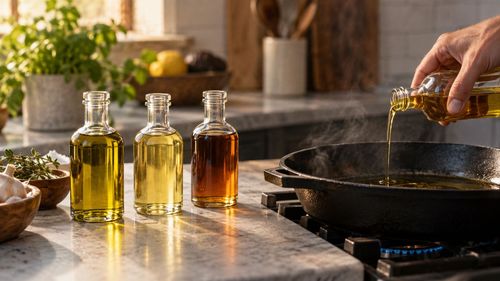
The stovetop at high heat for short periods is the indoor equivalent. A screaming hot cast iron pan that sears a thin piece of fish or a butterflied chicken thigh in three minutes per side produces excellent results with minimal sustained heat input. The key is that the cooking is genuinely fast — not twenty minutes of medium heat, which would produce more kitchen warmth for less culinary result, but three minutes of extremely high heat that accomplishes the Maillard reaction and the protein cooking simultaneously before the kitchen has had much time to register the addition.
The technique of cooking in the cool of the morning — producing the components of several days’ meals before the heat of the day makes cooking uncomfortable — is one of the most practical approaches to summer cooking. Grains cooked at eight in the morning and stored in the refrigerator. A batch of roasted vegetables done before ten, when the outdoor temperature is still manageable. Proteins marinated and cooked in the early morning that will be eaten cold or at room temperature for dinner.
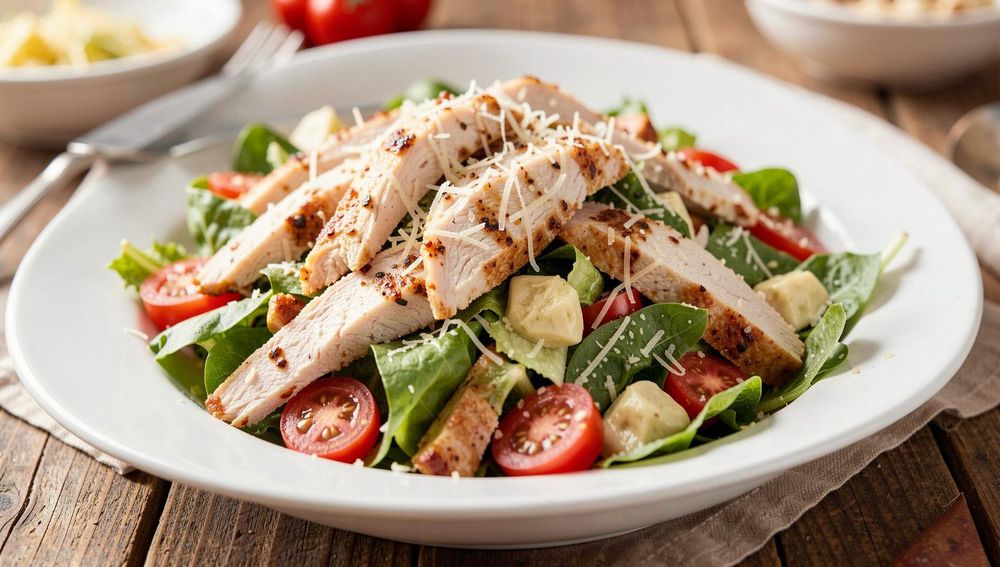
This approach — cooking ahead when the temperature permits rather than when the hunger demands — produces food that is genuinely better suited to summer eating. Cold roasted chicken eaten at room temperature, pulled from the refrigerator and sliced over a simple salad, is a better summer meal than the same chicken served hot from the oven at seven in the evening.
The Salad That Is Actually a Meal
The word salad carries associations — of side dishes, of accompaniments, of the slightly insufficient thing eaten alongside the real food — that are entirely inaccurate when applied to what a summer salad can actually be.
The summer meal salad is not a bowl of lettuce with dressing. It is a complete, composed, genuinely satisfying meal that happens to be served cold and to use the format of a salad as its organizing principle.
The Niçoise — the classic French composed salad of tuna, hard-boiled eggs, green beans, potatoes, olives, and anchovies, dressed with vinaigrette — is not a side dish. It is dinner. Its components provide complete protein and substantial substance without requiring any heat on the day of serving, because the potatoes and eggs and green beans can be cooked ahead and stored in the refrigerator until needed.
The grain salad — farro or wheat berries or barley cooked ahead and cooled, combined with roasted or raw vegetables, fresh herbs, a dressing built around good vinegar and olive oil, and whatever protein is on hand — is one of the most practical and most satisfying summer meal formats available. It improves with time in the refrigerator as the grain absorbs the dressing. It holds for several days. It can be eaten at any temperature from cold to room temperature without loss of quality.
The technique of building the summer meal salad around components rather than a single recipe produces maximum flexibility with minimum effort. The grain that was cooked on Monday serves in a different combination on Wednesday. The roasted vegetables from Tuesday appear in a different form on Thursday. The salad is not a recipe — it is a format that accommodates whatever is in the refrigerator and whatever is at peak quality at the market this week.
The Cold Soup That Is More Than the Sum of Its Parts
Beyond gazpacho — which is the best known but not the only cold soup available in summer — there is a range of cold soup preparations that deserve more attention in the July kitchen.
The cold cucumber soup — made from cucumber blended with yogurt, garlic, dill, and a small amount of good vinegar — is one of the most refreshing preparations available in summer. It is cooling in the specific sense that its dairy fat and acidity signal coolness to the palate even at refrigerator temperature, and deeply satisfying in a way that its minimal ingredient list doesn’t predict.
Cold corn soup — made from the kernels of peak-season corn blended with stock and cream until silky, seasoned carefully, and served thoroughly chilled — showcases the specific sweetness of summer corn in a form that is entirely different from corn on the cob or corn salad. The blending concentrates the corn flavor and produces a texture that is silky and almost impossibly smooth, a contrast to the rustic preparations that corn usually suggests.
The Japanese preparation of hiyayakko — cold silken tofu served with grated ginger, soy sauce, scallions, and bonito flakes — is perhaps the most minimal cold dish in any culinary tradition, requiring no preparation beyond opening a package and arranging a few garnishes. Its pleasure is entirely in the quality of the tofu and the balance of its seasonings. It is a dish that requires nothing from the cook and delivers more than most elaborate preparations in summer heat.
Drinks as Food: The Serious Smoothie and Its Relatives
There is a category of summer sustenance that food culture sometimes treats as adjacent to cooking rather than as cooking itself.
The genuinely nutritious, genuinely satisfying cold drink — built from whole fruit and vegetables and protein and fat rather than from sugar and flavoring — is one of the most efficient and most pleasurable ways to eat in July without adding heat to the kitchen.
The smoothie made from whole fruit — frozen for texture, combined with yogurt or nut butter for protein and fat, without added sugar — is a meal, not a snack. Its dismissal as a serious food category reflects a cultural bias toward solid food rather than any nutritional or culinary deficiency. A smoothie made from frozen mango, coconut milk, lime juice, and a handful of spinach (invisible in flavor, significant in nutrition) is more nutritionally complete than many solid breakfasts and requires less preparation time than almost any cooked alternative.
The agua fresca — the Mexican tradition of blending fruit with water and a small amount of sweetener to produce a lightly flavored cold drink — is one of the most elegant summer refreshments available. Watermelon agua fresca, requiring nothing more than blended watermelon strained through a fine mesh strainer and seasoned with a touch of lime and salt, is the most perfect expression of summer thirst satisfaction available in a glass.
The Outdoor Table as a Cooking Strategy
One of the most significant decisions a summer cook can make has nothing to do with what to cook — it is where to eat.
The outdoor meal — eaten on a porch, in a garden, at a picnic table, on a blanket in a park — changes the cooking equation entirely. Food that would be unremarkable indoors takes on a different quality in the specific conditions of outdoor eating: the ambient temperature, the sound and smell of the outdoors, the particular ease of a meal eaten without the formality of the indoor table.
The picnic as a meal format — food prepared to travel and be eaten at ambient temperature, assembled with attention to what holds well and what suffers from sitting — is a discipline that rewards its practitioners. The components of a good picnic are not the components of a restaurant meal carried outside. They are ingredients that are specifically suited to outdoor eating: things that are good at room temperature, that don’t require utensils, that improve rather than deteriorate with a few hours in a bag.
The specific foods of picnic tradition — the sandwich, the composed salad, the pickled things, the cheese and charcuterie, the fruit that needs no preparation — are not the foods of picnic tradition by accident. They are the foods that work. The specific constraints of picnic eating selected for them over generations of outdoor summer meals.
The Takeaway
July cooking is not a problem to be solved. It is a different kind of cooking — one that requires letting go of the habits and the ambitions that make sense in other months and replacing them with the specific pleasures that high summer makes available.
The no-cook meal made from genuinely peak ingredients. The quick-sear that accomplishes maximum flavor with minimum heat. The grain salad built from components cooked in the cool of the morning. The cold soup served from a refrigerator that has been doing the cooking for hours. The outdoor table that makes everything taste better.
July cooking, done well, is not about making the best of difficult conditions. It is about cooking in the way that the season actually invites — with less fire, more fresh, and the specific pleasure of an ingredient at its peak that needs nothing added to be extraordinary.
The heat of July is not the enemy of good cooking.
It is the invitation to cook differently.