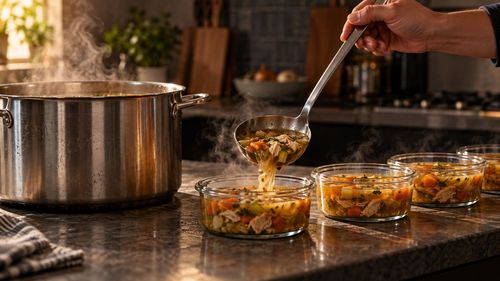

You make soup for dinner.
It’s good. Flavorful. Exactly what you wanted.
You save the leftovers. The next day, you reheat a bowl and something’s different.
The vegetables are mushy. The noodles or rice have absorbed all the liquid and turned bloated. The broth tastes diluted. The seasoning seems to have vanished.
It’s technically the same soup. But it doesn’t taste the same at all.
Meanwhile, restaurant soups that sit in warmers all day somehow maintain their quality. The vegetables stay intact. The broth stays flavorful. Everything holds together.
The difference isn’t better ingredients or commercial equipment.
It’s understanding what happens to soup during storage and reheating—and knowing how to prevent those changes from ruining leftovers.
Pasta and Rice Keep Absorbing Liquid
Noodles and rice don’t stop absorbing liquid just because the soup cooled down.
In the refrigerator, pasta continues to swell. Rice keeps soaking up broth. By the next day, what was a balanced soup is now thick, pasty, and has half the liquid it started with.
The noodles or rice are bloated and mushy. The broth is gone or so thick it’s more like porridge.
Chefs know this. That’s why restaurants rarely add pasta or rice directly to soup that will be stored.
They cook pasta or rice separately and add it to individual bowls when serving. The bulk soup stays brothy. Each portion gets the right amount of starch.
Home cooks put everything in one pot because it’s convenient. Then they’re disappointed when leftovers are a gummy mess.
If you’re making soup with pasta or rice and want good leftovers, cook the starch separately. Store it separately. Add it when reheating individual portions.
Yes, it’s an extra step. But it’s the difference between leftover soup that’s as good as the original and leftover soup that’s barely edible.
The Vegetables Overcook During Storage
Vegetables in soup continue cooking even after the pot comes off the stove.
They sit in hot liquid while the soup cools. Then they sit in that liquid in the refrigerator, slowly breaking down further.
By day two, vegetables that were perfectly tender are now mushy and falling apart.
Restaurants that hold soup intentionally undercook vegetables slightly. They know the vegetables will continue softening during storage.
By the time the soup is served—even hours later—the vegetables reach the perfect texture.
Home cooks cook vegetables until they’re tender, then store the soup. The vegetables have nowhere to go but overcooked.
If you’re making soup specifically for leftovers, pull vegetables off heat while they still have some bite. They’ll finish cooking during storage and be perfect when reheated.
Seasoning Fades Into the Background
Salt and spices distribute throughout soup as it sits.
What tasted properly seasoned when fresh can taste muted the next day. The flavors haven’t disappeared—they’ve just mellowed and integrated to the point where nothing stands out.
Chefs taste and adjust seasoning every time they reheat soup. They expect it to need more salt, more acid, more something.
Home cooks reheat leftovers and serve them as-is, then wonder why they taste bland compared to yesterday.
Leftover soup almost always needs a seasoning boost. A pinch of salt. A squeeze of lemon. A dash of hot sauce. Freshly cracked pepper.
Taste before serving and adjust. Don’t assume it’s still properly seasoned just because it was yesterday.
Reheating on High Heat Ruins Texture
Blasting leftover soup on high heat to reheat it quickly destroys whatever texture remains.
Delicate ingredients break down completely. Proteins toughen. The soup tastes overcooked and tired.
Chefs reheat soup gently on medium-low heat, stirring occasionally. It takes longer, but the soup stays intact.
Home cooks often microwave soup on high or heat it rapidly on the stove because they’re hungry and in a hurry.
That aggressive reheating is the final blow to soup that’s already been through cooling and storage.
Slow, gentle reheating preserves what’s left of the soup’s texture and keeps it from tasting cooked to death.
Fat Separates and Congeals
Soups with fat—whether from meat, cream, or added oil—separate when cold.
The fat rises to the top and solidifies. When reheated, that fat doesn’t always reincorporate smoothly.
The soup can taste greasy and separated instead of cohesive and rich.
Restaurants skim excess fat before storing soup. They’re looking for a balanced amount—enough for flavor, not so much that it becomes unpleasant when reheated.
Home cooks often leave all the fat in the soup. When it separates and solidifies overnight, reheating it creates an unpleasant greasy layer.
Skim visible fat before storing soup. The soup will taste cleaner and more balanced when reheated.
Dairy Curdles or Separates
Cream-based soups are particularly problematic as leftovers.
Reheating dairy soups, especially if done too quickly, causes the cream to separate or curdle. The texture becomes grainy and broken instead of smooth and velvety.
Restaurants often don’t add cream until serving. They keep a base soup and finish individual portions with cream as they’re plated.
This ensures the cream is always fresh and hasn’t been subjected to multiple heating and cooling cycles.
Home cooks add cream to the whole pot. Then they reheat the entire pot the next day, directly introducing the cream to conditions that make it separate.
If you’re making cream soup for leftovers, consider storing the base without cream and adding fresh cream when reheating portions.
It’s more work. But it’s the only way cream soups reheat well.
Fresh Herbs Turn to Mush
Fresh herbs added to soup lose their brightness during storage and reheating.
Delicate herbs like parsley, cilantro, and basil turn dark, slimy, and contribute almost nothing to the reheated soup.
Chefs add fresh herbs as a garnish right before serving—every time. They don’t cook fresh herbs into soup that will be stored.
Home cooks often add fresh herbs during cooking and expect them to survive storage. They don’t.
Save fresh herbs for garnish. Add them to reheated soup right before eating. This brings back some of the brightness the soup lost during storage.
Broth Concentrates from Evaporation
Even in the refrigerator, some moisture evaporates from soup.
Plus, if you didn’t cover it tightly, the broth can reduce slightly from residual heat before fully cooling.
The next day, the soup is thicker and the flavors are more concentrated—sometimes to the point of being too intense.
Restaurants thin leftover soup with fresh stock or water when reheating. They’re actively managing consistency.
Home cooks reheat soup as-is and don’t understand why it’s suddenly too salty or too thick.
Add liquid when reheating if the soup has thickened. Stock is ideal, but even water helps restore the original consistency.
The Container Affects Storage
Storing soup in a wide, shallow container exposes more surface area to air.
This accelerates flavor loss and increases the chance of off-flavors developing.
Chefs store soup in tall, narrow containers or divide it into smaller portions. Less surface area, better preservation.
Home cooks often store soup in whatever pot they cooked it in—usually a large, wide pot with maximum surface exposure.
Transfer soup to an appropriately sized storage container. This helps maintain quality.
Starches Leach Into Broth
Potatoes, beans, and other starchy vegetables gradually release starch into soup as it sits.
This thickens the broth and can make it cloudy or gummy.
A soup that was clear and light yesterday is suddenly thick and heavy today—even if nothing was added.
Restaurants account for this. They know soup will thicken overnight and plan accordingly.
Home cooks are often surprised by how much thicker leftover soup becomes, especially potato or bean soup.
Expect this. Thin with additional broth or water when reheating. It’s normal and fixable.
Some Soups Improve, Most Don’t
Certain soups genuinely taste better the next day. Chili, stews, bean soups—things with bold flavors that benefit from time to meld.
But most soups don’t improve. They deteriorate.
Delicate broth-based soups, vegetable soups, seafood soups, cream soups—these are all better fresh.
Chefs know which soups hold well and which don’t. They plan their menu accordingly.
Home cooks often assume all soups improve with time because that’s the conventional wisdom. It’s not true.
If you’re making soup for leftovers, choose types that actually hold well. Don’t expect delicate soups to maintain quality over multiple days.
What You Should Do Differently
If making soup with pasta or rice, cook the starch separately and add it when serving.
Slightly undercook vegetables if you know the soup will be stored.
Store soup in appropriately sized containers with tight lids.
Skim excess fat before refrigerating.
Reheat gently on medium-low heat, not high heat.
Taste and adjust seasoning every time you reheat. Add salt, acid, or fresh herbs as needed.
Thin with broth or water if the soup has thickened overnight.
For cream soups, consider adding fresh cream to reheated portions rather than storing it with cream already added.
These steps don’t guarantee leftover soup will be as good as fresh. But they prevent it from being actively bad.
The Takeaway
Leftover soup fails for predictable reasons.
Pasta and rice absorb liquid. Vegetables overcook. Seasoning fades. Dairy separates. Fresh herbs turn to mush.
Every one of these problems is preventable if you understand what’s happening and plan accordingly.
Restaurants serve good leftover soup because they store components separately, reheat gently, and adjust seasoning before serving.
Home cooks often just refrigerate the whole pot and reheat it straight the next day without modifications.
That approach works for chili and stews. For most other soups, it produces disappointing results.
But now you know what to do differently.
Store smartly. Reheat gently. Adjust seasoning. Add fresh elements.
Do that, and leftover soup becomes something worth eating—not just something you eat because it’s there.