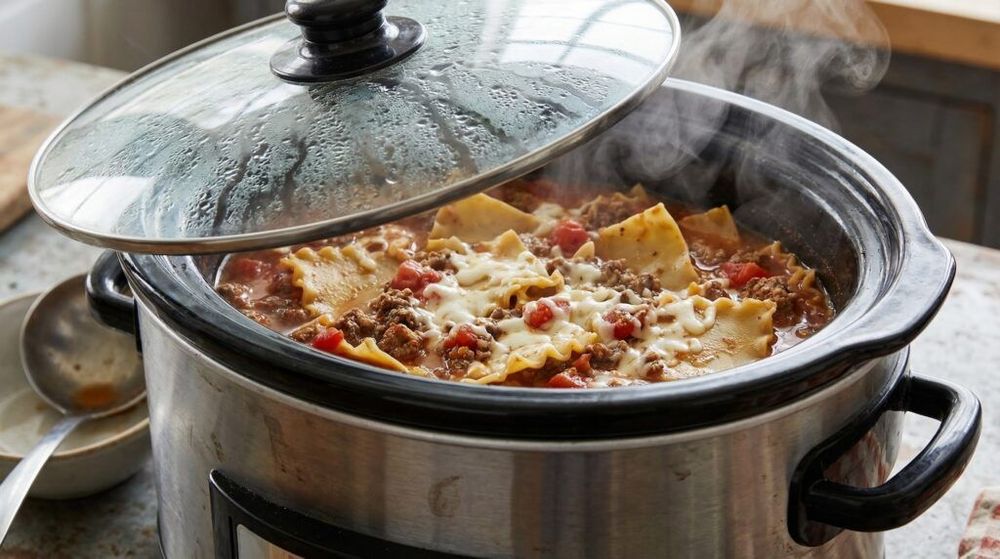

You use your slow cooker for soups, stews, braises—dishes that should be rich and flavorful.
You follow the recipe. Add everything. Set it on low for eight hours.
When you come back, the food is cooked. But it tastes diluted. Watery. The flavors are muted instead of concentrated.
The vegetables have released liquid. The meat tastes bland. The sauce is thin and weak.
Restaurant braises and stews are the opposite. Rich. Concentrated. Every spoonful packed with flavor.
You assumed slow cookers just produce inferior results compared to stovetop or oven cooking.
Sometimes that’s true. But usually, watered-down slow cooker meals are the result of using techniques meant for other cooking methods without adjusting for how slow cookers actually work.
Understanding what makes slow cookers different is what separates disappointing results from meals that are actually better than stovetop versions.
You’re Adding Too Much Liquid
This is the most common mistake and the most important to fix.
Slow cookers trap moisture. Almost nothing evaporates during cooking. Liquid doesn’t reduce the way it does on the stovetop or in the oven.
Whatever liquid you start with is what you’ll have at the end—plus whatever moisture vegetables and meat release during cooking.
Chefs who use slow cookers add far less liquid than stovetop or oven recipes call for. Sometimes half as much. Sometimes even less.
They know the slow cooker will retain and even create liquid, not reduce it.
Home cooks often follow stovetop recipes in the slow cooker, using the same liquid amounts. By the end of cooking, they have twice as much liquid as they started with.
Cut liquid amounts dramatically. If a recipe calls for 2 cups of broth, start with 1 cup or even 3/4 cup. You can always add more at the end if needed, but you can’t take it away.
The Vegetables Release Water
Onions, tomatoes, peppers, zucchini, mushrooms—all release significant moisture during slow cooking.
That liquid dilutes whatever’s in the pot. A recipe that should produce thick, rich sauce ends up producing thin soup.
Chefs account for this vegetable liquid. They reduce other liquid accordingly. Or they sauté vegetables first to drive off some moisture before adding them to the slow cooker.
Home cooks add raw vegetables and full liquid amounts. The vegetables release water. Everything becomes diluted.
Either reduce the liquid you add, or sauté high-moisture vegetables before slow cooking to reduce their water content.
Onions especially benefit from this. Sautéing them first concentrates their flavor and removes liquid that would otherwise water down the dish.
You’re Not Browning Meat First
Raw meat added to a slow cooker steams rather than browns. It never develops the deep, caramelized flavors that come from searing.
It also releases moisture as it cooks, adding to the dilution problem.
Browned meat has more flavor and releases less liquid during cooking.
Chefs almost always sear meat before slow cooking. This develops flavor through the Maillard reaction and renders some fat, both of which contribute to a richer final dish.
Home cooks often skip this step, putting raw meat straight into the slow cooker to save time.
That saved time costs flavor. The meat tastes boiled instead of braised. The sauce is weaker because it lacks the fond and browned flavors that searing provides.
Brown your meat. Yes, it’s an extra step. But it’s the difference between bland slow-cooker food and restaurant-quality braises.
The Lid Is Trapping Too Much Moisture
Slow cookers are designed to retain moisture. That’s their strength for certain dishes and their weakness for others.
For foods that should reduce and concentrate—like chili or bolognese—the trapped moisture works against you.
Chefs sometimes prop the slow cooker lid open slightly for the last hour or two of cooking. This allows some moisture to escape and the sauce to thicken.
Or they finish the dish on the stovetop with the lid off, reducing the sauce to the right consistency.
Home cooks always keep the lid tightly closed because that’s the standard instruction. Everything stays watery.
If your dish is too liquidy, remove the lid for the final 30 to 60 minutes. Or transfer everything to a pot and simmer uncovered to reduce.
Don’t accept watery sauce just because it came from a slow cooker.
You’re Using Frozen Ingredients
Frozen meat and vegetables release excess moisture as they thaw in the slow cooker.
This adds even more liquid to an already moisture-retaining environment. The result is extremely diluted flavor.
Chefs use thawed ingredients. They know frozen foods will dump water into the slow cooker.
Home cooks often use frozen chicken breasts or frozen vegetables for convenience. The convenience comes at the cost of flavor and texture.
Thaw ingredients before slow cooking. Or at least reduce added liquid significantly to account for the water that will be released.
You’re Not Reducing at the End
Even with all precautions, slow cooker meals often finish with more liquid than you want.
The solution isn’t to serve it as-is. It’s to reduce it.
Chefs transfer the finished dish to a pot or large skillet. They simmer uncovered for 10 to 15 minutes, reducing the sauce until it’s properly concentrated.
Or they remove solids and reduce just the liquid, then recombine.
This final reduction transforms watery slow cooker food into something rich and flavorful.
Home cooks usually serve slow cooker meals straight from the pot. If it’s watery, that’s what they eat.
Take the extra step. Reduce the sauce. The improvement is dramatic.
The Recipe Wasn’t Designed for Slow Cookers
Many slow cooker recipes are just stovetop or oven recipes adapted without real adjustment.
The liquid amounts, cooking times, and techniques are wrong for slow cooking. Following them produces disappointing results.
Good slow cooker recipes are written specifically for slow cookers, accounting for moisture retention and different heat distribution.
Chefs who use slow cookers either use specialized recipes or significantly adapt conventional ones—reducing liquid, pre-browning, adjusting aromatics.
Home cooks often just throw a regular recipe into the slow cooker and hope it works. Sometimes it does. Often it doesn’t.
Use recipes actually designed for slow cookers. Or learn to adapt conventional recipes properly—less liquid, more browning, expect to reduce at the end.
Aromatics Get Lost
Delicate aromatics like garlic and fresh herbs lose their potency during eight hours of slow cooking.
What starts as flavorful becomes bland and muted by the time you serve it.
Chefs add aromatics in stages. Heartier ones at the beginning. Delicate ones near the end.
Fresh herbs, garlic, and citrus zest often go in during the last 30 minutes of cooking. This preserves their brightness.
Home cooks add everything at the start. Eight hours later, the aromatics have cooked to death and contributed little.
Add delicate flavors late. Refresh with fresh herbs or a squeeze of lemon before serving.
This brings back the brightness that long cooking dulled.
You’re Not Seasoning Enough
Long, gentle cooking can mute seasoning. What tastes properly salted at the beginning often tastes bland at the end.
The flavors meld and equalize. Salt seems to disappear into the background.
Chefs taste and adjust seasoning before serving. They add salt, acid, or fresh aromatics to bring everything into focus.
Home cooks often season at the beginning and never adjust. The final dish tastes underseasoned even though salt was added.
Taste before serving. Add salt if needed. Add a splash of vinegar or squeeze of lemon if flavors are flat.
This final seasoning adjustment is what makes slow cooker meals taste intentional instead of just long-cooked.
Starches Absorb Too Much Liquid
Rice, pasta, or potatoes added at the beginning of slow cooking absorb enormous amounts of liquid.
They soak up the sauce, leaving you with mushy starches and no liquid.
Or you compensate by adding extra liquid, which makes everything else watery.
Chefs add starches late in slow cooking—the last 30 to 60 minutes. This gives them time to cook without absorbing all the liquid.
Or they cook starches separately and serve the slow-cooked components over them.
Home cooks often add rice or pasta at the beginning because the recipe says “dump everything in.” Eight hours later, the starches have turned to mush and absorbed the sauce.
Add starches late or cook them separately. Don’t let them steal your sauce.
The Slow Cooker Is Too Large
Cooking a small amount of food in a large slow cooker creates excess surface area for moisture to evaporate from—except it doesn’t evaporate in a slow cooker.
Instead, that moisture condenses on the lid and drips back into the food. You end up with more liquid than you started with.
Chefs match slow cooker size to portion size. A full slow cooker works better than a half-empty one.
Home cooks often use whatever slow cooker they have, even if it’s too large for the recipe. The extra space creates condensation problems.
Use a slow cooker that’s appropriately sized for what you’re making. If it’s less than half full, use a smaller one or increase the recipe.
What You Should Do This Weekend
Choose a slow cooker recipe. Cut the liquid amount by one-third to one-half.
Brown meat before adding it to the slow cooker. Sauté aromatics like onions and garlic briefly.
Add everything to the slow cooker with the reduced liquid. Cook as directed.
For the last hour, crack the lid slightly to allow some moisture to escape.
Before serving, taste and adjust seasoning. If sauce is still too thin, reduce it in a pot for 10 minutes.
That process produces slow cooker meals that are rich and concentrated, not watered down.
The Takeaway
Watered-down slow cooker meals aren’t inevitable.
They’re the result of adding too much liquid, not accounting for moisture vegetables release, skipping the browning step, and not reducing sauce at the end.
Every one of these problems is fixable.
Restaurants that use slow cookers produce rich, flavorful food because they reduce liquid amounts, brown meat first, and finish dishes properly.
Home cooks often treat slow cookers like magic pots where you dump everything in and expect perfection eight hours later.
But slow cookers require technique. Different technique than stovetop cooking, but technique nonetheless.
Use less liquid. Brown meat. Add aromatics late. Reduce sauce at the end. Season before serving.
Do that and your slow cooker meals finally taste concentrated and flavorful instead of diluted and bland.
Not just convenient. Actually good.
The way slow cooker food should be.