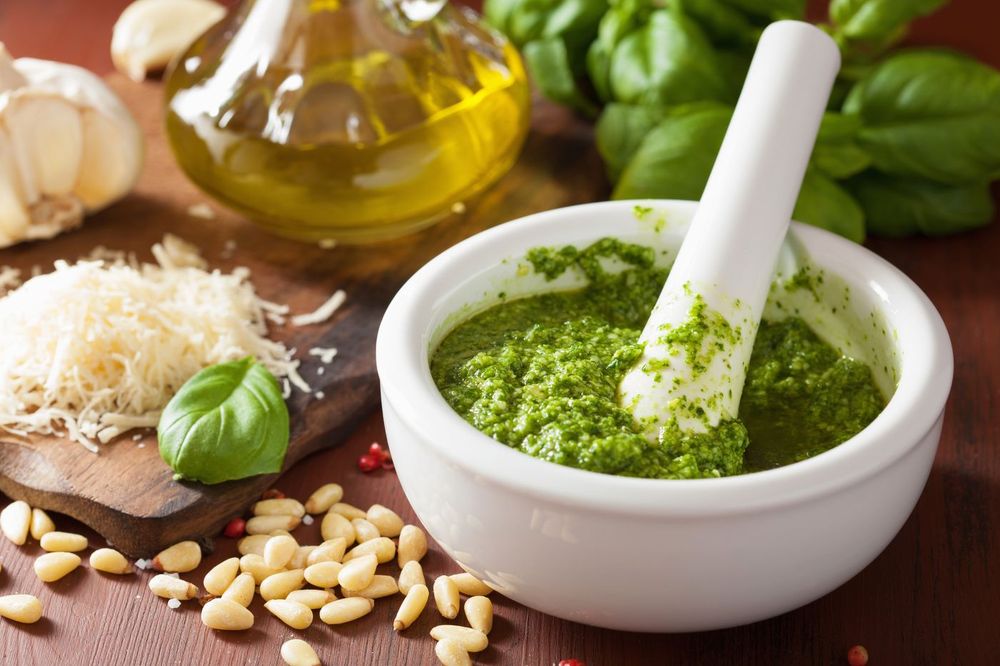

You make fresh pesto.
Basil, garlic, pine nuts, Parmesan, olive oil. All the right ingredients.
It looks vibrant green when you finish blending it. Perfect.
An hour later, it’s brown. Oxidized. Unappealing. The flavor is still fine, but the color makes it look old and unappetizing.
Restaurant pesto stays bright green for hours. Even when stored, it maintains that fresh, vivid color.
You assumed restaurants use preservatives or special ingredients you don’t have access to.
Usually, it’s neither. Brown pesto is the result of oxidation—a chemical reaction that happens when certain compounds in basil are exposed to air.
Understanding what causes browning and using techniques that slow or prevent it is what separates pesto that stays green from pesto that turns brown almost immediately.
You’re Using Metal Blades
Metal blades—in food processors or blenders—heat up from friction and react with the basil.
This accelerated oxidation starts the browning process during blending, before the pesto even hits the bowl.
Chefs who make pesto by hand use a mortar and pestle. The gentle crushing doesn’t generate heat and doesn’t accelerate oxidation the way metal blades do.
For those who can’t or won’t use a mortar and pestle, short pulses with minimal blending time help reduce heat buildup.
Home cooks often blend pesto continuously until completely smooth. The prolonged contact with hot metal blades starts the browning immediately.
If using a food processor, pulse in short bursts. Keep blending time minimal. Stop as soon as ingredients are incorporated.
The less time basil spends in contact with hot metal blades, the slower it will brown.
The Basil Isn’t Dry
Wet basil oxidizes faster than dry basil.
Surface moisture accelerates the chemical reactions that cause browning.
Chefs dry basil thoroughly after washing—using salad spinners or patting with towels until leaves are completely dry.
They want basil as dry as possible before making pesto.
Home cooks often rinse basil and use it immediately while still damp. The moisture speeds up oxidation.
Dry your basil completely. Use a salad spinner. Pat with towels. Make sure there’s no visible water on the leaves.
This slows the browning process significantly.
You’re Blending Too Much Air In
Oxygen is what causes basil to oxidize and turn brown. The more air incorporated during blending, the faster the browning.
Over-blending whips air into the pesto. Those air bubbles bring oxygen into direct contact with the basil.
Chefs blend pesto just until combined. They don’t over-process. The texture is slightly coarse, not completely smooth and aerated.
Home cooks often blend until the pesto is perfectly smooth and uniform. That extra blending incorporates air that accelerates browning.
Blend less. Stop when ingredients are just combined. A slightly rustic texture is traditional anyway—and it means less oxidation.
There’s Not Enough Acid
Acid slows oxidation by lowering pH and interfering with the enzymes that cause browning.
Lemon juice is the traditional acid in pesto. It brightens flavor and helps preserve color.
Chefs use more lemon juice than most home recipes suggest. The extra acid helps maintain green color.
Home cooks often use minimal lemon juice or skip it entirely, focusing on basil and cheese flavors.
Without adequate acid, the pesto browns faster.
Use the juice of half a lemon per large batch of pesto. Taste and adjust, but know that the acid is doing more than flavoring—it’s preventing browning.
The Oil Layer Isn’t Sealing the Surface
When pesto is exposed to air, it oxidizes. A layer of oil on top creates a barrier that prevents oxygen from reaching the basil.
This dramatically slows browning.
Chefs store pesto with a thin layer of olive oil floating on top. They smooth the surface, then pour just enough oil to completely cover it.
Home cooks often store pesto without this protective layer. Air reaches the entire surface. Browning happens quickly.
After making pesto, transfer to a container. Smooth the top. Pour a thin layer of olive oil over the surface to seal it from air.
This technique keeps pesto green for days instead of hours.
You’re Using a Food Processor Bowl That’s Too Large
A half-full food processor bowl means lots of air space above the pesto while blending.
That extra air circulates through the mixture during processing, accelerating oxidation.
Chefs use appropriately sized equipment for the quantity they’re making. Less air space means less oxidation.
Home cooks often use a full-sized food processor for a small batch of pesto. The extra air space works against them.
Use the smallest container that fits your batch. Or make larger batches so there’s less air space relative to the amount of pesto.
The Basil Is Bruised or Damaged
Bruised basil leaves have already started oxidizing before you even make pesto.
Those damaged leaves brown very quickly once processed.
Chefs use fresh, unblemished basil leaves. They handle them gently to avoid bruising.
Home cooks sometimes use basil that’s been in the refrigerator for days, with some leaves bruised or damaged.
Starting with compromised basil means the pesto is already on its way to browning.
Use the freshest basil possible. Handle it gently. Inspect leaves and discard any that are bruised or darkened.
You’re Not Blanching the Basil
This is a professional technique that home cooks rarely use.
Blanching basil for 5 to 10 seconds in boiling water, then shocking it in ice water, denatures the enzymes that cause browning.
The basil stays bright green much longer. The flavor changes slightly—less raw, more mellow—but for applications where color matters, it’s worth it.
Chefs use this technique for pesto that needs to stay green for service or storage.
Home cooks almost never blanch basil for pesto because most recipes don’t mention it.
Try blanching half your basil leaves. Shock them in ice water immediately. Dry thoroughly. Then make pesto.
The color will stay green dramatically longer.
The Pesto Is Stored in a Wide, Shallow Container
More surface area exposed to air means faster oxidation.
Even with an oil layer on top, a wide container has more pesto in contact with potential oxygen exposure.
Chefs store pesto in tall, narrow containers. Less surface area means slower browning.
Home cooks often use whatever container is convenient—sometimes wide bowls that maximize surface exposure.
Transfer pesto to the narrowest container that fits it. Less surface area, less browning.
You’re Not Adding Enough Oil
Oil coats the basil and creates a barrier against oxygen. It also dilutes the concentration of oxidizing compounds.
Pesto with insufficient oil browns faster because there’s less protective coating on each piece of basil.
Traditional pesto is quite oily—much more oil than American versions often use.
Chefs follow traditional ratios: roughly equal parts basil to oil by volume. The high oil content helps preserve color.
Home cooks often use less oil, making a thicker pesto. It browns faster because there’s insufficient oil to protect the basil.
Use more oil. The pesto should be quite fluid when first made. It’ll thicken slightly as it sits.
The Container Isn’t Filled Completely
Air trapped at the top of a partially filled container means oxygen in contact with the pesto surface.
This accelerates browning even with an oil layer on top.
Chefs fill containers to the brim, leaving minimal air space. Then they add the oil layer.
This eliminates most oxygen exposure.
Home cooks often put pesto in a container with several inches of air space above it. That trapped air contains oxygen that oxidizes the pesto.
Fill containers as full as possible. Minimize air space. Then add your oil layer.
You’re Stirring It Before Serving
Each time you stir pesto, you incorporate air and break the protective oil layer.
This brings oxygen back into contact with the basil, accelerating browning.
Chefs remove what they need from the top, leaving the rest undisturbed with its oil layer intact.
They don’t stir the entire batch every time they use some.
Home cooks often stir pesto thoroughly before scooping out a portion. This breaks the seal and exposes everything to air.
Remove what you need from the top. Leave the rest undisturbed. Re-seal with a fresh oil layer if needed.
What You Should Do This Weekend
Wash basil and dry it completely—use a salad spinner and towels.
Combine basil, pine nuts, garlic, and Parmesan in a food processor. Pulse in short bursts—don’t over-blend.
Add olive oil and the juice of half a lemon. Pulse just until combined—the texture should be slightly coarse.
Transfer to a narrow container. Smooth the top. Pour a thin layer of olive oil over the surface to seal it.
Store in the refrigerator. Don’t stir unless you’re using all of it.
That process produces pesto that stays green for days instead of turning brown in an hour.
The Takeaway
Brown pesto isn’t inevitable or the result of missing ingredients.
It’s the result of oxidation—accelerated by wet basil, over-blending, contact with hot metal, and exposure to air.
Every one of these factors is controllable.
Restaurants serve bright green pesto because they dry basil thoroughly, blend minimally, use adequate acid and oil, and store with a protective oil layer.
Home cooks often use damp basil, blend until smooth, skip the protective oil layer, and stir the entire batch before each use.
But now you know what prevents browning.
Dry basil. Minimal blending. Adequate lemon juice and oil. Oil layer on top. Narrow storage container. Don’t stir unnecessarily.
Do that and your pesto stays bright green instead of turning brown almost immediately.
Not oxidized. Not brown. Vibrant green.
The way fresh pesto should be.