
You make Alfredo sauce.
Butter, cream, Parmesan. The classic combination.
You melt butter. Add cream. Stir in cheese. It looks smooth for a moment.
Then it breaks. The cheese clumps. The sauce separates into greasy puddles and grainy bits. Instead of velvety smooth sauce, you have a broken mess that won’t coat pasta properly.
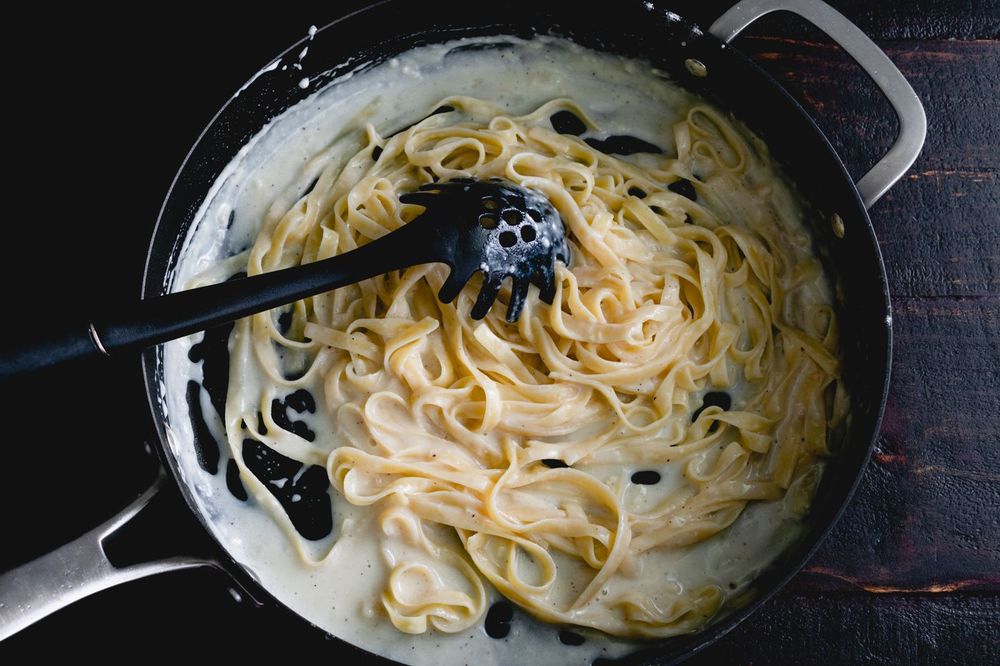
Restaurant Alfredo is silky. The sauce clings to fettuccine in a glossy, unified coating. No graininess. No separation.
You assumed you needed special cheese or professional equipment.
Usually, it’s neither. Broken Alfredo is almost always the result of heat management and cheese choice—two factors that are completely within your control once you understand what causes the sauce to break.
The Heat Is Too High
This is the most common mistake and the most important to fix.
High heat causes the proteins in Parmesan to seize up and separate from the fat. The cheese clumps into grainy bits instead of melting smoothly into the cream.
Once cheese proteins seize from excessive heat, you can’t undo it. The sauce is broken permanently.
Chefs make Alfredo over very low heat—barely a simmer. Sometimes they even pull the pan off the heat entirely when adding cheese.
The gentle heat allows cheese to melt slowly and emulsify with the cream without the proteins tightening.
Home cooks often keep the heat at medium or medium-high, trying to finish quickly. The moment cheese hits that hot cream, it clumps.
Lower your heat. Significantly. The sauce should never boil once cheese is added. It should barely simmer—just gentle movement, no bubbles.
This one adjustment prevents most broken Alfredo situations.
You’re Using Pre-Grated Cheese
Pre-grated Parmesan is coated with cellulose or potato starch to prevent clumping in the bag.
Those anti-caking agents interfere with smooth melting. They create a grainy texture and prevent proper emulsification.
Pre-grated cheese also dries out in the package, making it less likely to melt smoothly.
Chefs always use freshly grated Parmesan from a block. The cheese is moist, it has no additives, and it melts smoothly into sauce.
Home cooks often use the convenience of pre-grated cheese. The sauce breaks or turns grainy no matter how carefully they cook it.
Buy a block of Parmesan. Grate it yourself right before making sauce. The difference is dramatic.
Fresh-grated cheese melts smoothly. Pre-grated cheese fights you the entire time.
The Cheese Is Added All at Once
Dumping all the cheese in at once overwhelms the sauce’s ability to incorporate it smoothly.
The cheese clumps before it can melt. Even with low heat, too much cheese at once creates texture problems.
Chefs add cheese gradually—a handful at a time. They stir until each addition is fully incorporated before adding more.
This gives the sauce time to absorb and emulsify each addition. The final result is smooth because the cheese was integrated gradually.
Home cooks often dump all the cheese in and hope aggressive stirring will make it smooth. It doesn’t. The cheese clumps and the sauce breaks.
Add cheese slowly. Handful by handful. Stir gently until smooth before adding more. Patience here is what creates silky sauce.
The Cream Is Boiling
Cream can curdle when boiled, especially when combined with acidic cheese.
Boiling also creates too much heat for smooth cheese incorporation. The proteins seize and separate.
Chefs heat cream to just below a simmer. They see gentle steam rising but no actual bubbling.
This temperature is hot enough to melt cheese but not so hot that proteins seize or cream curdles.
Home cooks often let cream come to a full boil before adding cheese. The temperature is too high. The sauce is already compromised before cheese even enters.
Heat cream gently. It should steam and move slightly but not bubble. This is the ideal temperature for adding cheese.
You’re Using the Wrong Parmesan
Not all Parmesan melts equally well.
Aged Parmesan—Parmigiano-Reggiano aged 24 months or more—has less moisture and more crystallized proteins. It’s delicious for eating but doesn’t melt as smoothly.
Younger Parmesan (12 to 18 months) has more moisture and melts more readily into sauce.
Chefs often use younger Parmigiano-Reggiano or even a blend of Parmesan and Romano for Alfredo. The goal is flavor plus smooth melting.
Home cooks sometimes use very aged, expensive Parmesan thinking it’s best for everything. For eating, yes. For melting into sauce, not ideal.
Use Parmesan that’s not overly aged. Or blend in some Pecorino Romano, which melts well and adds flavor.
The cheese choice affects how smoothly your sauce comes together.
The Butter and Cream Ratio Is Off
Alfredo needs adequate fat to create an emulsion that holds cheese in suspension.
Too little butter or cream means insufficient fat to support the cheese. The sauce breaks because there’s not enough liquid fat to bind everything.
Classic Alfredo ratios are roughly 1/2 cup butter to 1 cup cream to 1 to 1.5 cups cheese.
Chefs follow these proportions because they’re what creates stable emulsion.
Home cooks sometimes reduce butter or cream to make the sauce “lighter.” The reduced fat can’t hold the cheese. The sauce breaks.
Use adequate fat. If you’re concerned about richness, serve smaller portions. But don’t reduce the fat ratio—it’s structural, not optional.
You’re Stirring Too Aggressively
Aggressive stirring breaks up the emulsion you’re trying to create.
It also incorporates too much air, which can cause separation.
Chefs stir Alfredo gently and continuously. Slow, constant motion that keeps everything moving without creating turbulence.
This gentle stirring helps cheese melt evenly and maintains the emulsion.
Home cooks often stir vigorously, thinking they’re helping the cheese melt. They’re actually breaking the sauce.
Stir gently. Use a wooden spoon or silicone spatula. Keep it moving but don’t whip or beat it.
Gentle, continuous stirring creates smooth sauce. Aggressive stirring breaks it.
The Sauce Sits Off Heat Too Long
Alfredo begins to separate as it cools. The fats solidify slightly and the cheese starts to firm up.
Reheating broken Alfredo rarely fixes it completely. You can improve it, but it’s never as smooth as sauce that was kept warm.
Chefs make Alfredo right before serving. They keep it warm over very low heat, stirring occasionally.
They don’t make it ahead and let it sit. Fresh Alfredo is best.
Home cooks sometimes make Alfredo, then let it sit while they finish other dishes. By the time they serve it, it’s begun to separate.
Make Alfredo last. Have pasta ready. Toss and serve immediately. Don’t let it sit.
Time is another variable that works against smooth sauce.
You’re Adding Other Ingredients That Break Emulsion
Acidic ingredients like lemon juice or wine can break cream-based sauces by curdling the cream.
Even small amounts of acid can cause texture problems in Alfredo.
Traditional Alfredo is just butter, cream, and cheese. Nothing acidic.
Chefs stick to the classic preparation. If they want brightness, they add it through garnish—lemon zest, fresh herbs—not by putting acid in the sauce itself.
Home cooks sometimes add wine, lemon juice, or other acidic elements thinking they’re improving the sauce. They’re destabilizing it.
Skip the acid. If you want complexity, add nutmeg or black pepper. But keep acidic ingredients out of the sauce itself.
The Sauce Is Overheated After Combining
Once you’ve successfully made smooth Alfredo, overheating it afterward breaks it.
Bringing sauce back to a boil or keeping it over high heat causes the proteins to seize and the sauce to separate.
Chefs keep finished Alfredo warm over the lowest possible heat. Just enough to maintain temperature without continuing to cook it.
Home cooks sometimes turn the heat back up after adding cheese, worried the sauce isn’t hot enough. It breaks from the temperature spike.
Once cheese is incorporated, keep heat very low. Just warm, not hot. The sauce should maintain temperature without bubbling.
The Pasta Water Addition Helps
Adding a splash of starchy pasta water can help emulsify Alfredo and prevent breaking.
The starch acts as a stabilizer, helping keep fats and proteins in suspension.
Chefs often add a few tablespoons of pasta water to Alfredo before tossing with pasta. This creates a more stable sauce that clings better.
Home cooks usually drain pasta completely and discard the water. They miss this opportunity to improve sauce stability.
Reserve pasta water. Add a few tablespoons to your finished Alfredo. It helps the sauce stay together and coat pasta better.
What You Should Do This Weekend
Grate fresh Parmesan from a block. Have butter and heavy cream ready.
Melt butter over low heat. Add cream and heat gently until steaming but not boiling.
Remove from heat or reduce to lowest setting. Add cheese gradually, a handful at a time, stirring gently until each addition melts.
Add a splash of pasta water. Stir gently. Taste and adjust seasoning.
Toss immediately with hot pasta. Serve right away.
That’s the technique. Low heat, fresh cheese, gradual addition, gentle stirring.
Do that and your Alfredo stays smooth instead of breaking into grainy clumps.
The Takeaway
Broken Alfredo isn’t about bad luck or missing ingredients.
It’s about heat management and cheese choice. Too much heat seizes the proteins. Pre-grated cheese has additives that prevent smooth melting. Adding cheese all at once overwhelms the sauce’s ability to incorporate it.
Every one of these problems is preventable.
Restaurants serve smooth Alfredo because they use very low heat, fresh-grated cheese, and gradual incorporation.
Home cooks often use medium heat, pre-grated cheese, and dump everything in at once. The sauce breaks before it has a chance to come together.
But now you know what creates smoothness versus graininess.
Low heat. Fresh cheese. Gradual addition. Gentle stirring. Serve immediately.
Do that and your Alfredo finally has the silky texture it’s supposed to have.
Not grainy. Not broken. Smooth.
The way Alfredo should be.