
Somewhere in an old family recipe box, there's probably a bean recipe with a strange instruction tucked into the ingredient list: a pinch of baking soda, added for reasons the recipe never quite explains.
It looks like a typo or a superstition. It's actually chemistry, and it's solving a problem most people don't realize beans even have.
The Real Reason Beans Take So Long to Cook
Dried beans are tough because of pectin, a structural compound in their cell walls that holds them firm and rigid. Softening beans means breaking down that pectin, which normally requires a long soak and an even longer simmer.
Hard water makes this worse. Calcium and magnesium in mineral-rich water actually reinforce pectin structure, which is part of why beans cooked in some areas seem to take noticeably longer than the same recipe cooked elsewhere.
Time alone can break pectin down eventually. It's just slow, and it's not the only option.
What Baking Soda Actually Does in the Pot
Baking soda is alkaline, and raising the pH of the cooking water speeds up pectin breakdown considerably compared to plain water alone.
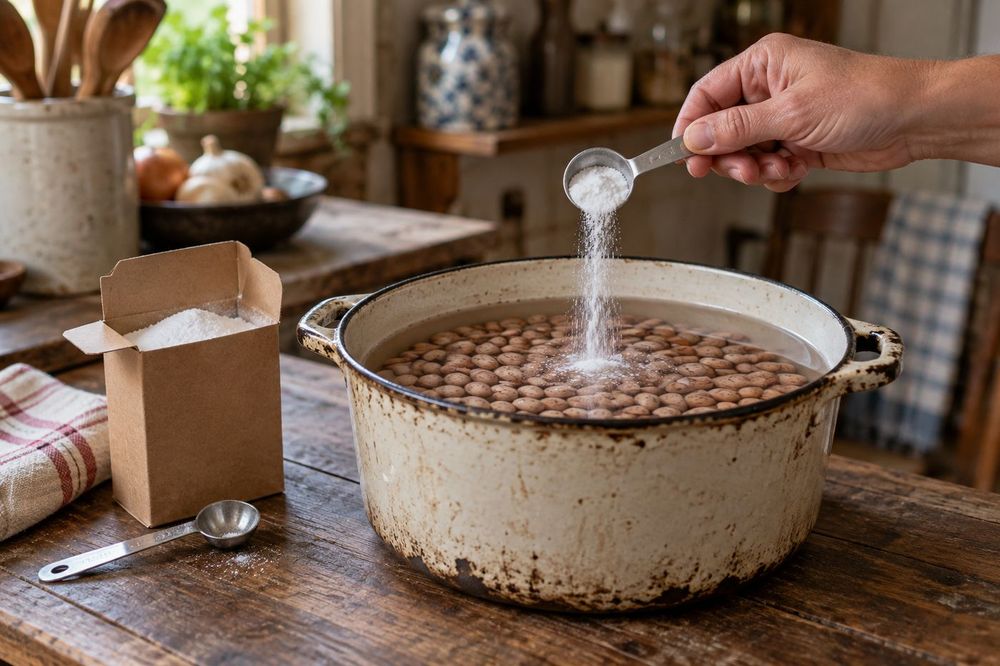
A small amount added to the soaking water or the cooking pot can cut cooking time significantly, sometimes by 25 percent or more, while also producing a creamier, softer texture than beans cooked without it.
This is the same basic chemistry, on a smaller scale, that makes baking soda useful for tenderizing meat and even for making pretzels chewy on the outside — altering pH changes how proteins and structural compounds behave.
Why Too Much Baking Soda Ruins the Pot Instead of Helping It
A little baking soda speeds things up. A lot of it introduces a new problem entirely.
Too much alkalinity gives beans a slightly soapy, metallic taste and can break them down into a mushy, unpleasant texture rather than a creamy one. It can also degrade certain B vitamins, particularly thiamine, more than a well-balanced amount would.
A pinch — typically no more than a quarter teaspoon per pound of dried beans — is the difference between a helpful shortcut and a ruined pot.
Why Some Cooks Swear By It and Others Avoid It Entirely
Regional cooking traditions vary widely on this one, and both sides have a legitimate point.
In places with harder water, baking soda solves a real, noticeable problem, cutting cooking time and improving texture in a way that's hard to ignore. In places with naturally soft water, beans may already cook reasonably fast without it, making the addition feel unnecessary or even slightly detrimental to flavor.
Whether baking soda helps often depends less on the recipe and more on what's coming out of the tap.
How to Actually Use It Correctly
Getting the benefit without the downside comes down to using a small, controlled amount at the right stage.
Add roughly ¼ teaspoon of baking soda per pound of dried beans to the soaking water
Rinse beans after soaking to remove excess alkalinity before cooking
Add a smaller amount, if any, directly to the cooking water if skipping the soak
Taste as beans cook, since water hardness varies and adjustments may be needed
This isn't a fix that needs to be used every time — it's a tool for specific situations, particularly hard water or beans that are taking unusually long.
The Takeaway
That strange instruction in an old recipe wasn't a mistake or a shortcut passed down without reason. It was a small, precise chemistry lesson, encoded into a family recipe long before anyone called it chemistry.
Beans don't need to take all afternoon by default. Sometimes they just need a slightly different environment to soften in.
The pinch of baking soda was never superstition. It was somebody's grandmother understanding pH long before the term meant anything to her.