
A recipe calling for buttermilk alongside baking soda looks like a minor ingredient preference. Swap in regular milk, and the result can come out noticeably flatter, denser, and less tender — sometimes for reasons that have nothing to do with flavor at all.
That specific pairing isn't a stylistic choice. It's a chemical reaction, quietly doing structural work most bakers never think about.
Baking Soda Needs an Acid to Actually Work
Baking soda is a base, and on its own, it doesn't produce much leavening power. It needs an acidic ingredient to react with, triggering the release of carbon dioxide gas that creates lift in a batter.
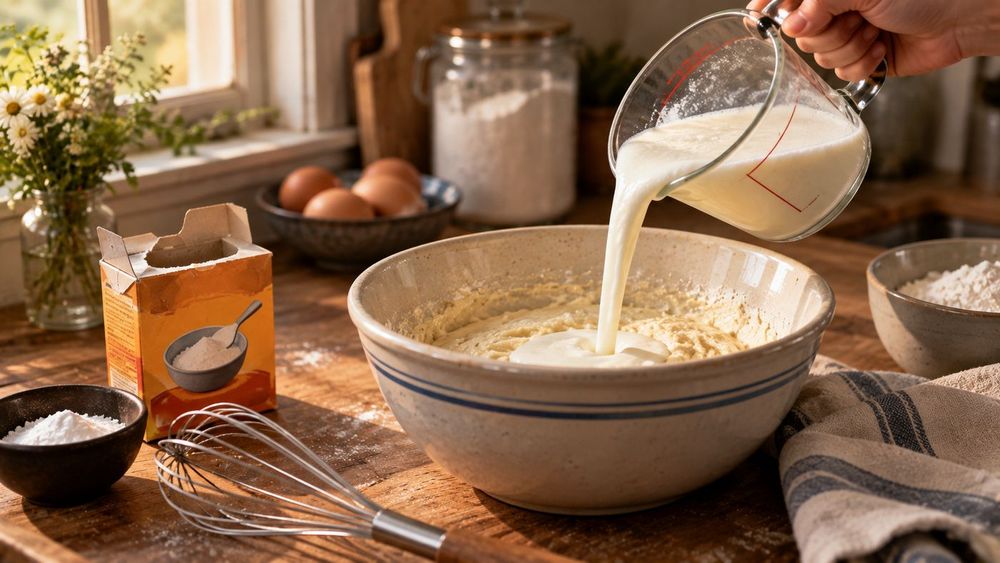
Buttermilk is notably acidic, thanks to the fermentation process that creates it. Combined with baking soda, that acidity sets off an immediate chemical reaction, producing bubbles that get trapped in the batter and expand during baking — the same basic mechanism, just built from ingredients instead of a single packaged product.
Regular milk is close to neutral, which means it can't trigger that same reaction nearly as effectively, if at all.
Why This Matters More Than It Seems
Without enough acid to react with, baking soda mostly just sits inert in the batter, contributing little to no rise.
Worse, unreacted baking soda can leave behind a faintly metallic, soapy aftertaste — the same effect discussed with over-alkalinized beans, just showing up in a cake or biscuit instead of a pot of legumes. A recipe built around buttermilk and baking soda, made instead with regular milk, risks both a denser texture and an off flavor at the same time.
Why Buttermilk Also Changes Texture, Not Just Rise
Beyond leavening, buttermilk's acidity does something else recipes rely on: it gently breaks down some of the gluten structure in flour, similar to how acid tenderizes meat.
That slight tenderizing effect is part of why buttermilk biscuits and cakes often turn out more tender and delicate than versions made with regular milk, independent of the leavening question entirely. The acidity is doing double duty — helping the batter rise and helping it stay soft once it does.
What Actually Happens If You Substitute Regular Milk
Swapping in plain milk doesn't ruin a recipe outright, but it changes two things at once: less lift, and a slightly tougher, less tender crumb.
Baking powder, by contrast, contains its own built-in acid, which is why recipes using baking powder are generally more forgiving about the liquid used alongside it. Baking soda recipes are pickier specifically because they're depending on an external acid source to do half the job.
How to Substitute Buttermilk If You Don't Have It
A shortage of buttermilk doesn't have to derail a recipe, as long as the substitute brings its own acidity along with it.
Add 1 tablespoon of lemon juice or white vinegar to 1 cup of regular milk, then let it sit 5–10 minutes
Use plain yogurt thinned slightly with water or milk, which carries similar acidity
Use sour cream thinned the same way, in a pinch
Avoid substituting plain milk with no added acid if the recipe specifically calls for baking soda
Any of these restores the acidity baking soda needs, even without real buttermilk in the fridge.
The Takeaway
Buttermilk and baking soda aren't paired together out of tradition or taste alone. They're paired because one genuinely needs the other to do its job, in a reaction most people are triggering without realizing it every time they bake.
Once that relationship is understood, an ingredient swap that seemed harmless suddenly explains a lot about why a cake sometimes comes out flatter than expected — and why a small bottle of vinegar can quietly save a recipe with no buttermilk in sight.