
Two jars of pickled cucumbers, made the same week, can end up completely different a month later — one still snapping cleanly when you bite it, the other soft, faded, and slightly hollow-feeling in a way that's hard to unsee once you notice it.
The recipe might have been nearly identical. The outcome usually comes down to a handful of small variables most people never think to control.
What Actually Keeps a Pickle Crisp
Crunch in a cucumber comes from intact cell walls, held rigid by water pressure inside each cell — the same structure that makes a fresh vegetable feel firm in the first place.
Pickling, whether through vinegar brine or fermentation, inevitably softens cell walls to some degree. The goal isn't preventing that entirely — it's slowing it down enough that some rigidity survives the process, rather than collapsing into the soft, waterlogged texture people associate with a bad pickle.
Why Fresh Cucumbers Matter More Than People Expect
A cucumber that's already lost moisture before it even hits the brine has a real head start toward mush.
Cucumbers sitting in a grocery store or fridge for days lose internal water pressure gradually, softening their structure before pickling even begins. Cucumbers pickled within a day or two of harvest, still firm and cold, hold their crunch dramatically better than ones that have been sitting around for a week.
This is part of why pickles made from garden-fresh cucumbers, or ones bought at a farmers market the same day, tend to outperform grocery store versions using the exact same recipe.
The Small Ingredient That Makes a Big Difference
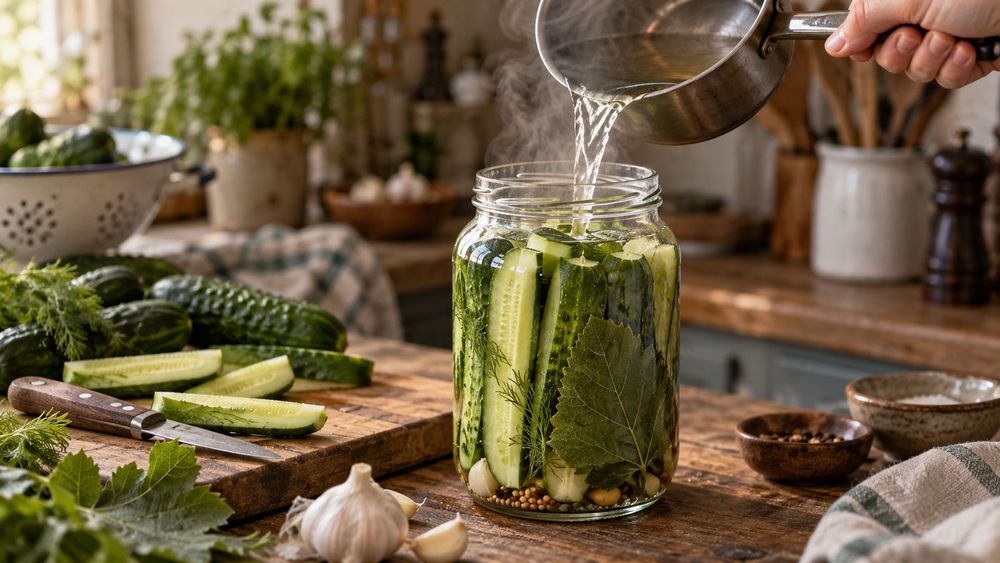
A surprising number of traditional pickle recipes call for a grape leaf, a horseradish leaf, or a small handful of tannin-rich leaves tucked into the jar — a detail that looks decorative but isn't.
Tannins help stabilize pectin, the same structural compound in fruit and vegetable cell walls discussed with beans and unripe fruit, slowing the enzymatic breakdown that leads to softness over time. Without tannins, that pectin breaks down faster, especially in warmer storage conditions.
Modern recipes sometimes swap this for a pinch of alum or calcium chloride, chasing the same basic effect through a different ingredient.
Why Cutting the Blossom End Actually Matters
An old piece of pickling advice — trim off the blossom end of the cucumber — sounds like folklore. It's actually addressing a real, specific problem.
The blossom end naturally carries higher concentrations of an enzyme that breaks down pectin, softening texture from that end inward if left untrimmed. Cutting it away before brining removes a meaningful source of that softening enzyme before it ever gets the chance to work.
It's a small, thirty-second step that traditional recipes insisted on for a reason most people were never told.
Why Heat Is the Enemy of Crunch
Any pickling method that involves heating the cucumbers directly — rather than pouring a hot brine over them briefly and letting them cool — tends to produce a noticeably softer result.
Heat accelerates cell wall breakdown almost immediately, which is why quick pickles designed for maximum crunch usually call for a hot brine poured over cold, raw cucumbers rather than simmering the vegetables themselves. The brine gets to be hot. The cucumber, ideally, barely notices.
How to Actually Get a Crunchy Pickle
A few habits, combined, make the biggest difference in the final texture.
Use the freshest cucumbers available, ideally pickled within a day or two of harvest
Trim the blossom end before brining
Add a tannin source like a grape or horseradish leaf, or a small amount of calcium chloride
Pour hot brine over cold cucumbers rather than heating them directly
None of these guarantee perfection on their own, but combined, they address most of what actually causes softness.
The Takeaway
A soft, mushy pickle isn't a failed recipe so much as a predictable outcome of a few overlooked variables — cucumber freshness, a missing tannin source, an untrimmed blossom end, or too much direct heat.
Once those pieces are in place, crunch stops being a matter of luck and starts being a matter of a few small, deliberate choices made before the lid ever goes on the jar.