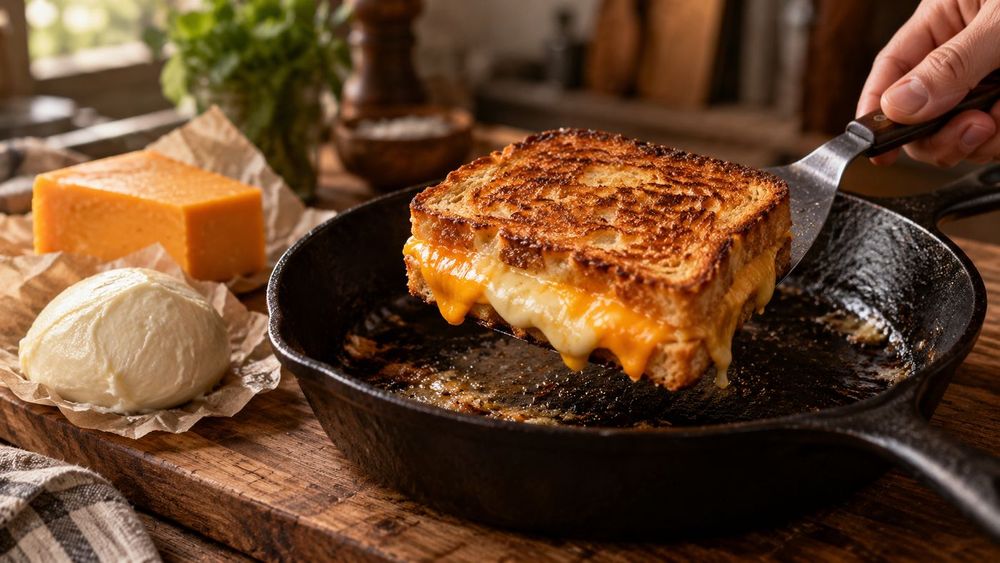

Drop a slice of American cheese onto a hot burger and it turns into a smooth, glossy puddle in seconds. Try the same thing with a chunk of fresh mozzarella straight from the fridge, and it seizes up, gets stringy, or separates into an oily mess before it ever gets creamy.
Both are cheese. Both hit the same heat. What happens next depends almost entirely on structure, not effort.
What Cheese Actually Is, Structurally
Cheese is essentially a protein network — casein — with fat, water, and sometimes air trapped inside it. Melting isn't cheese turning to liquid so much as that protein network loosening its grip and letting the trapped fat move more freely.
How tightly that protein network is bound together, and how much moisture and fat it's holding, determines almost everything about how a cheese behaves under heat.
Why Aging Changes Everything
Fresh cheeses like mozzarella and paneer have a tightly bound protein structure and high moisture content, which is part of why they melt into stretchy, stringy textures rather than smooth pools.
Aged cheeses, like sharp cheddar or Parmesan, have had time for enzymes to break down some of that protein structure and for moisture to evaporate out. Aged cheese tends to melt differently — often separating into oil and solids rather than flowing smoothly, because there's less water left to help emulsify the fat as it loosens.
This is why a recipe calling for a "good melting cheese" is really asking for a specific structural profile, not just a favorite flavor.
The Science Behind the "Perfect Melters"
Cheeses famous for melting well — mozzarella, Gruyère, young cheddar, fontina — tend to share a specific combination: moderate moisture, moderate fat, and a protein structure loose enough to soften evenly without fully breaking apart.
Processed cheeses like American singles take this further on purpose. Emulsifying salts are added during production specifically to help fat and protein stay blended together under heat, which is part of why they melt so reliably smooth compared to nearly anything else in the cheese drawer.
That reliability isn't an accident of flavor. It's engineered structure, built specifically for melting.
Why Some Cheese "Breaks" Instead of Melting Smoothly
When a cheese sauce turns grainy or oily instead of silky, that's usually the protein network overheating and squeezing out the fat and moisture it was holding, rather than gently loosening its grip.
Higher heat and longer cooking time make this more likely, which is part of why cheese sauces are traditionally built low and slow, often with a starch like flour or cornstarch added specifically to help hold the fat and water together under heat.
Rushing heat is the most common reason a homemade queso or mac and cheese turns oily instead of creamy.
How to Actually Get the Melt You Want
Matching the cheese to the goal matters more than technique alone.
For stretchy, stringy melts, reach for fresh, high-moisture cheeses like mozzarella
For smooth, glossy sauces, choose young, moderate-moisture cheeses like Gruyère or young cheddar
Grate cheese finely rather than using large chunks, so it melts evenly and quickly
Keep heat low and add cheese gradually when building a sauce, rather than dumping it all in at once
None of these require special equipment — just matching the cheese's structure to what the dish actually needs from it.
The Takeaway
Cheese doesn't melt inconsistently by accident. It melts according to a fairly predictable set of rules based on age, moisture, and protein structure — rules that explain why a grilled cheese sandwich and a cheese platter almost never use the same cheese for a reason.
Once you understand what's actually happening inside that protein network, picking the right cheese for the job stops being a guess.