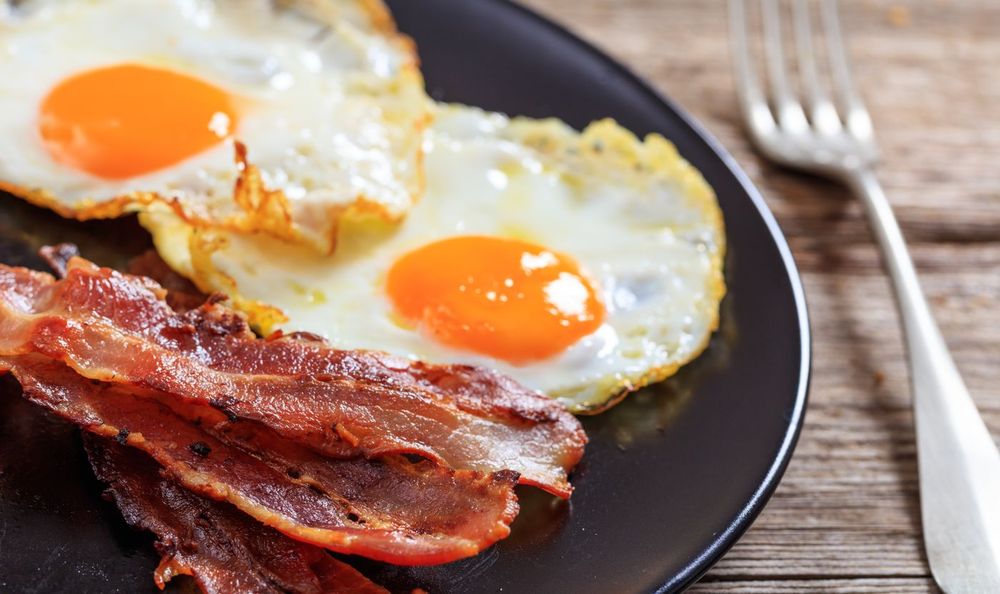

Restaurant bacon comes out perfect every time.
Crispy. Evenly cooked. Not burnt. Not flabby. Just right.
Your bacon is either chewy in the middle or burnt on the edges. Sometimes both on the same strip.
You assume it’s the bacon quality. Or that restaurants have better equipment.
Sometimes that’s part of it. But more often, it’s the method you’re using that guarantees inconsistent results.
Most people cook bacon the way they’ve always cooked it—without questioning whether there’s a better approach.
There is. And once you understand why the restaurant method works, you’ll never go back.
You’re Using Too Much Heat
High heat seems logical for bacon. You want it crispy, so you crank the burner.
But bacon renders fat as it cooks. On high heat, the edges burn before the fat in the middle has time to render out.
The result is bacon that’s simultaneously burnt and chewy—exactly what you don’t want.
Chefs cook bacon on medium to medium-low heat. Sometimes even lower.
This gives the fat time to render slowly and evenly. The bacon crisps gradually from edge to center, rather than burning on the outside while staying raw inside.
It takes longer. But the texture is incomparably better—evenly crispy throughout with no burnt spots.
The Bacon Is Crowded in the Pan
You’re cooking bacon for four people, so you fill the pan with overlapping strips.
The bacon steams in its own fat instead of crisping. The overlapping parts stay soft and undercooked.
Chefs lay bacon in a single layer with space between strips. If they’re cooking a lot, they do it in batches.
This allows heat to reach every surface. The bacon crisps evenly instead of steaming.
Crowding might save time initially, but it produces inferior bacon that often needs more cooking anyway—negating any time saved.
They’re Using the Oven, Not the Stovetop
This is the biggest difference between home and restaurant bacon.
Most people cook bacon in a pan on the stove. It requires constant attention. You have to flip each strip. The heat is uneven. Grease splatters everywhere.
Restaurants bake bacon in the oven.
They lay strips on a sheet pan and bake at 375°F to 400°F for 15 to 20 minutes. No flipping. No watching. No splatter.
The heat surrounds the bacon evenly. Every strip cooks at the same rate. You can cook an entire pound at once without any of the problems that come with pan-frying.
The bacon comes out flat, evenly crispy, and perfectly cooked from end to end.
Once you try oven bacon, you’ll never understand why you spent years standing over a hot pan flipping individual strips.
The Bacon Isn’t Starting in a Cold Pan
When you put bacon in a hot pan, the outside cooks too fast.
The surface crisps or burns before the interior fat has rendered.
Chefs who do cook bacon on the stovetop start with a cold pan. They lay the bacon down, then turn on the heat.
As the pan gradually heats, the bacon fat slowly renders. By the time the pan is hot, much of the fat has already melted out.
This produces more evenly cooked bacon with better texture.
Starting in a hot pan is instinctive—it’s how you cook almost everything else. But bacon is different. Cold start works better.
You’re Flipping Too Often
Constant flipping seems like it would help bacon cook evenly.
It does the opposite.
Every time you flip, you interrupt the crisping process. The bacon never stays in contact with heat long enough to develop proper texture.
Chefs flip bacon once. Maybe twice. That’s it.
They let it sit undisturbed until one side is crispy, flip, let the other side finish.
In the oven, they don’t flip at all. The ambient heat cooks it evenly without intervention.
Stop fussing with your bacon. Leave it alone. Let it cook.
The Grease Isn’t Being Managed
As bacon cooks, it releases fat. A lot of fat.
If that fat pools around the bacon, it essentially deep-fries instead of crisps.
Some people pour off excess grease midway through cooking. This helps, but it’s awkward and risky—hot grease splashes easily.
The oven method naturally manages this. The bacon sits on a rack over a sheet pan, and the fat drips away as it renders.
The bacon isn’t sitting in its own grease. It stays crispy instead of getting soggy.
On the stovetop, tilting the pan periodically to pool grease at one end helps. But the oven method is cleaner and more effective.
They’re Using Thick-Cut Bacon
Thin bacon cooks so fast that there’s almost no margin for error.
A few seconds too long and it’s burnt. Pull it early and it’s chewy.
Thick-cut bacon is more forgiving. It has more fat to render, which means it takes longer to cook—and that extra time makes it easier to get right.
Restaurants often use thick-cut bacon because it produces more consistent results and has better texture.
At home, people usually buy whatever’s on sale, which is often thin-cut. Then they struggle with bacon that goes from undercooked to burnt in seconds.
If your bacon consistently comes out wrong, try thick-cut. The extra cooking time gives you more control.
The Temperature Isn’t Consistent
Stovetop cooking requires you to manually maintain consistent temperature.
Most people don’t adjust the heat as the pan gets hotter or as fat accumulates. The temperature fluctuates, and the bacon cooks unevenly.
In the oven, temperature is stable. The bacon cooks at a consistent rate throughout.
This is one reason professional kitchens prefer the oven—it removes the variable of temperature management.
On the stovetop, you need to actively monitor and adjust heat. Most home cooks set it once and ignore it.
You’re Not Draining It Properly
Most people transfer cooked bacon directly to a plate.
It sits in its own residual grease and softens. Bacon that was crispy in the pan becomes less crispy within minutes.
Chefs drain bacon on paper towels or a wire rack. This wicks away excess grease and keeps the texture crispy.
It’s a small step that makes a noticeable difference in how the bacon tastes and feels five minutes later.
If you’re serving bacon immediately, paper towels are fine. If it needs to sit for any length of time, a wire rack prevents it from steaming and going soft.
The Bacon Type Matters
Not all bacon is the same.
Some is injected with water and additives to increase weight. This bacon releases huge amounts of liquid when cooked, making it nearly impossible to crisp properly.
High-quality bacon with minimal added ingredients renders fat cleanly and crisps easily.
Restaurants often pay more for bacon that cooks predictably. Home cooks often buy the cheapest option and wonder why it doesn’t behave the same way.
If your bacon releases a lot of white liquid and shrinks dramatically, that’s a quality issue. Better bacon costs more but performs completely differently.
They’re Not Cooking It From Frozen
This seems counterintuitive, but frozen bacon actually separates easier than refrigerated bacon.
When bacon is cold but not frozen, the strips stick together. You tear them trying to separate them. The edges get damaged.
Frozen bacon peels apart cleanly. Individual strips release without tearing.
Chefs often freeze bacon just slightly—firm but not solid—before cooking. The strips separate perfectly and lay flat without fighting back.
At home, people struggle with a package of cold bacon where every strip is stuck to the next one. Slight freezing solves this completely.
You’re Expecting Pan Bacon to Work Like Oven Bacon
The two methods produce different results.
Pan bacon tends to curl. Oven bacon lies flat.
Pan bacon has more variation in texture. Oven bacon is more uniform.
Neither is wrong—they’re just different.
If you want bacon that looks like restaurant bacon—flat, evenly cooked, every strip identical—use the oven method.
If you want bacon with crispy edges and chewier centers with more textural variation, stovetop works.
But you can’t get oven results from a pan. The methods are fundamentally different.
What You Can Do Tomorrow Morning
Line a sheet pan with foil. Place a wire rack on top if you have one.
Lay bacon strips in a single layer, not overlapping.
Put the pan in a cold oven. Set it to 400°F.
Set a timer for 15 minutes. Check the bacon. If it needs more time, give it a few more minutes.
Remove when it’s crispy. Drain on paper towels.
That’s it. Perfect bacon with almost no effort or attention required.
The Takeaway
Restaurant bacon isn’t better because of expensive equipment or premium ingredients—though those help.
It’s better because the method is better.
Low and slow heat. Single layer. Oven instead of stovetop. Proper draining.
These aren’t complicated techniques. They’re just different from what most people do at home.
Once you switch to the oven method, you’ll never go back to standing over a stove flipping bacon and dodging grease splatter.
The results are more consistent. The process is easier. The cleanup is simpler.
And the bacon is exactly what you want it to be every single time—crispy, evenly cooked, and worth eating.