
A bottle of pure vanilla extract can cost several times more than a comparable bottle of "vanilla flavor." Most people assume that gap is marketing. It's mostly agriculture, and a surprisingly fragile one.
Understanding why vanilla is priced the way it is says a lot about how disconnected most kitchen staples have become from the plants they actually come from.
Vanilla Is an Orchid, and That's the Whole Problem
Vanilla comes from the seed pod of a specific orchid species, and orchids are notoriously difficult to cultivate at scale compared to most other food crops.
The vanilla orchid flowers for only a single day each year, and each flower stays open for just a few hours. If it isn't pollinated in that narrow window, no pod forms at all. In the plant's native Mexico, a specific species of bee handles this naturally. Almost everywhere else vanilla is grown today, including Madagascar, which produces most of the world's supply, no such pollinator exists.
Why Every Vanilla Flower Gets Pollinated by Hand
Without a natural pollinator, farmers pollinate each individual flower manually, using a small tool to transfer pollen exactly the way a bee would, during that same few-hour window.
This has to happen flower by flower, across entire farms, every single day during the short flowering season. It's slow, skilled, physical labor with no way to automate it at scale, and it's the single biggest reason vanilla is one of the most labor-intensive spices in the world to produce.
Before a vanilla pod even starts growing, it's already required more direct human attention than most crops need in their entire growing cycle.
The Months-Long Process After Harvest
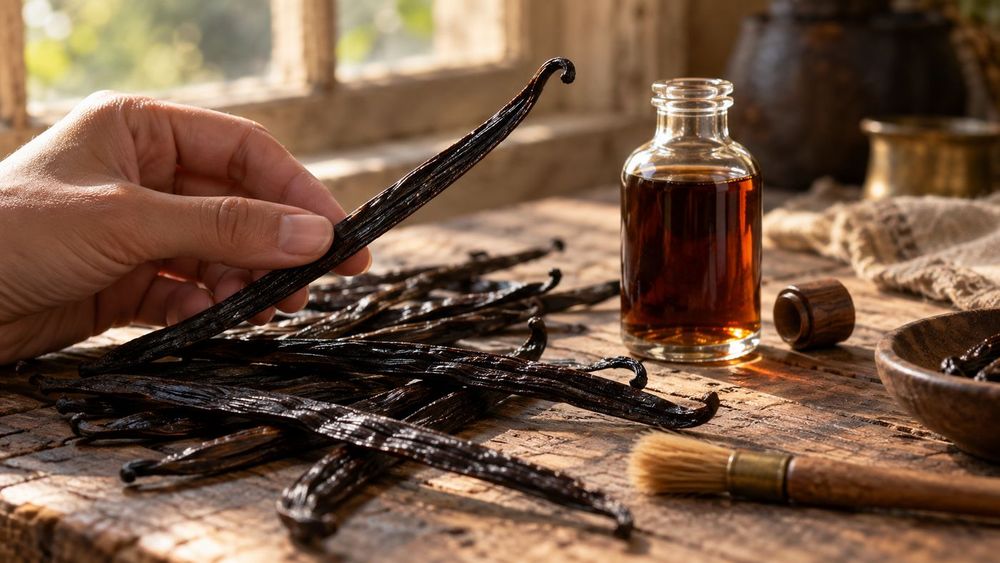
Harvesting the pod isn't close to the end of the process. Freshly picked vanilla pods have almost no flavor or aroma at all.
Getting to the familiar dark, fragrant vanilla bean requires a curing process that typically takes several months, involving repeated cycles of sweating, drying, and conditioning. This is when the compound most associated with vanilla's aroma actually develops, through a slow chemical breakdown that can't be rushed without sacrificing quality.
A vanilla pod can take close to a year total, from hand-pollinated flower to finished bean ready for market.
Why Vanilla Prices Swing So Wildly
Vanilla is one of the more volatile commodity prices in the food world, with costs occasionally spiking to several times their normal level within just a year or two.
Because production is concentrated in a small number of regions, and because the crop is so labor-intensive and vulnerable to weather, a single bad storm season or unstable political period in a major growing region can meaningfully tighten global supply. Unlike more diversified crops grown across many climates, vanilla doesn't have much of a buffer.
Why "Vanilla Flavor" Exists At All
Given the cost and complexity of real vanilla, it's not surprising that a cheaper synthetic alternative dominates the market for flavoring.
Synthetic vanillin replicates the single dominant flavor compound in vanilla, produced cheaply and consistently. It captures much of vanilla's core flavor note but misses the hundreds of other subtle compounds present in real vanilla, which is part of why bakers can often taste the difference in simple recipes where vanilla is the star, even if the difference is harder to notice in a dish with many other competing flavors.
The Takeaway
Vanilla's price tag isn't inflated for no reason. It reflects an almost absurdly labor-intensive process: a flower pollinated by hand in a matter of hours, followed by months of careful curing, just to get a plain-looking bean that eventually ends up as a small brown bottle on a grocery shelf.
The next time real vanilla extract feels expensive next to the imitation version, it's worth remembering what's actually being paid for — not a brand, but nearly a year of specific, unautomatable human effort behind every single pod.