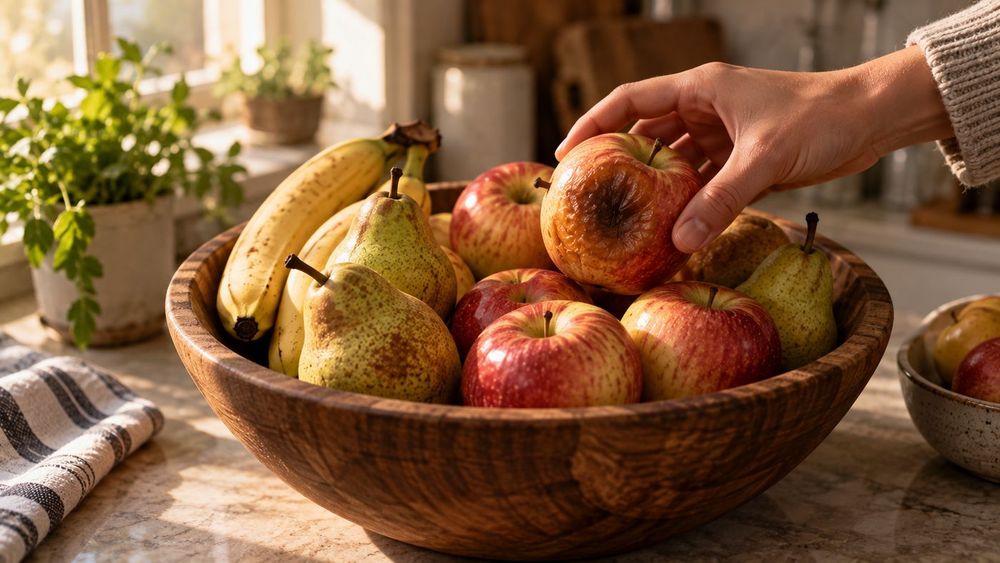

The saying has been around so long it barely registers as anything more than a metaphor for workplace culture or bad influences. It turns out the literal version is also just true — one rotting apple really can take down everything sitting near it.
Understanding why explains a lot about produce drawers that seem to sabotage themselves for no clear reason.
The Gas Behind the Whole Thing
As apples ripen and eventually begin to decay, they release ethylene gas, the same plant hormone responsible for ripening bananas and avocados on the counter.
A single apple starting to spoil produces noticeably more ethylene than a healthy one, and that gas doesn't stay contained to the apple that made it. In an enclosed space like a fruit bowl or produce drawer, it spreads to everything nearby, accelerating ripening — and eventually decay — in fruit that was otherwise perfectly fine.
The saying isn't really about morality. It's straightforward plant biology, dressed up as a proverb.
Why This Effect Compounds So Quickly
Once a second apple starts responding to that ethylene exposure, it begins producing its own ethylene too, adding to the total gas concentration in the same enclosed space.
That creates a feedback loop: more ethylene speeds up ripening in nearby fruit, which produces more ethylene, which speeds things up further. What starts as one slightly soft spot on a single apple can spread through an entire bowl within days, especially in a warm kitchen.
This is part of why a produce drawer that seemed fine on Monday can look like a lost cause by Thursday.
Why Apples Are Especially Prone to This
Apples produce unusually high levels of ethylene compared to many other fruits, which is part of why they're often used deliberately to ripen other produce faster, like the paper-bag trick with avocados or bananas.
That same trait that makes apples useful for speeding up other fruit is exactly what makes them risky to store alongside things meant to last. A single apple tucked into a bag of potatoes, for instance, can noticeably shorten how long those potatoes stay firm.
What This Means for How Produce Should Actually Be Stored
Grouping all fruit together in one bowl feels tidy, but it can quietly work against the goal of keeping produce fresh longer.
High-ethylene producers — apples, bananas, avocados, pears — benefit from separation from ethylene-sensitive produce like leafy greens, berries, and cucumbers, which tend to wilt or spoil faster when exposed to extra gas they weren't producing themselves.
A little intentional separation in the fridge or on the counter can meaningfully extend how long everything stays usable.
How to Actually Manage It in a Real Kitchen
None of this requires special containers or dramatic changes to how produce gets stored.
Check fruit bowls and produce drawers every few days for early signs of soft spots or bruising
Remove a spoiling piece of fruit immediately rather than letting it sit
Store high-ethylene fruits like apples separately from leafy greens and berries
Use perforated bags in the fridge to let some ethylene escape rather than concentrating
Small habits like these do more to extend freshness than any specific storage container marketed for the purpose.
The Takeaway
The old saying about one bad apple wasn't just a tidy piece of folk wisdom passed down for its moral lesson. It was an accurate observation about plant chemistry, made by people who had no idea what ethylene gas even was.
The next time a produce drawer seems to spoil faster than expected, it might be worth checking for one quiet culprit doing more damage than its size would suggest.