
Melt a bar of chocolate the wrong way, and instead of turning smooth and glossy, it can suddenly seize up into a dull, grainy, unworkable lump — sometimes in just a few seconds, with no warning.
It looks like the chocolate is ruined. Usually, it's just reacting to one specific mistake that's easy to make and just as easy to avoid once you know what's actually happening.
Why Water Is Chocolate's Real Enemy, Not Heat
Chocolate is made mostly of cocoa solids and sugar suspended in fat, with almost no water content of its own. That balance is exactly what makes it melt into a smooth, pourable liquid.
The moment even a small amount of water gets introduced — a wet spoon, a bit of steam from a pot below, condensation from a lid — sugar and cocoa particles clump together around it instead of staying evenly suspended in the fat. That sudden clumping is what's actually happening when chocolate "seizes."
It's not really about the chocolate getting too hot. It's about the wrong ingredient sneaking in at the wrong moment.
Why a Double Boiler Isn't Just a Fancy Suggestion
Melting chocolate directly over a burner or in a microwave without care raises two separate risks at once: scorching from direct, uneven heat, and stray steam finding its way into the bowl.
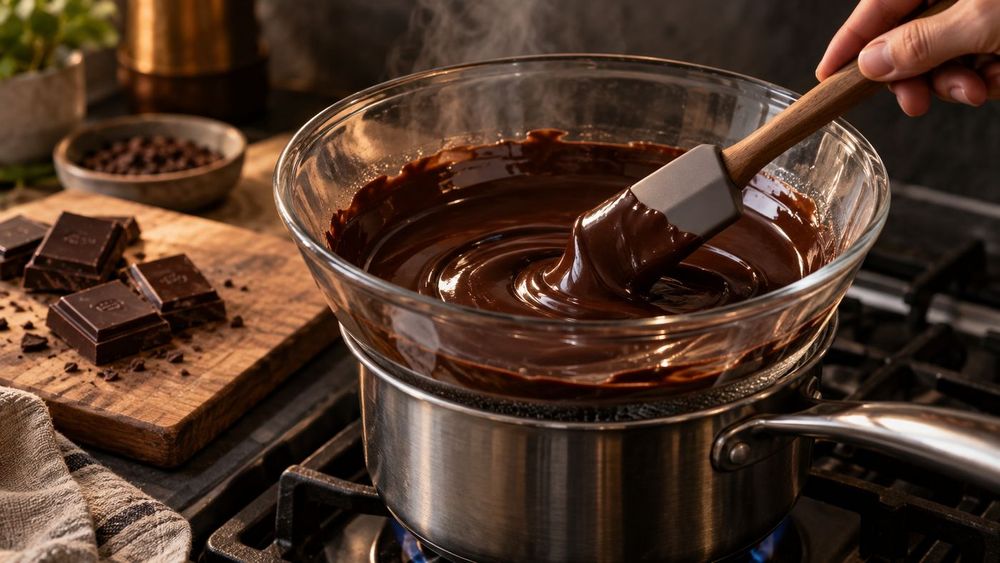
A double boiler — a bowl set over, not in, a pot of simmering water — solves both problems by spreading heat gently and keeping the chocolate itself away from direct moisture. Even here, a lid that drips condensation back into the bowl can undo the whole setup in an instant.
The technique isn't complicated. It's just intolerant of small mistakes that other cooking methods usually forgive.
What Tempering Is Actually Doing
Smooth, glossy, snap-when-you-break-it chocolate isn't just melted chocolate that's cooled back down. It's chocolate that's gone through tempering, a process of carefully heating and cooling to encourage cocoa fat to form one specific, stable crystal structure.
Chocolate cooled without tempering can still taste fine, but it often turns dull, soft, or streaky, with a crumbly texture instead of a clean snap. Professional chocolate work — coating, molding, dipping — depends on getting this crystal structure right, since untempered chocolate simply won't behave the same way under stress or at room temperature.
Why Chocolate Sometimes Gets a Chalky White Coating
A grayish-white film on stored chocolate looks like mold to a lot of people. It almost never is.
That coating, called bloom, comes from either fat rising to the surface after temperature swings, or sugar crystallizing after brief moisture exposure. Both are cosmetic issues, not safety issues — the chocolate underneath is generally still perfectly fine to eat, even if it no longer looks glossy.
Storing chocolate at a stable, moderate temperature, away from humidity and away from the fridge, is the simplest way to avoid this entirely.
How to Actually Melt Chocolate Without Trouble
A few consistent habits prevent almost every common chocolate-melting problem.
Use a double boiler, or short bursts in the microwave at low power, stirring between each
Keep every utensil and bowl completely dry before they touch the chocolate
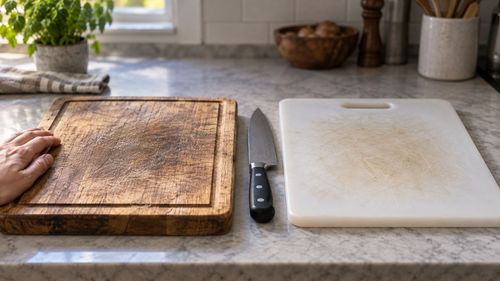
Chop chocolate into small, even pieces first so it melts more evenly and quickly
Avoid covering melting chocolate with a lid that could drip condensation back in
None of these require special equipment beyond a heatproof bowl and a bit of patience.
The Takeaway
Chocolate isn't a fragile ingredient because it's finicky for no reason. It's fragile because its entire smooth texture depends on keeping water out and its crystal structure intact — two things a lot of common kitchen habits accidentally work against.
Once you understand what's actually causing the seizing, the graininess, and the dull finish, melting chocolate stops feeling unpredictable.
It was never really about luck. It was always about moisture, heat, and a little bit of chemistry most people never learned by name.