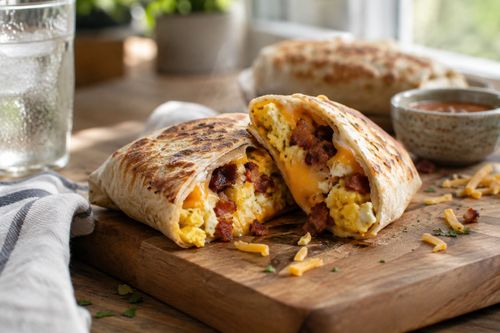

Eggs are the first thing most people learn to cook.
They’re the practice ingredient. The fallback meal. The thing you make when there’s nothing else or when you don’t feel like thinking. Scrambled, fried, boiled — eggs seem so familiar, so simple, so fully understood that most home cooks stopped paying attention to them years ago.
And yet eggs are one of the most technically demanding ingredients in a professional kitchen. Not because they’re difficult to cook in the basic sense — but because the margin between extraordinary and ordinary is measured in seconds and degrees, and most home cooks have been operating outside that margin their entire lives without knowing it.
Scrambled Eggs Are Not a Quick Meal in a Professional Kitchen
Here is a statement that surprises most home cooks: in serious culinary circles, perfectly scrambled eggs are considered one of the most technically revealing dishes a cook can make. Not because of complexity — because of control.
The scrambled eggs most home cooks make are produced quickly over medium-high heat, stirred periodically, and pulled when they look done. They’re fine. They’re cooked. They are also, by professional standards, significantly overcooked — dry, rubbery, with large, tough curds that have been pushed far past the moment of ideal texture.
Professional scrambled eggs — the kind served at high-end restaurants and made by cooks who treat the technique seriously — are made low and slow, in a heavy pan, over the gentlest heat the burner can produce. The eggs are stirred continuously, almost meditative in pace, and the pan is pulled on and off the heat repeatedly to manage the temperature. The process takes five to eight minutes for a two-egg serving. What comes out is something entirely different from the home version: small, soft, almost liquid curds with a creamy, custard-like texture that holds its shape on the plate without being dry or rubbery.
The technique is not complicated. It is, however, completely counter to every instinct that home egg cooking has built — because it requires slowing down rather than speeding up, and pulling the eggs while they still look underdone.
The Temperature Gap in Fried Eggs
Fried eggs in a professional kitchen reveal the same principle from a different angle: temperature control is everything, and the home instinct is almost always wrong.
Most home cooks fry eggs over medium to medium-high heat — a compromise that produces eggs with set whites and overcooked, chalky yolks, or alternatively, slightly undercooked whites with a yolk that’s just barely runny. The window for a properly cooked fried egg — whites fully set, no translucent raw patches, yolk still completely liquid and bright — is narrow, and medium heat makes that window harder to hit, not easier.
Professional cooks approach fried eggs two ways, depending on the desired result — and neither involves the medium-heat compromise.
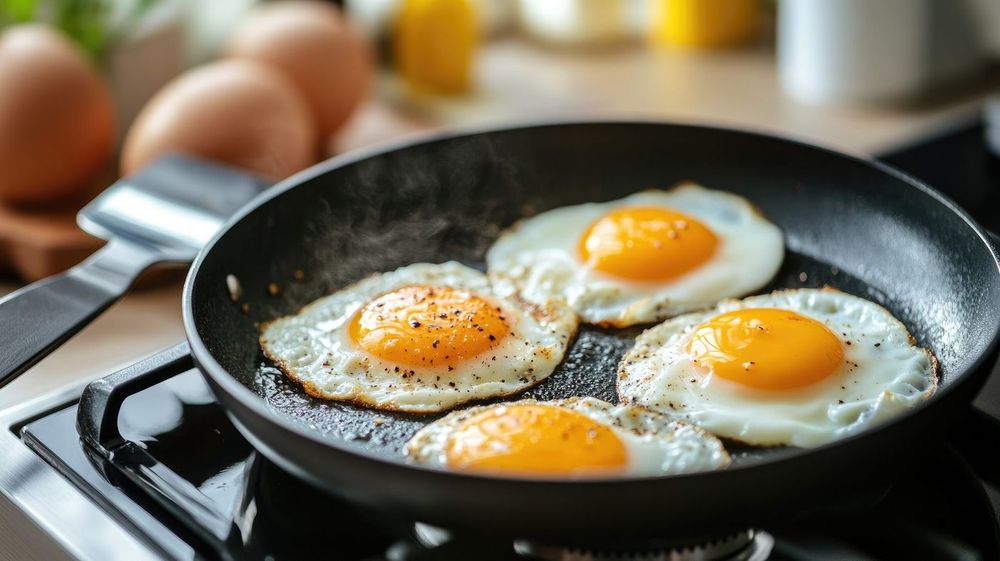
The first is a high-heat approach: butter or oil in a very hot pan, the egg dropped in, the whites set almost immediately in the intense heat before the yolk has time to cook. Done in under ninety seconds, basted with the hot fat by tilting the pan, pulled the moment the white is just set. The result is a fried egg with lacy, crisped edges, a fully set white, and a completely runny yolk.
The second is the opposite: a barely warm pan, gentle heat, the egg cooked slowly over several minutes until the white sets through gentle warmth rather than direct heat. No crispness, no color, just a smooth, tender white and a warm, barely-set yolk.
Both are deliberate techniques. Neither is the medium-heat default.
Boiled Eggs Are More Precise Than They Appear
The boiled egg seems like the most foolproof application of egg cookery. Water, egg, timer. And yet overcooked boiled eggs — with that grey-green ring around the yolk and a sulfurous smell that betrays the overcooking — are one of the most common results in home kitchens.
The grey ring is not a mystery. It’s iron from the yolk and sulfur from the white meeting at the surface between them when the egg has been held at too high a temperature for too long. It’s a precise indicator of overcooking, and professional kitchens avoid it through a technique most home cooks don’t use: the ice bath.
Eggs pulled from boiling water and immediately plunged into ice water stop cooking the moment they hit the cold. The temperature inside the egg drops rapidly enough to prevent the carryover cooking that produces the grey ring. Professional kitchens use this technique for every hard-boiled egg they produce — it also makes peeling easier, because the rapid contraction of the egg away from the shell loosens the membrane.
Soft-boiled eggs require even more precision. The difference between a yolk that is jammy and slightly set and one that is fully liquid is often a matter of thirty seconds. Professional kitchens time their soft-boiled eggs to the second and ice-bath them immediately. Home cooks who eyeball it produce inconsistent results not because the technique is hard but because the tolerance is tighter than most realize.
Poached Eggs Have More Variables Than the Recipe Admits
Poached eggs are where home egg cookery most visibly falls apart — and where professional technique diverges most sharply from home habit.
The standard home instruction for poached eggs involves a swirling vortex in the water, vinegar to help the whites coagulate, and a prayer. The results are often wispy, ragged whites trailing away from the yolk in long, thin strands — technically cooked but nothing like the compact, smooth, elegant poached eggs that appear in restaurant brunch dishes.
Professional kitchens use fresh eggs — genuinely fresh, not refrigerator-door eggs that have been sitting for two weeks. The white of a fresh egg is thick and cohesive, hugging the yolk closely when the egg is cracked. An older egg has a thinner, more watery white that spreads immediately and produces the wispy result most home cooks recognize as poached eggs.
The vortex technique, while useful for a single egg, is largely abandoned in professional kitchens for volume cooking. Instead, eggs are cracked into small cups or ramekins and slipped gently into barely simmering water — not boiling, which agitates the white into shreds — just below the surface. They cook undisturbed for three to four minutes. They are often poached in batches ahead of service and held in cold water, then reheated briefly in hot water to order.
The vinegar helps, but it’s the freshness of the egg and the temperature of the water that do most of the work.
The Pan and the Fat Are Not Interchangeable
One final distinction that professional cooks make with eggs that most home cooks never think about: the pan and the fat used to cook them are chosen deliberately based on the egg preparation, not reached for by default.
Scrambled eggs and French omelettes go into non-stick pans or well-seasoned carbon steel — surfaces where the delicate egg can be moved freely without sticking and tearing. Fried eggs with crispy edges go into cast iron or stainless steel with enough fat to baste them. The fat itself changes the flavor and texture of the finished egg — butter for richness and browning, olive oil for a more savory, slightly fruity quality, neutral oil for pure heat without flavor.
These are not random preferences. They’re deliberate choices made by cooks who understand that the pan and the fat are part of the recipe, not just the vessel in which the recipe happens.
The Takeaway
Eggs reward attention more than almost any other ingredient in the kitchen. The techniques that professional cooks apply — low and slow for scrambled, high and fast or gentle for fried, immediate ice baths for boiled, fresh eggs and calm water for poached — are not complicated. They are precise.
And precision with eggs, more than almost anything else a home cook can develop, produces results that are immediately and unmistakably better than what came before.
The ingredient hasn’t changed. The relationship with it has.