
There’s a step that happens in every professional kitchen before anything hits the stove.
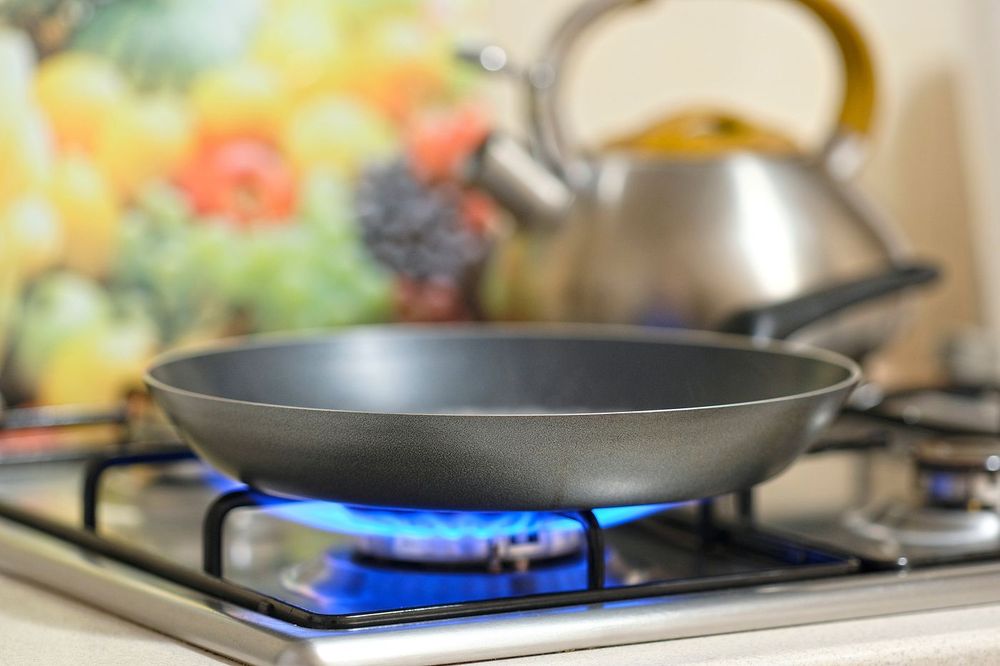
The pan goes on the burner. Empty. And it sits there.
For a minute. Sometimes two. Sometimes longer, depending on what’s being cooked.
Most home cooks skip this entirely. They put the pan on the heat, add oil, add food—all within seconds of each other.
Then they wonder why their food sticks. Why it steams instead of sears. Why it doesn’t develop that golden crust restaurants seem to achieve effortlessly.
The answer is simple: the pan wasn’t ready.
Cold Pans Make Food Stick
When you put food in a cold or barely-warm pan, it grabs onto the surface immediately.
The proteins bond with the metal before they have a chance to form a crust. Even with oil, they stick—because the pan temperature isn’t high enough to create that protective barrier between food and surface.
A properly preheated pan is different.
The surface is hot enough that food sizzles on contact. A thin layer of steam forms instantly between the food and the pan. The proteins sear and form a crust quickly—and once that crust develops, the food releases naturally.
No scraping. No tearing. No leaving half your dinner stuck to the pan.
Even Heating Requires Time
Pans don’t heat evenly when you rush them.
The center gets hot while the edges stay cool. You get hot spots that burn food in some places while it barely cooks in others.
A few minutes of preheating allows heat to distribute across the entire cooking surface. The whole pan reaches a uniform temperature.
This is especially important with stainless steel or cast iron—materials that take longer to heat but hold temperature beautifully once they’re there.
Chefs know this. That’s why they preheat. They’re not just warming the pan—they’re ensuring consistent, predictable results.
The Water Test Tells You When It’s Ready
Chefs don’t guess when a pan is hot enough. They test it.
The simplest method: flick a few drops of water onto the surface.
If the water just sits there and slowly evaporates, the pan isn’t ready.
If it sizzles and evaporates immediately, it’s getting close.
If the water forms tight beads that roll around the pan like ball bearings, you’re there. That’s the Leidenfrost effect—the pan is hot enough that the water can’t even touch the surface directly.
That’s when you add oil. That’s when you’re ready to cook.
Oil Goes in After Preheating, Not Before
This is where most people mess up.
They put oil in a cold pan, then heat them together. The oil heats unevenly. It can start breaking down or smoking before the pan is actually ready.
Chefs heat the pan first, then add oil.
The oil shimmers almost immediately when it hits the hot surface. You can watch it thin out and spread. Within seconds, it’s ready for food.
This method also makes it much easier to tell when the pan is too hot—the oil will smoke right away, and you know to pull back the heat.
Different Foods Need Different Temperatures
Not everything requires a screaming-hot pan.
Eggs want gentle, moderate heat. Vegetables need medium-high. A steak demands high heat for a proper sear.
But in every case, you still preheat to the temperature you need.
The mistake isn’t always using too little heat. Sometimes it’s not giving the pan time to reach and stabilize at the right temperature.
A pan that’s climbed to medium heat over 30 seconds behaves differently than one that’s been sitting at medium heat for two minutes. The second one is stable. Predictable. Ready.
Heavy Pans Take Longer But Hold Better
Thin pans heat fast. They also lose heat fast.
Add cold food to a thin pan and the temperature plummets. You lose your sear. Food steams instead of browns.
Heavy pans—cast iron, thick stainless steel, carbon steel—take longer to preheat. But once they’re hot, they hold that heat even when cold food hits the surface.
That thermal mass is why restaurants use heavyweight cookware. It’s not about snobbery—it’s about performance.
If you’re using thin pans, you need to compensate by preheating even longer and working in smaller batches.
You Can Hear When It’s Right
A properly preheated pan sounds different when food hits it.
There should be an immediate, aggressive sizzle. Not a quiet hiss. Not silence. A sizzle that tells you the surface is hot enough to transform what you’re cooking.
If you don’t hear that sound, the pan isn’t ready—or you’ve crowded it and dropped the temperature too much.
Chefs listen to their pans constantly. That audio feedback tells them everything they need to know about heat levels.
Preheating Prevents Oil Absorption
Food added to a cold or barely-warm pan absorbs more oil.
It sits in the fat longer before a crust forms. It soaks it up like a sponge.
Food added to a properly preheated pan sears quickly. The outside cooks fast enough that less oil gets absorbed.
The result is food that’s crispy instead of greasy—using the same amount of oil.
This is why restaurant fried foods often taste lighter than home versions. Not less flavorful—just less heavy.
It’s Especially Critical for Protein
Fish. Chicken. Steak. Eggs.
All of these stick to insufficiently heated pans and tear when you try to move them.
With proper preheating, proteins develop a crust that naturally releases when it’s ready to flip. You don’t have to force it or scrape it.
The food tells you when it’s ready by letting go on its own.
Chefs rely on this. They know that if they have to fight to flip something, either the pan wasn’t hot enough or they’re trying to move it too soon.
Nonstick Pans Are the Exception
Nonstick pans should never be preheated while empty—especially not on high heat.
The coating can break down and release fumes if heated too much without food or fat to regulate the temperature.
For nonstick, you preheat on low to medium, add your fat, then add food fairly quickly.
This is one reason chefs prefer other materials. Stainless steel and cast iron can handle aggressive preheating without any safety concerns.
Most People Don’t Wait Long Enough
When recipes say “heat a pan over medium-high heat,” most home cooks turn on the burner, wait 20 seconds, and start cooking.
That’s nowhere near enough time.
A proper preheat takes two to five minutes, depending on the pan and the heat level.
It feels like forever when you’re standing there waiting. But that patience is what separates okay results from great ones.
Chefs build this waiting time into their workflow. They preheat while they prep other ingredients. The pan is ready when they are.
You’ll Use Less Oil Overall
Counterintuitively, properly preheated pans require less oil than cold ones.
Because food doesn’t stick, you don’t need a heavy layer of fat to act as a barrier.
You can use just enough to coat the surface—sometimes only a tablespoon or two.
The food cooks in that minimal amount of fat without sticking, and you end up with a cleaner, lighter final dish.
What You Can Do Starting Now
Next time you cook anything, put your pan on the burner and just wait.
Don’t add oil yet. Don’t add food. Just let the pan heat.
Do the water test. Watch for those beads that dance across the surface.
Then—and only then—add your oil and your food.
Notice how differently things behave. How much easier it is. How much better the results look and taste.
That’s what a properly preheated pan does.
The Takeaway
Preheating isn’t a nice-to-have step you can skip when you’re in a hurry.
It’s foundational. It’s the difference between food that sticks and food that sears. Between something that steams and something that caramelizes.
Professional kitchens never skip it. Ever.
Home cooks skip it constantly, then blame their pans or their technique for results that were doomed from the start.
But now you know better.
Heat the pan. Test it. Wait until it’s actually ready.
That’s not a trick. That’s just proper cooking.
And it might be the single easiest way to immediately improve almost everything you make.