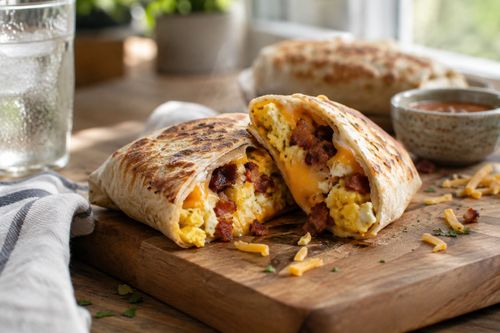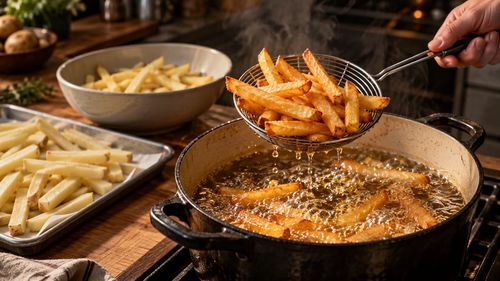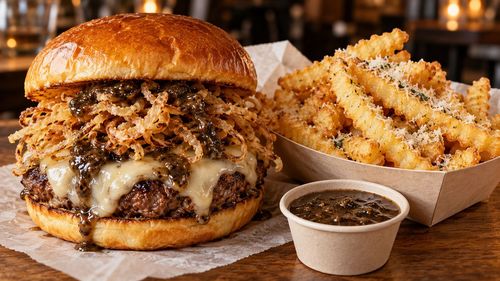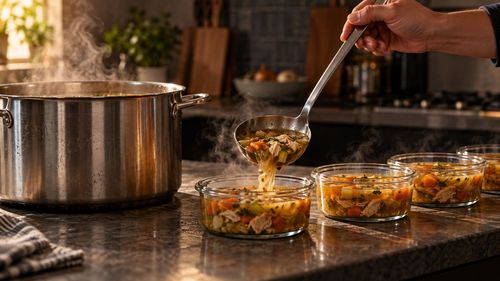

Heat is the most fundamental tool in cooking.
Not a knife, not a pan, not a recipe. Heat. Everything that happens in a kitchen — the browning of a crust, the tenderizing of a tough cut, the setting of a custard, the caramelizing of an onion — is the result of heat being applied to food in a specific way, at a specific intensity, for a specific duration.
And yet most home cooks have a surprisingly limited relationship with it. They turn the burner on. They wait for things to look done. They adjust the heat when something seems to be going wrong. They treat heat as a background condition rather than an active ingredient.
In a professional kitchen, heat is managed with a precision and intentionality that changes everything it touches.
High Heat and Low Heat Are Not Points on a Dial — They’re Different Cooking Environments
Here is something that professional cooks understand instinctively and most home cooks have never been explicitly taught: high heat and low heat don’t just cook food faster or slower. They produce fundamentally different results from the same ingredient.
High heat drives the Maillard reaction — the complex series of chemical reactions between amino acids and sugars that produces browning, crust development, and the hundreds of flavor compounds responsible for the taste of seared meat, toasted bread, caramelized vegetables, and fried food. Without sufficient heat, these reactions don’t occur. The food cooks through but never develops the surface complexity that makes it interesting.
Low heat does something entirely different. It allows collagen in tough cuts to convert slowly to gelatin, transforming something that would be chewy and unpleasant at high heat into something tender and rich. It sets eggs gently without curdling them. It infuses fat with aromatics without burning them. It coaxes sweetness out of onions over forty minutes in a way that twenty minutes at higher heat never replicates.
The mistake home cooks make most often is using medium heat for everything — a compromise that achieves neither the browning of high heat nor the gentle transformation of low heat, but something in between that is often less than the sum of its parts.
The Pan Needs to Be Ready Before the Food Goes In
One of the most consistent habits in a professional kitchen is this: the pan is always hot before anything goes into it.
Not warm. Not heating up. Hot — at the temperature it needs to be for the cooking that’s about to happen. This applies to searing, sautéing, stir-frying, and any other high-heat application. The pan gets put on the burner, the heat goes on, and the cook waits. Not for a few seconds. Long enough for the pan to reach actual cooking temperature throughout its entire surface.
The reason matters: a cold or warm pan doesn’t sear food — it steams it. Proteins hitting an insufficiently hot surface don’t form a crust immediately. They release moisture, which lowers the surface temperature further, and the food effectively poaches in its own liquid rather than making direct, dry contact with a hot surface. By the time the pan has recovered its temperature, the window for a proper sear has often already closed.
Professional cooks test pan temperature without a thermometer — a drop of water flicked onto the surface evaporates almost instantly when the pan is ready. Oil added to a properly hot pan shimmers and moves fluidly, reaching its own temperature quickly. These are learned observations, built through repetition, that remove the guesswork from a step that most home cooks rush through.
The Two-Zone Fire Is One of the Most Useful Techniques Most Home Cooks Never Use
Whether on a stovetop or a grill, professional cooks almost never work with a single, uniform heat source when cooking proteins or anything that requires both browning and gentle cooking.
The two-zone approach divides the cooking surface into a hot zone and a cooler zone. Food gets seared or browned over high heat to develop the crust, color, and flavor compounds that only intense heat produces — and then moves to the cooler zone to finish cooking through gently, without the risk of burning the exterior before the interior reaches the right temperature.
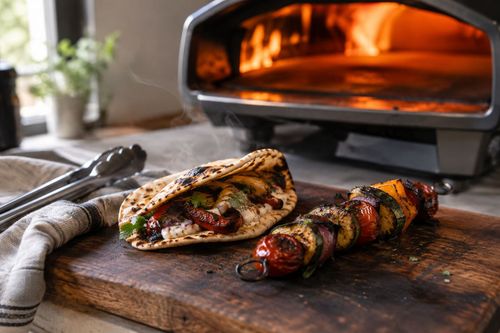
On a grill, this means coals banked to one side and an empty side kept for indirect cooking. On a stovetop, it means a screaming hot cast iron for the initial sear and a moderate oven to finish. In a professional kitchen, the transition from high-heat sear to low-heat finish happens constantly — for thick steaks, bone-in chicken, whole fish, and any protein where the interior needs time that the exterior cannot afford to give it.
Home cooks who cook everything over a single, uniform heat source are forcing a compromise that professional kitchens avoid entirely.
Residual Heat Is a Cooking Tool, Not an Accident
Every professional cook thinks about what happens to food after it leaves the heat source — because the cooking doesn’t stop when the burner goes off.
Residual heat, or carryover cooking, continues to raise the internal temperature of food for several minutes after it’s removed from direct heat. A steak pulled from the pan at 125°F internal temperature will reach 130°F or beyond during its rest. Cookies pulled from the oven while the centers look underdone will finish setting on the hot pan. A thick piece of salmon removed from heat while still slightly translucent at the center will arrive at perfect doneness by the time it reaches the plate.
Professional cooks account for carryover as a matter of routine. They pull food early — deliberately — knowing that the heat already in the food will finish the job. Home cooks who cook to the final target temperature before removing food from heat are consistently overshooting, because the cooking continues whether they intend it to or not.
Understanding residual heat doesn’t require a thermometer, though one helps. It requires knowing that the oven and the pan are not the only heat sources involved. The food itself carries heat — and that heat keeps working.
Moisture and Heat Are Opposing Forces
There is a relationship between moisture and browning that professional cooks manage constantly and home cooks rarely think about.
Water boils at 212°F. The Maillard reaction — responsible for browning and crust development — requires surface temperatures above 300°F. These two facts together mean that as long as there is free moisture on the surface of food or in the cooking environment, browning cannot occur. The moisture must evaporate first.
This is why crowding a pan kills a sear. The combined moisture released by too much food in too small a space raises the humidity of the cooking environment and drops the effective surface temperature below what browning requires. It’s why patting food dry before searing makes such a dramatic difference. It’s why roasting vegetables with space between them produces caramelized edges while crowded ones steam to softness.
Professional cooks actively manage moisture in their cooking environment — keeping proteins dry, giving food space, using high enough heat to drive off moisture quickly. Home cooks who understand this relationship stop seeing soggy food as a mystery and start seeing it as a physics problem with a straightforward solution.
The Takeaway
Heat is not a background variable. It is the primary tool of the kitchen — and the cook who understands what different temperatures do, how to prepare a pan properly, how to move food between heat zones, and how to account for the heat that keeps working after the burner is off is a fundamentally more capable cook than one who simply turns the dial and waits.
None of this requires professional equipment. It requires professional awareness — the habit of thinking about heat as something to be managed, not just applied.
That shift in perspective changes everything that follows.