
There is a particular kind of cooking that most people have never experienced in their own kitchen.
Not elaborate cooking. Not expensive cooking. Not cooking that requires professional training or special equipment or ingredients that are difficult to find.
Slow cooking. Genuinely, unhurriedly, completely slow cooking — where the goal is not to get dinner on the table as efficiently as possible but to let time do work that heat and technique and effort simply cannot replicate.
Most home cooking is, by necessity, fast. Weeknights have schedules. Hunger doesn’t wait. The thirty-minute meal exists because thirty minutes is often all there is. And within those constraints, home cooks have become remarkably skilled at producing good food quickly.
But somewhere in the acceleration, something got left behind.
Time Is an Ingredient With No Substitute
Professional kitchens understand something about time that the rhythm of weeknight home cooking makes easy to forget: there are transformations that only happen slowly, and no amount of heat or technique can speed them up without changing what they produce.
Caramelized onions are the most instructive example — and the most frequently faked.
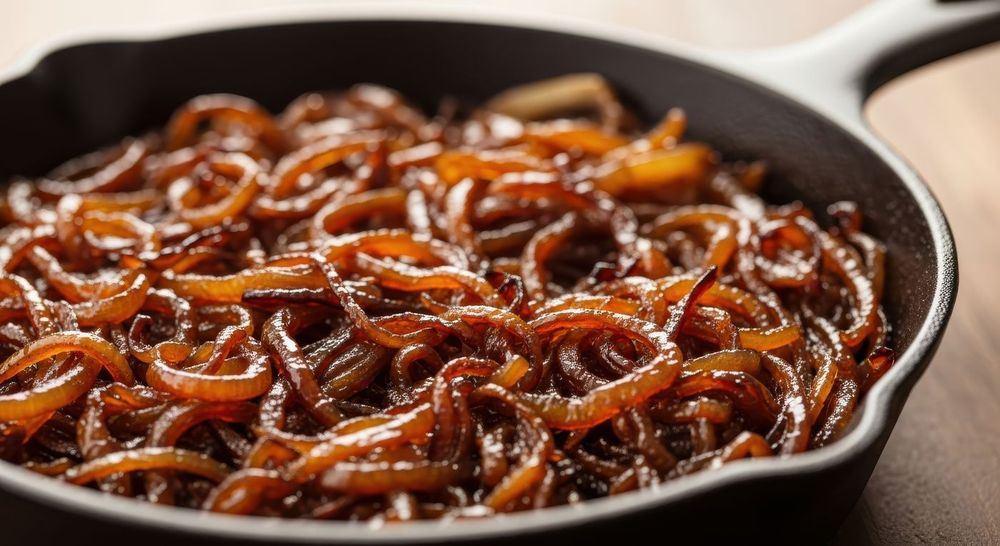
A recipe that calls for caramelized onions and suggests they’ll be ready in ten minutes is not describing caramelized onions. It is describing softened onions, possibly with a splash of balsamic vinegar added to simulate the color and a hint of the sweetness that actual caramelization produces over forty-five minutes to an hour of low, patient heat.
Real caramelized onions — cooked low and slow until the cell walls have completely broken down, the sugars have undergone the long, gradual transformation that produces deep sweetness and complex flavor, and the volume has reduced to a fraction of what went into the pan — are a fundamentally different ingredient from the ten-minute version. They are sweeter, deeper, more concentrated, and more complex in ways that no shortcut replicates.
This is not a matter of preference. It is chemistry. The Maillard reactions and caramelization that produce the flavor compounds in properly cooked onions require time at the right temperature. Speed produces different compounds. Different compounds produce different flavor.
Time, in this case, is not a luxury. It is the active ingredient.
What Braises Know That Roasts Don’t
There is a category of cooking that is almost exclusively about time — where the cook’s primary job is to create the right conditions and then step back and let hours do what minutes cannot.
Braising. Slow roasting. Confit. Overnight stocks. Long fermentations.
These are not passive preparations. The cook’s skill shows in the setup — the sear, the aromatics, the liquid ratio, the temperature calibration, the vessel selection. But once the lid goes on or the oven door closes, the work shifts from the cook to time itself.
What time does to a tough cut of meat during a four-hour braise is remarkable. Collagen — the connective tissue that makes a short rib or a lamb shank unpleasantly chewy at any temperature a quick cook can achieve — dissolves at sustained temperatures between 160 and 180°F over several hours into gelatin. The gelatin lubricates the muscle fibers from within. The meat becomes tender not by becoming soft and mushy but by becoming something that yields cleanly and completely while retaining its structure. The braising liquid around it absorbs the dissolved collagen, the rendered fat, the aromatics, the fond, and becomes something richer and more complex than any sauce made quickly could be.
This transformation is irreversible. It cannot be achieved in forty-five minutes at a higher temperature — the meat dries out before the collagen has time to dissolve. It cannot be achieved by any technique that doesn’t involve sustained, gentle heat over the full duration the cut requires.
The braise teaches a lesson that nothing else in cooking teaches quite as clearly: patience is not a virtue here. It is the technique.
The Flavors That Develop Overnight
There is a category of flavor development that professional kitchens exploit regularly and home kitchens almost never experience: the flavors that develop when food is left alone.
A stew made and eaten immediately is good. The same stew made the day before, refrigerated overnight, and reheated is often profoundly better — and the difference is not reheating technique. It is what happens during the hours of rest.
As a stew or braise cools, the fat solidifies and can be skimmed, leaving a cleaner, clearer flavor. More significantly, the flavors continue to develop and integrate during the rest. Aromatics that were distinct become unified. The seasoning, which may have seemed slightly off the night before, settles into equilibrium. The body of the braising liquid deepens as the gelatin continues to set and distribute.
This overnight transformation is why professional kitchens often make braises and stews a day ahead — not for convenience, but for flavor. The time between cooking and service is itself a preparation step. The day of rest is part of the recipe.
Home cooks who make a braise and serve it the same day are, in many cases, eating the dress rehearsal rather than the performance.
Bread That Ferments Slowly
The difference between bread made with a quick, commercial yeast rise and bread fermented slowly over twelve to seventy-two hours is one of the most dramatic illustrations of what time does to food.
A quick bread — mixed, risen for an hour, baked — produces a loaf that is fine. It has structure, it has some flavor, it tastes like bread.
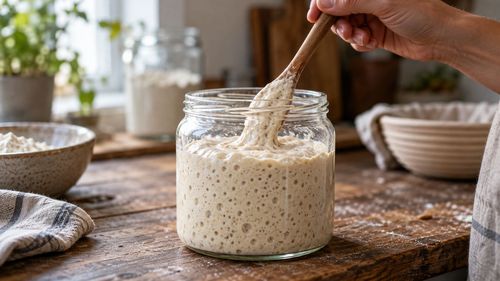
A slow-fermented bread — mixed, refrigerated overnight or longer, allowed to develop through a long, cold fermentation — produces a loaf with a fundamentally different character. The extended fermentation produces organic acids that give the crumb a complex, slightly tangy flavor that quick-risen bread cannot replicate. The gluten network has time to develop fully, producing a more open, airy crumb structure. The crust, having had time to develop, bakes with a depth of color and flavor that a quickly risen loaf never achieves.
The baker’s skill is present in the mixing, the shaping, the scoring, the baking. But the flavor that makes great bread great was made by time — by the slow, invisible work of fermentation that happens in the refrigerator while the baker is doing something else entirely.
The Paradox of Slow Cooking
Here is the counterintuitive truth that slow cooking reveals: the less you do, the more you get.
A braise attended to constantly — stirred, adjusted, checked repeatedly — is often worse than one left completely alone after the initial setup. The agitation disrupts the gentle, even heat that the transformation requires. The checking releases steam that the braising liquid needs. The adjustment of seasonings mid-cook changes the concentration as the liquid reduces and renders those adjustments inaccurate by the time the dish is done.
The slow dish rewards restraint in a way that quick cooking rarely does. The best thing the cook can do, after the careful setup, is leave it alone. Trust the temperature. Trust the time. Trust that the transformation is happening even when — especially when — nothing visible is occurring.
This is perhaps the deepest lesson slow cooking teaches: that the cook’s job is not always to do more. Sometimes it is to create the right conditions and then step back and let the process unfold without interference.
It is a lesson that applies, in different ways, far beyond the kitchen.
The Takeaway
Slow cooking is not a method for weeknights or for cooks in a hurry. It is a different relationship with the cooking process entirely — one that treats time as an active ingredient, restraint as a technique, and patience as a form of skill.
The food it produces cannot be approximated by faster methods. The braise, the slow fermentation, the overnight rest — these produce flavors and textures that have no equivalent in quick cooking, not because they are more complex but because they are the specific result of time working on food in ways that nothing else replicates.
Make the braise the day before. Let the bread ferment overnight. Cook the onions until they actually caramelize.
The wait is not the obstacle. The wait is the point.