
Eggs show up everywhere in professional kitchens.
Breakfast. Pasta. Sauces. Baked goods. They’re one of the most versatile ingredients a chef has.
But the way professionals cook eggs is fundamentally different from how most people do it at home.
Not because chefs have better equipment or access to special eggs. Because they understand something about heat and timing that changes everything.
Once you learn it, even basic scrambled eggs become something worth paying attention to.
Low and Slow Beats Hot and Fast
The biggest difference between restaurant eggs and home eggs comes down to temperature.
Most people cook eggs over medium-high or high heat, trying to get breakfast on the table quickly.
Chefs use low heat and take their time.
High heat toughens eggs. It creates that rubbery texture and sulfuric smell most people associate with overcooked eggs. It also gives you almost no control—eggs go from underdone to overdone in seconds.
Low heat keeps eggs tender. It gives you time to control the texture. It allows the proteins to set gently instead of seizing up.
The eggs take longer, yes. But the difference in quality is enormous.
Scrambled Eggs Should Be Creamy
If your scrambled eggs look dry and crumbly, they’re overcooked.
Restaurant scrambled eggs are soft, custardy, almost pourable. They’re cooked just to the point where they hold together but still look slightly wet.
This requires pulling them off the heat before they look done.
The residual heat continues cooking them for another 30 seconds after they leave the pan. If you wait until they look perfect in the pan, they’ll be overdone on the plate.
Chefs pull scrambled eggs when they still look slightly underdone. By the time they’re served, they’re exactly right.
Stirring Constantly Makes a Difference
Most home cooks scramble eggs by stirring occasionally and letting large curds form.
Chefs stir constantly—almost obsessively—with a spatula or wooden spoon.
This creates small, delicate curds instead of large, chunky ones. The texture becomes smooth and creamy rather than broken and coarse.
It also ensures even cooking. No part of the egg sits on the hot pan long enough to toughen.
This technique takes more attention, but once you taste the result, you understand why French chefs can spend 20 minutes making scrambled eggs.
Fat Matters More Than You Think
Eggs cooked in a dry pan taste like eggs and nothing else.
Eggs cooked with butter taste richer. More complex. More satisfying.
Chefs are generous with fat—not excessive, but not timid either. A tablespoon of butter for three eggs isn’t unusual.
The fat does more than prevent sticking. It carries flavor. It creates a silkier texture. It makes the eggs taste more luxurious without adding cream or cheese.
Some chefs finish scrambled eggs with an extra pat of cold butter stirred in at the end. It melts into the eggs, adding shine and richness.
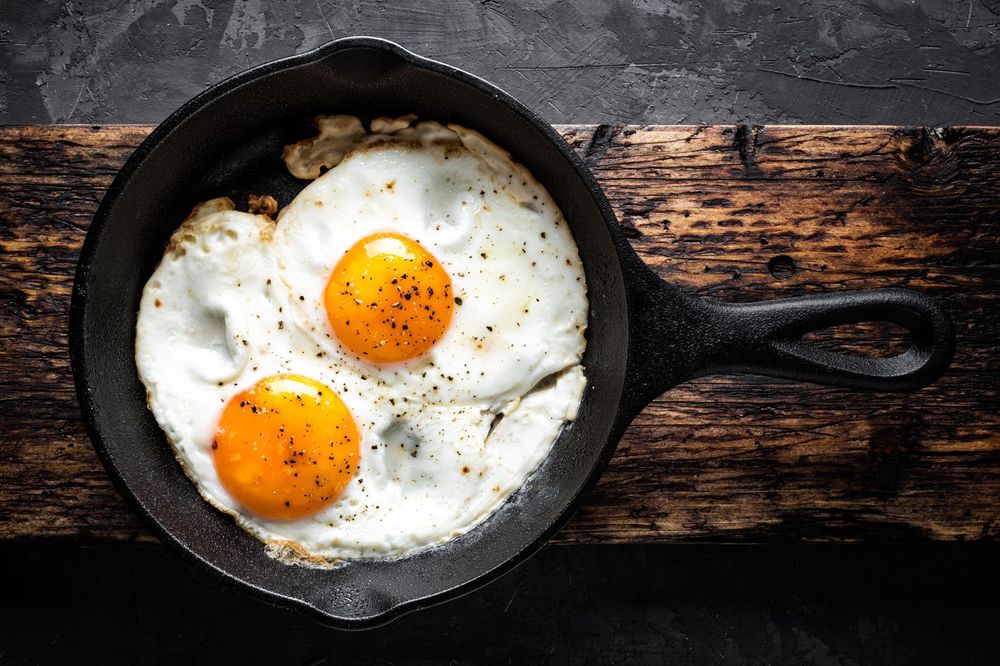
Fried Eggs Need Basting
The problem with fried eggs: the whites cook faster than the yolks.
By the time the yolk is done, the whites are rubbery. Or the yolk stays raw while the whites overcook.
Chefs solve this by basting.
They tilt the pan and spoon hot fat over the top of the egg while it cooks. This gently sets the top of the white and warms the yolk without flipping.
You get a fully cooked white, a runny yolk, and no rubbery edges.
This is how restaurants serve perfect sunny-side-up eggs that aren’t raw on top but aren’t flipped either.
Freshness Actually Matters
You can cook old eggs and make them edible. But they won’t be great.
Older eggs have thinner whites that spread across the pan instead of staying compact. The yolks break more easily. The flavor is flatter.
Fresh eggs hold together better. The whites stay thick and don’t run all over the pan. The yolks stand tall and round.
Restaurants go through eggs quickly, so freshness is rarely an issue. At home, if your eggs have been sitting in the fridge for three weeks, that affects the result.
It’s not a dealbreaker. But it’s a factor.
Room Temperature Eggs Cook More Evenly
Cold eggs straight from the fridge cook unevenly.
The outside sets before the inside warms up. You get a temperature gradient that’s harder to control.
Chefs pull eggs out ahead of time and let them come to room temperature—or at least take the chill off.
This is especially important for boiled eggs. Starting with room temperature eggs means less chance of cracking and more even cooking.
For scrambled or fried eggs, it’s less critical but still helpful.
Seasoning Happens at Different Times
Most people salt eggs before cooking them.
Chefs have different approaches depending on the preparation.
For scrambled eggs, some salt them before cooking to help break down the proteins for a creamier texture. Others wait until the end to avoid drawing out moisture.
For fried eggs, salt goes on after the white has set. Salting raw egg whites can create tough, watery spots.
For omelets, salt gets whisked into the eggs before they hit the pan.
There’s no single rule. But chefs are deliberate about when seasoning happens, not random.
Residual Heat Is Everything
Eggs don’t stop cooking when you take them off the heat.
The pan stays hot. The eggs stay hot. They continue to set for another 20 to 30 seconds.
This is why restaurant eggs often look slightly underdone when they leave the kitchen but arrive at the table perfectly cooked.
Most home cooks don’t account for this carryover cooking. They cook the eggs until they look done, then they continue cooking on the plate and become overdone.
Pull your eggs earlier than feels right. Trust that they’ll finish on their own.
Omelets Are About Technique, Not Fillings
A fancy omelet loaded with ingredients isn’t necessarily a good omelet.
A classic French omelet has no fillings at all—just eggs, butter, salt. The skill is in the execution.
The eggs should be creamy and barely set. The outside should be smooth and pale yellow with no browning. The shape should be a neat oval, not a folded-over mess.
This takes practice. It requires constant motion in the pan, shaking and stirring simultaneously. It’s one of those techniques that looks effortless when a chef does it but reveals its difficulty the moment you try.
Most people never develop this skill because they focus on what goes inside the omelet instead of how the eggs themselves are cooked.
Poached Eggs Aren’t as Hard as You Think
People avoid poached eggs at home because they seem fussy.
But chefs do them constantly without stress. The technique is straightforward once you understand it.
Fresh eggs. Simmering water with a splash of vinegar. Create a gentle whirlpool in the water. Slide the egg into the center. Let it cook undisturbed for three minutes.
That’s it.
The vinegar helps the whites set faster. The whirlpool wraps the white around the yolk. The gentle simmer—not a rolling boil—keeps everything tender.
Restaurants poach dozens of eggs during brunch service. If it were truly difficult, they wouldn’t do it.
The Pan Temperature Makes or Breaks You
Too hot and eggs stick, brown, and toughen before they’re cooked through.
Too cool and they spread out, take forever, and develop a weird texture.
Chefs preheat their pans properly, then adjust the heat as needed. They can tell by feel and sound when the pan is ready.
For most egg preparations, you want a medium-low pan. Hot enough that butter foams gently but doesn’t brown immediately. Hot enough that eggs sizzle quietly when they hit the pan but don’t aggressively sputter.
This is something you learn through repetition, not from reading. But knowing to pay attention to it is half the battle.
What You Can Do Tomorrow Morning
Make scrambled eggs on the lowest heat setting your stove has. Stir them constantly. Pull them off when they still look too wet.
Make a fried egg and baste it with butter instead of flipping it.
Notice how different both of these feel from your usual routine.
That difference—that’s what chefs do every single day.
The Takeaway
Eggs are simple. But simple doesn’t mean easy.
The margin between perfect and overcooked is thin. The techniques that produce great eggs require more patience than most people bring to breakfast.
But once you slow down and pay attention—once you use lower heat, pull eggs earlier, and treat them gently—they transform.
Not because you bought better eggs. Not because you added fancy ingredients.
Just because you cooked them the way they deserve to be cooked.
And that might be the easiest upgrade you can make in your kitchen.