
There is a fruit that sits at the center of the summer eating experience in a way that no other does.
Not the tomato, which is extraordinary but which the serious eater approaches with a specific and educated attention — looking for the right variety, the right color, the right weight, the right smell. Not the peach, which is similarly specific in its peak-quality indicators and similarly demanding of the eater’s attention.
The watermelon.
The watermelon occupies a specific and slightly paradoxical position in the summer fruit hierarchy. It is the most quintessentially summer fruit available — the one most associated with outdoor eating, with heat and thirst and the specific pleasure of something cold and sweet and abundantly juicy in the warmest days of the year. And it is, at the same time, the summer fruit that is most frequently disappointing — the one most likely to be purchased with high expectations and opened to reveal pale, watery flesh with little sweetness and less flavor.
The watermelon problem is real. It is also entirely solvable — through a specific understanding of what makes a watermelon excellent, how to select it before purchase, and what to do with it once it has been identified.
Why Watermelon Is So Often Disappointing
The specific mechanism of watermelon disappointment is worth understanding — because understanding it reveals that the disappointing watermelon is not a random failure but a predictable outcome of specific conditions that can be identified and avoided.
The watermelon that is pale, watery, and flavorless is a watermelon that was harvested before it was fully ripe. This is the most common source of watermelon disappointment, and it is a deliberate agricultural decision rather than an accident.
Watermelons that must travel significant distances to reach their final market — which describes the majority of watermelons sold in grocery stores across much of the country — are harvested before they reach full ripeness specifically because they must survive the journey. A fully ripe watermelon is fragile — its flesh is dense with sugar and juice, its rind has softened slightly, and it is vulnerable to the bruising and the damage that transit inflicts. A slightly underripe watermelon is more durable, survives the journey more reliably, and arrives at the market looking acceptable while delivering a fraction of the flavor that peak ripeness would have provided.
The watermelon cannot ripen after harvest in the way that some fruits can. Unlike the peach or the avocado — which continue to ripen on the counter, converting starches to sugars and developing flavor after they have been picked — the watermelon’s sugar development occurs entirely on the vine. Once cut from the plant, the sugar content is fixed. The watermelon that was harvested underripe will never become sweet, regardless of how long it sits on the counter or in the refrigerator.
This irreversibility is what makes the harvest timing of watermelon so critical and what makes the selection process at the point of purchase so important. The decision about quality has already been made — by the farmer, at the moment of harvest. The buyer’s job is to identify which watermelons reflect a decision made in favor of quality rather than durability.
The Signals of a Good Watermelon
Selecting a genuinely excellent watermelon from the available options requires knowing what to look for — and the signals are more specific and more reliable than most buyers realize.
The field spot is the most reliable indicator of ripeness available on the exterior of the watermelon. The field spot is the area where the watermelon rested on the ground during growing — a section of the rind that was shaded from sunlight by contact with the soil. On an underripe watermelon, this spot is white or very pale yellow. On a fully ripe watermelon, it is a deep, creamy yellow — sometimes almost orange in its intensity.
The depth of this color reflects the duration of time the watermelon spent on the vine after reaching a certain stage of development — the longer it ripened on the vine, the deeper the field spot color. A watermelon with a white or pale yellow field spot was harvested relatively early. A watermelon with a deep, creamy yellow field spot was allowed to ripen more fully before harvest.
This indicator is reliable across varieties — the field spot of a seedless watermelon, a yellow-fleshed watermelon, or a mini watermelon all follow the same principle, though the specific color of the fully ripe spot varies slightly by variety.
The sound test — tapping the watermelon and listening for the specific hollow sound that indicates ripe flesh — is the most widely known indicator and the most widely misunderstood. The hollow sound is produced by the specific density and turgor of ripe watermelon flesh — the flesh that is full of juice and sugar produces a different resonance than the underripe flesh that is less developed. The problem with the sound test is that it requires calibration — the ability to distinguish between the hollow sound of a ripe watermelon and the hollow sound of an overripe one — that most buyers haven’t had the opportunity to develop.
The weight test — comparing the weight of the watermelon to its apparent size — is a more accessible indicator. A watermelon that is heavy for its size is a watermelon with dense, juice-filled flesh. A watermelon that feels light relative to its size has less juice — which correlates with less sweetness and less developed flavor. Picking up two or three watermelons of similar size and selecting the heaviest one is a simple and reliable quality indicator.
The Varieties Worth Knowing
The limited selection of watermelon varieties available in most grocery stores — primarily the large, oval, seedless varieties that have become the commercial standard — represents a small fraction of the actual diversity available in the watermelon family.
The heirloom and specialty varieties that appear at farmers markets and at specialty produce stores during the peak of the season are worth seeking out specifically — not because they are necessarily superior to the commercial varieties in every way, but because they offer flavor profiles and textures that the commercial varieties don’t provide and that demonstrate the full range of what the watermelon is capable of.
The Crimson Sweet — the classic heirloom variety with its striped green exterior and its deeply red, sweet flesh — is the variety that most people who grew up eating watermelon remember as the definitive version. Its flavor is more complex and more intensely sweet than most commercial seedless varieties, and its seeds — the element that commercial breeding has eliminated — contribute a specific textural element that the seedless experience lacks.
The Sugar Baby — the small, round, dark-green heirloom variety — produces a consistently sweet and dense flesh in a size that is more practical for a small household than the large commercial varieties. Its concentrated sweetness and its manageable size make it one of the most practical farmers market watermelon purchases available.
The Yellow Doll and other yellow-fleshed varieties — which look conventional on the exterior but reveal a surprising honey-yellow interior when cut — have a flavor that is distinctly different from the red-fleshed varieties: sweeter, with a honey-like quality and less of the specific melon flavor that the red varieties carry. They are a revelation to anyone who has only eaten red-fleshed watermelon.
And the small specialty varieties — the Moon and Stars, the Orangeglo, the Charleston Grey — each have specific flavor profiles and specific culinary qualities that reward the attention of the eater willing to seek them out.
What to Do With the Perfect Watermelon
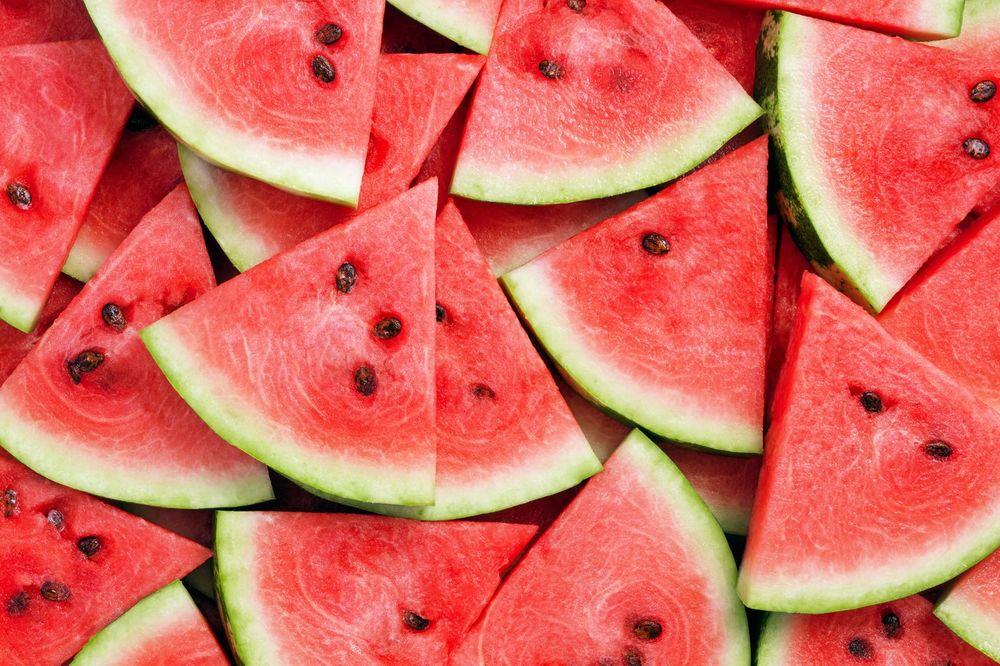
The watermelon at its peak — sweet, dense, cold from the refrigerator, cut into wedges thick enough to hold comfortably — needs almost nothing done to it. Eating it standing at the kitchen counter, over the sink, with the juice running down the forearm in the way that only a genuinely ripe watermelon can manage, is the complete and perfect experience of the fruit at its best.
But the watermelon has a range of preparations that go beyond the wedge — and understanding what they are and when they are appropriate extends the usefulness of a well-selected watermelon across more eating occasions than the simple wedge provides.
The watermelon salad — cubed watermelon combined with feta cheese and fresh mint and a drizzle of good olive oil — is one of the most specifically summer preparations available: the sweetness of the watermelon against the salt and the fat of the cheese, the freshness of the mint providing brightness, the olive oil tying the components together. It is a dish that sounds improbable and tastes inevitable — one of those combinations that seems like it shouldn’t work and that works perfectly.
The watermelon agua fresca — the Mexican preparation of blended watermelon diluted with water and seasoned with lime and a small amount of salt — is one of the most refreshing summer drinks available. The salt is not a mistake. It suppresses any remaining bitterness in the watermelon while making the sweetness more vivid — the same mechanism that makes salt on a sweet preparation work universally. The lime provides the acid that balances the sweetness and that makes the drink genuinely thirst-quenching rather than merely sweet.
The grilled watermelon — thick slices placed on a very hot grill until marked and slightly caramelized — is the preparation that most surprises people encountering it for the first time. The heat concentrates the watermelon’s sugars, caramelizes its surface, and produces a warm, slightly smoky sweetness that bears a complicated relationship to the cold sweetness of the raw fruit. It is not better than the raw watermelon. It is a different thing entirely — and worth knowing.
The Salt on the Watermelon Debate
There is a culinary practice that divides people with an intensity somewhat disproportionate to its actual stakes.
Salt on watermelon.
The practice of sprinkling salt on watermelon — which is widespread in the American South, in parts of Asia, and in other food cultures — is dismissed by some eaters as an adulteration of the pure fruit experience and celebrated by others as the single best thing that can happen to a slice of watermelon.
The science is on the side of the salt.
The mechanism is the same one that makes salt universally valuable as a flavor enhancer: at sub-threshold concentrations, sodium ions suppress bitterness receptors more effectively than they activate salt receptors — producing a net increase in perceived sweetness without the food tasting salty. A light sprinkle of salt on a slice of watermelon suppresses any residual bitterness in the fruit while making the sweetness more vivid, producing a sweeter-tasting watermelon than the unsalted version despite adding no sweetness at all.
This is not a trick or a compensation for a deficient watermelon. It works on excellent watermelons too — making the excellent watermelon taste even more intensely like itself by suppressing the minor bitter notes that are present in even the finest specimens.
The debate about salt on watermelon is, ultimately, a debate about whether the enhancement of a natural flavor through a specific chemical mechanism is acceptable or represents a compromise of the pure experience. It is a debate worth having and worth resolving through direct experimentation rather than through received opinion.
The Takeaway
The watermelon problem — the persistent gap between the watermelon’s potential and the watermelon’s frequent reality — is solvable through specific knowledge applied at the point of selection.
Look for the deep, creamy yellow field spot. Choose heavy over light when size is equivalent. Seek out heirloom and specialty varieties at the farmers market when the commercial selection is uninspiring. Buy from vendors with high turnover who can tell you when the watermelons arrived.
And when the perfect watermelon has been found — eat it cold, over the sink if necessary, with the specific quality of attention that the most quintessential summer fruit deserves.
The salt is optional.
The presence is not.