
There are rules in cooking that appear in every cookbook.
Temperature rules. Timing rules. Ratio rules. The rules of technique — how to hold a knife, how to build a sauce, how to tell when a protein is done. These rules are written down because they can be written down. They are specific, teachable, and verifiable.
And then there are the other rules.
The ones that govern not what happens in the kitchen but what happens at the table. The ones that determine whether a meal — regardless of how technically accomplished the food is — becomes an experience that people remember, return to, and describe to others with a quality of warmth that has nothing to do with the cooking.
These rules are almost never written down. They are absorbed, gradually, from meals that felt right without the diner being able to articulate exactly why. They are intuited by hosts who seem to effortlessly create an atmosphere that makes guests feel genuinely welcome — and they are violated, often unknowingly, by hosts who cook exceptional food and wonder why the evening felt slightly off.
The unwritten rules of a great meal are worth making explicit.
The Table Is Set Before the Guests Arrive
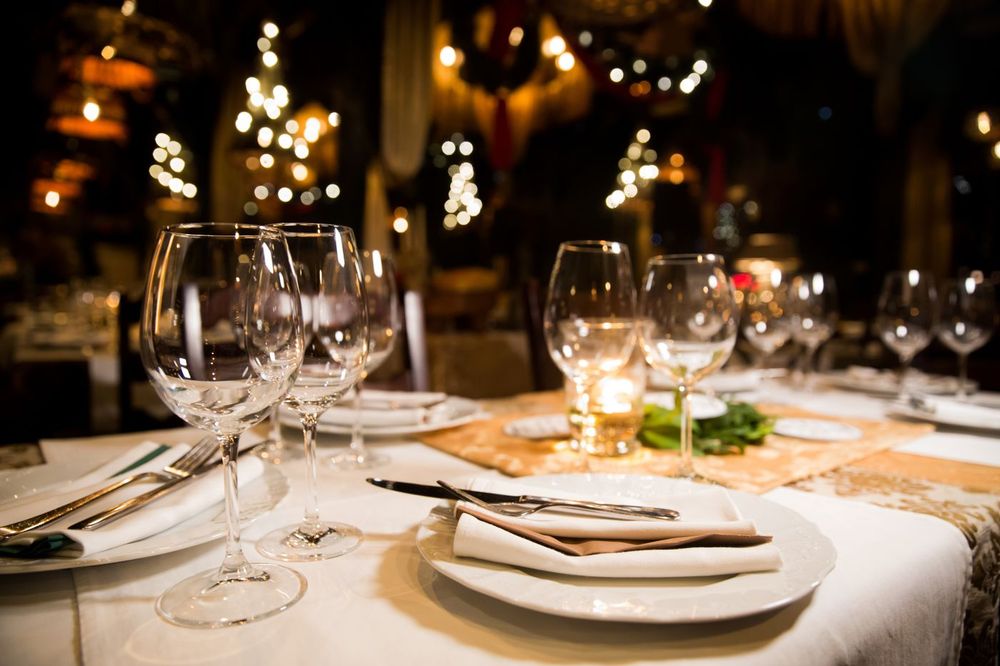
The first unwritten rule of a great meal is one that seems logistical but is actually about something else entirely: the table should be ready before the first guest walks in.
This is not about formality. It is not about tablecloths or centerpieces or whether the napkins are folded. It is about what a set table communicates to the person who walks through the door — that they were expected, that their arrival was prepared for, that someone thought about this moment before it arrived.
An unset table when guests arrive communicates the opposite — not intentionally, but unmistakably. It says that the meal is not quite ready for them yet, that there is still preparation underway, that the evening hasn’t quite begun. The guest adjusts — becomes helpful, offers to assist, moderates their expectations — and a subtle dynamic is established that the rest of the evening has to work to overcome.
Professional restaurants understand this. The table is set before service begins. The mise en place of the dining room is as deliberate as the mise en place of the kitchen. The guest who sits down at a set table is a guest who has already, before a word has been spoken or a dish has arrived, been told that they are expected and welcome.
At home, this translates simply: finish the table before the guests arrive, even if it means leaving a dish half-finished to do it. The table matters more than the last fifteen minutes of prep.
Hunger Is Managed From the Beginning
There is a specific kind of discomfort at a dinner party that experienced hosts prevent and inexperienced hosts often overlook: the discomfort of arriving hungry and waiting too long for food to appear.
Guests who arrive at a dinner party have typically not eaten in anticipation of the meal. By the time they arrive, they are often genuinely hungry — and hungry guests are guests whose patience, generosity, and conversational ease are all operating at a slight deficit.
The professional solution to this is the amuse-bouche — the small, single-bite offering that arrives at a restaurant table before anything has been ordered, designed not to satisfy hunger but to acknowledge it. To say: we know you’re here, we know you’re hungry, and something is coming.
At home, this translates to the simple, often overlooked practice of having something on the table when guests arrive. Not an elaborate appetizer course. Something — olives, good bread and butter, a small bowl of nuts, a simple dip with vegetables. Something that says the meal has begun, that hunger has been acknowledged, that the wait for the main event will be comfortable.
This small gesture changes the energy of a dinner party in ways that are difficult to overstate. Guests who have something to eat and something to drink within minutes of arriving are guests who relax. And guests who relax make better dinner companions than guests who are managing their hunger while trying to make conversation.
The Host Eats With the Guests
This rule is violated at almost every home dinner party and honored at almost none — and its violation is responsible for a significant portion of the disconnect between technically successful dinner parties and genuinely memorable ones.
The host who spends the meal in the kitchen — finishing dishes, plating, managing timing, attending to the next course — is not at dinner. They are at work. Their guests are at dinner without them, which is a fundamentally different experience from a shared meal.
The great meals are shared. The host is at the table. The conversation includes everyone. The food, when it arrives, is experienced together rather than delivered by someone who disappears back into the kitchen the moment the plates are set down.
This requires planning — the kind of advance preparation that allows the kitchen work to be largely finished before guests arrive, the kind of menu that doesn’t require constant last-minute attention, the kind of confidence to let a dish hold rather than hovering over it until the last possible moment.
It also requires a decision — a deliberate choice to prioritize presence at the table over perfection in the kitchen. The host who makes this choice consistently produces evenings that guests remember as warm and connected. The host who makes the opposite choice consistently produces evenings that guests experience as slightly lonely, despite the company.
Conversation Is the Main Course
A meal is not primarily a food delivery mechanism. This sounds obvious. It is, in practice, a principle that is frequently forgotten in the effort to make the food as good as possible.
The food is the context. The conversation is the content. The role of the meal — the reason humans have been gathering to eat together since before recorded history — is to create an occasion for connection. The food matters because it gives the gathering a purpose and a pleasure. It does not matter more than the gathering itself.
This has practical implications for how a meal is paced, how courses are timed, and how the host manages the rhythm of the evening. A meal that moves too fast — courses arriving before the previous ones have been fully eaten and the conversation they accompanied has had room to develop — is a meal that is prioritizing the food over the experience the food is supposed to support.
Professional restaurants understand this. A good server reads the table before clearing — not clearing a plate until most guests at the table have finished, not rushing a course when the conversation at a table is clearly in full flow. The pacing of a meal in service of conversation is one of the most important skills in professional hospitality.
At home, this means resisting the impulse to move through the meal on a rigid schedule. If the soup course has produced a conversation that everyone at the table is deeply engaged in, the soup course should last as long as that conversation needs. The kitchen can wait. The moment cannot.
What Is Left Unsaid Matters as Much as What Is Said
The last unwritten rule of a great meal is the most difficult to articulate precisely — and perhaps the most important.
A great meal has a quality of ease that the guests feel but rarely consciously notice. Nothing feels forced. No one feels obligated. The flow of the evening — from arrival to table to conversation to dessert to the gradual, unhurried end — feels natural rather than managed.
This ease is produced by the host’s invisible management of a dozen small things that guests never see: the temperature of the room, the level of music if there is any, the pacing of service, the seating arrangement that puts compatible people next to each other, the gentle redirect when a conversation heads somewhere uncomfortable, the refilled glass that arrives before anyone thought to ask for it.
The best hospitality is invisible. It is felt as ease and warmth and the sense that everything is exactly as it should be — without the guest being able to identify any specific thing the host did to produce that feeling.
This is the hospitality equivalent of mise en place: the preparation so thorough and the execution so quiet that the result looks effortless. And like mise en place, it requires more thought and preparation than it appears to — precisely because the goal is for none of that thought and preparation to be visible.
The guest who leaves a great meal thinking “that was effortless” is the guest whose host worked hardest to make it so.
The Takeaway
The unwritten rules of a great meal are not about the food. They are about the experience the food is embedded in — the welcome communicated by a set table, the hunger acknowledged by something to eat on arrival, the presence of the host at their own table, the pace of a meal that serves conversation rather than overriding it, and the invisible management of ease that makes a gathering feel like it happened naturally.
Great cooking is necessary but not sufficient. The meal that is remembered — the one guests describe to others, return to in conversation, measure other meals against — is the one where all of these things came together around a table where someone made every person in the room feel genuinely, warmly welcome.
The food brought them to the table.
Everything else kept them there.