
There is a moment in cooking that separates the good from the great.
It is not the moment when the technique is executed perfectly. Not the moment when the seasoning is exactly right. Not the moment when the dish comes together and looks the way it was supposed to look.
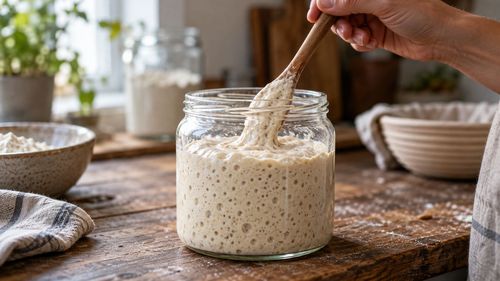
It is the moment when the cook puts down the spoon.
Knowing when to stop — when to resist the impulse to adjust, to add, to improve, to intervene — is one of the least discussed and most consequential skills in professional cooking. It is the skill that protects finished work from the cook’s own restlessness. It is the discipline of recognizing that a dish is complete and that every addition from that point forward is subtraction.
Most home cooks have never thought about it this way. Most home cooks don’t stop — they finish.
There’s a difference.
The Impulse to Keep Going
Cooking involves constant activity. Stirring, tasting, adjusting, adding. The cook’s hands are always doing something, and that activity feels productive — feels like progress — even when the dish has already arrived at the right place and further intervention is moving it away from that place rather than toward it.
This is the overcooking impulse, and it operates on flavor as surely as it operates on heat. A sauce that is correctly seasoned gets one more pinch of salt because the cook tastes it again and isn’t sure. A braise that has developed exactly the right depth gets another splash of wine because there’s still some left in the glass and it seems like it might help. A finished soup gets another round of spices because the cook has been standing at the stove for an hour and stopping feels premature.
Each of these additions changes something. Not always for the worse — but often enough that professional kitchens treat the impulse to keep adjusting a finished dish with genuine suspicion.
The question professional cooks learn to ask before any final addition is not “would this make it better?” It is “do I know this will make it better?” The first question almost always generates a yes. The second one generates honesty.
The Dish That Gets Away
Every experienced cook can describe a dish they cooked past its peak.
The stock reduced too far and went bitter. The caramel was pulled a moment too late and crossed from deep amber into acrid. The custard was left on the heat thirty seconds longer than it needed and went from silky to grainy. The pasta, perfectly al dente two minutes ago, sat in the sauce long enough to go soft.
These are not failures of skill. They are failures of stopping — moments when the cook knew, or almost knew, that the right moment had arrived and didn’t act on it.
Professional kitchens develop the reflex to stop through the same mechanism that develops every other culinary reflex: repetition with attention. A cook who has reduced a hundred stocks learns to recognize the moment the reduction crosses from concentrated to over-reduced — not by thinking about it, but by the smell, the color, the way the liquid moves in the pot. The reflex to pull the pan is built from having pulled it at the right moment enough times to know what the right moment feels like.
But there is also a more fundamental lesson here: the best moment in cooking is rarely a range. It is often a point — a specific, narrow window that opens and closes faster than hesitation allows. The cook who waits to be certain often finds the window has closed. The cook who acts on the first clear signal catches it.
Addition Is Not Always Improvement
There is a belief, deeply embedded in home cooking culture, that more is generally better. More seasoning means more flavor. More cooking means more development. More components mean more complexity. More time means more depth.
Professional cooking systematically dismantles this belief.
The olive oil drizzled over a finished dish at the right moment is the last thing it needed. The same olive oil drizzled over a dish that was already complete adds grease rather than richness. The additional herb added after the dish has been properly finished doesn’t add brightness — it adds noise. The extra salt added to a properly seasoned dish doesn’t enhance — it overwhelms.
The most disciplined professional cooks have internalized the understanding that a dish in balance is a system — and that adding to a balanced system doesn’t enhance it, it destabilizes it. Every addition changes the relationship between the elements already present. An addition that improves one relationship often damages another.
This is why experienced cooks taste a finished dish with a specific question: not “what does this need?” but “is this complete?” The two questions lead to different places. The first assumes something is missing. The second approaches the dish with the possibility that it has arrived — and that the right response is to stop.
The Art of Leaving Well Enough Alone
There is a moment in the preparation of almost every dish where it is exactly right — where the seasoning is in balance, the texture is what it should be, the flavors have developed to precisely the degree they were supposed to develop.
Professional cooks learn to recognize that moment not as a milestone on the way to something else but as the destination. The moment the dish is right, the cooking is done. Not almost done. Done.
This sounds obvious. In practice, it runs counter to nearly every instinct that cooking produces. The stove is still on. The cook is still in the kitchen. The meal isn’t plated yet. Every sensory signal in the environment says that the process is still underway — that stopping now would be stopping too soon.
Learning to override those signals when the dish is actually complete is a skill. It requires trust — in the tasting, in the judgment, in the accumulated experience that says this is it — that developing cooks don’t yet have and that experienced cooks have built over years.
It also requires a specific kind of confidence that is different from the confidence of technique. Technique confidence is the certainty that you know how to do something. Completion confidence is the certainty that you’ve done it — that the work is finished and that continuing is no longer cooking but something else: tinkering, adjusting, fussing, improving a thing that was already good into something that is merely different.
The Plating Moment Is the Last Moment
There is one final application of knowing when to stop that plays out at the very end of every cooking session: the plating.
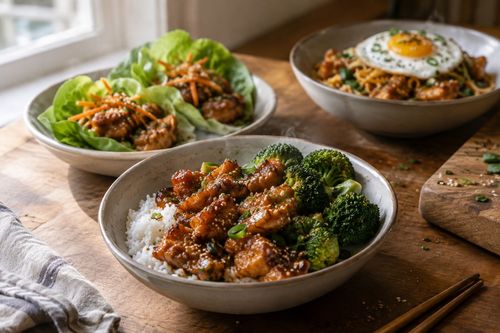
Professional cooks are trained to plate with intention and then stop. Every element goes on the plate for a reason. The sauce goes where the sauce is supposed to go. The garnish makes a specific contribution to the dish. The portion is correct. And then the cook steps back and looks — not to see what else the plate needs, but to confirm that what’s there is right.
Home cooks, standing over a plate with a spoon in hand and the dish they’ve been building for an hour in front of them, often can’t stop. Another drizzle. One more pinch. A different position for the garnish. An extra spoonful of sauce because the plate looks sparse.
Professional cooks call this overplating — and it is the visual equivalent of over-seasoning. A plate that has had things added to it past the point of completion looks busy rather than considered. The thoughtfulness of each element is obscured by the quantity of them.
The last skill of plating is the same as the last skill of cooking: recognizing when you’re done, and stopping there.
The Takeaway
Knowing when to stop is not passive. It is an active, deliberate skill — built through repetition, through the experience of having gone too far enough times to recognize the moment before it passes, through the development of trust in the judgment that says the dish is complete.
It is the skill that protects a finished dish from the cook’s own restlessness. It is the discipline of recognizing completion and choosing to honor it rather than improve upon it.
The cook who can stop — who can put down the spoon at the right moment and walk away from a finished dish — is the cook who consistently produces work that tastes like intention rather than effort.
And sometimes, the most skilled thing in the kitchen is knowing that there’s nothing left to do.