
There is a particular kind of freedom that most people have experienced but few have fully appreciated.
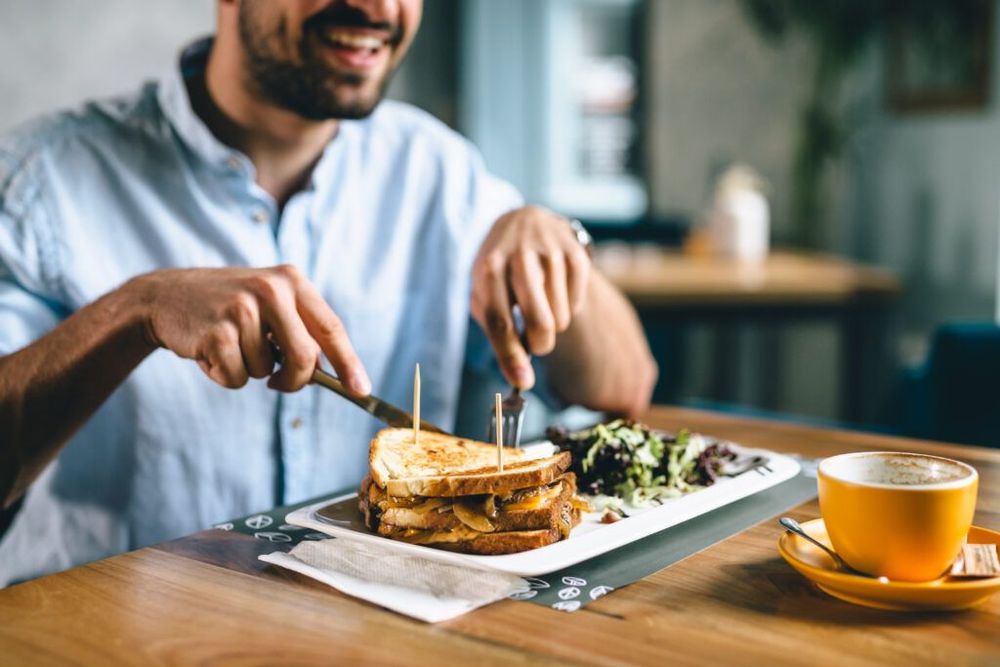
It arrives in the specific circumstances of a meal eaten alone — not the rushed lunch at a desk or the distracted dinner in front of a screen, but the deliberate, unhurried meal prepared for one person by one person, eaten with the specific quality of attention that the absence of social obligation makes possible.
Most food culture treats eating alone as a problem to be solved. The single diner at a restaurant is given a book or a newspaper or a seat at the bar — something to fill the space where a companion would be. The recipe designed for one is apologetic in its portion size, as if reducing the yield is the primary challenge of solo cooking rather than a simple calculation. The assumption embedded in most food writing, most restaurant design, and most social norms around eating is that the shared meal is the real meal and the solo meal is its diminished substitute.
This assumption deserves examination.
Because the meal eaten alone — attended to fully, prepared with genuine care, eaten without the distribution of attention that social eating requires — offers something that the shared meal, for all its genuine pleasures, cannot provide in the same form.
It offers the meal itself.
What Disappears When You Eat Alone
The shared meal is one of the most important social technologies humans have developed. Its value — as a mechanism of connection, of cultural transmission, of the specific pleasure of being together around food — is real and significant and worth protecting.
But the shared meal asks something of the eater that the solo meal does not.
It asks for attention to be distributed — between the food and the conversation, between the tasting and the talking, between what is in the bowl and what is happening at the table. This distribution is not a cost so much as a trade. The conversation that accompanies a shared meal adds a dimension to the experience that food alone cannot provide. But it also takes something from the food — the specific, focused quality of attention that produces the deepest sensory experience of eating.
The person who is genuinely engaged in conversation while eating is not fully tasting what they are eating. Not because the food is less good or the tasting less capable, but because the attention that full tasting requires is occupied elsewhere. The food is experienced, but it is experienced partially — in the background of a social experience that is happening simultaneously.
The solo meal removes this distribution. The attention that would have been divided is available entirely for the food. The tasting is complete rather than partial. The specific qualities of the dish — the temperature, the texture, the way the flavors develop and change as the meal progresses — are available in their full dimension to the eater who is attending to nothing else.
The Practice of Eating as a Primary Activity
There is a specific practice — rare enough in contemporary life that it feels almost countercultural — of eating as a primary activity rather than as a secondary one.
Most eating happens in the margins of other activities. Lunch at the desk while working. Dinner in front of the television. Breakfast in the car. Even meals at the table are often accompanied by phones checked between bites, conversations about logistics, the planning of the afternoon, the reviewing of the day. The food is consumed, but it is rarely attended to.
The solo meal eaten deliberately — without a screen, without a phone, without any activity competing for the attention that the food deserves — is an unusual experience for most contemporary eaters. It feels, initially, like something is missing. The silence where conversation would be. The absence of the social lubrication that shared eating provides. The specific discomfort of being present with nothing but the food and the act of eating.
And then, if the discomfort is tolerated rather than immediately resolved by reaching for a phone, something shifts.
The food becomes more interesting.
Not because it has changed but because the attention available to it has changed. The specific flavor of a well-made dish, attended to fully, is a more complex and more interesting experience than the same dish eaten while distracted. The texture that passes beneath notice in a social meal registers fully in the solo meal. The progression of flavors through a course — the way the beginning of a dish tastes different from the middle and the end — is available only to the eater who is present enough to notice it.
This is not mysticism. It is the straightforward result of what full attention does to sensory experience. The research on mindful eating consistently demonstrates that the same food, eaten with and without full attention, produces measurably different experiences of satisfaction, flavor intensity, and awareness of hunger and satiety cues.
The solo meal is the natural context for this practice. The deliberate shared meal can achieve it too — but the social dynamics of eating together work against the specific quality of attention that solo eating makes available.
The Kitchen as a Private Studio
The solo meal begins in the kitchen — and the kitchen, when there is no one else present, is a different kind of space than the kitchen occupied by social cooking.
Social cooking — cooking for others, cooking with others — is performed. Not necessarily consciously or dishonestly, but in the presence of an audience, however small and however benign, the cook’s behavior changes. Decisions are made with awareness of how they will be perceived. Techniques are selected partly for their impressiveness. The pace and the focus of the cooking reflect the social situation as much as the culinary one.
The kitchen with no one else in it is a private studio. The decisions made there are entirely between the cook and the food. The technique that is interesting to try but might fail. The combination that seems right but unconventional. The meal made from whatever is there without the constraint of what a guest would expect or enjoy.
The research on intrinsic motivation — motivation driven by personal interest rather than external reward or evaluation — consistently finds that work done in the absence of evaluation produces greater creativity, greater risk-taking, and greater satisfaction than work done under observation. The cook in the private kitchen is doing intrinsically motivated cooking — cooking for the pleasure of it, without the social stakes that come with cooking for others.
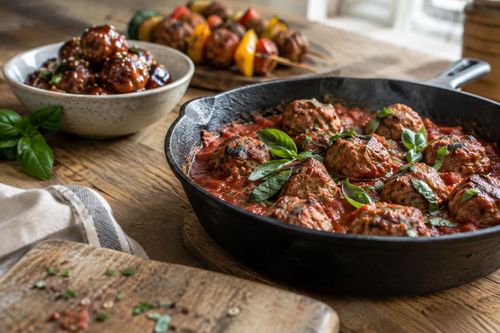
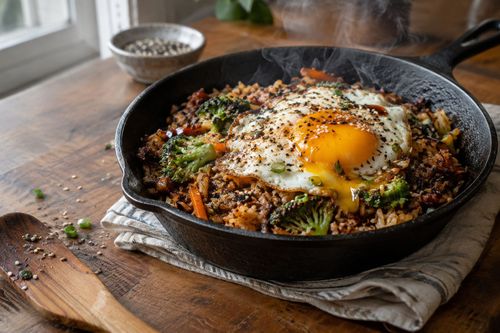
This is where the private combinations develop. The specific bowl of something that has never been written down and never been served to anyone else, that exists only in the cook’s practice of feeding themselves, that reflects their actual preferences in a way that cooking for others never fully does.
The Ritual Dimension of the Solo Meal
There is a quality available in the solo meal that is difficult to name precisely but that experienced solo eaters recognize.
It is something like ritual — the specific quality that comes from doing the same things in the same order for the same reasons, with the specific attention that ritual demands and that routine, which looks similar from the outside, doesn’t have.
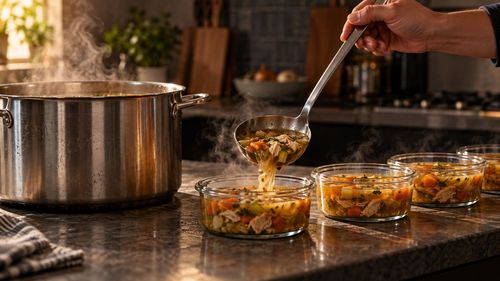
The cook who makes the same simple thing for themselves on certain evenings — the specific pasta, the specific soup, the specific combination of leftovers assembled in the same way — and who eats it in the same place with the same attention, is practicing a kind of ritual that the shared meal, with its social variability and its accommodation of multiple people’s needs, cannot replicate.
The ritual of the solo meal is entirely personal. It is shaped by one person’s specific preferences and rhythms and needs. It belongs completely to the person who practices it. And it provides, through its specific combination of repetition and attention, a quality of self-knowledge and self-care that social eating, for all its virtues, does not provide in the same form.
The philosopher Albert Borgmann wrote about what he called “focal practices” — activities that center and orient a person’s life by demanding full presence and producing deep satisfaction. The shared meal, he argued, was the paradigmatic focal practice of the domestic sphere. The solo meal, attended to fully, is a different but equally valid focal practice — one that centers the individual rather than the community, that orients the cook toward themselves rather than toward others, and that produces the specific satisfaction of a person who has fed themselves well.
What the Solo Meal Teaches About All Eating
The practice of the solo meal, developed deliberately and attended to fully, produces something that carries back into the shared meal.
It produces a better eater.
The person who has learned to taste fully in the absence of social distraction brings a quality of sensory attention to the shared meal that the person who has only ever eaten socially doesn’t have in the same way. The flavors at the shared table are noticed more fully. The specific qualities of a dish are more legibly present. The conversation about food — which is one of the genuine pleasures of the shared meal — is richer because the eater has more specific and more developed perceptions to contribute.
And the cook who has developed their palate through the honest feedback of the solo meal — who has cooked for themselves with enough attention and enough care to know what they actually like and what genuinely satisfies — is a cook who brings that self-knowledge to cooking for others.
The best dinner party hosts are, almost invariably, people who eat well alone.
Not because they cook elaborate meals for themselves — they usually don’t. But because they have developed, through the practice of the solo meal, a relationship with food that is genuine rather than performed. And genuineness, at the table as everywhere else, is the quality that makes the experience worth having.
The Takeaway
The meal eaten alone is not the lesser version of the real meal. It is a different meal with its own specific pleasures, its own specific value, and its own specific contribution to the eater’s relationship with food.
Eat alone sometimes. Deliberately. Without a screen, without a phone, without anything that competes with the food for the attention that the food deserves.
Make something worth eating. Set the table, or don’t — but sit down. Taste fully. Notice what is actually in the bowl rather than what should be or could be or might be better with different ingredients.
The meal for one, eaten with full presence, is one of the most honest experiences available in food.
And it is available every time there is no one else at the table.