
There is a number that professional cooks treat with more reverence than almost any other in the kitchen.
Not a cooking temperature. Not a timer setting. Not a ratio or a measurement.
It’s the internal temperature of the meat at the moment it leaves the heat — and the understanding of exactly what happens to protein, fat, and moisture at every degree on either side of that number.
Home cooks think about doneness as a visual cue. Professional cooks think about it as a precise thermal event — one that begins long before the meat touches heat and continues long after it leaves it.
The Journey Starts Before the Heat Does
Walk into a professional kitchen two hours before service and the proteins are already out of the refrigerator.
Not being cooked. Not being seasoned. Just resting — coming slowly to room temperature in a deliberate, unhurried way that most home cooks never think to replicate.
The reason is physics. A piece of meat pulled directly from a 38°F refrigerator and placed into a 400°F oven creates an enormous thermal gradient — a vast difference in temperature between the cold interior and the hot exterior that the oven heat must overcome before any even cooking can begin. By the time the heat has penetrated to the center of a cold, thick piece of meat, the outer layers have often been cooking for significantly longer than they should.
A piece of meat that has spent thirty to sixty minutes at room temperature before cooking has a much smaller thermal gradient to overcome. The heat moves through the protein more evenly. The cooking is more consistent from edge to center. The window for a perfectly cooked interior is wider and more forgiving.
This is not a minor adjustment. For thick cuts — a ribeye, a rack of lamb, a pork loin — the difference between cooking from cold and cooking from room temperature is visible in every slice.
Internal Temperature Is the Only Doneness Metric That Matters
The visual cues that home cooks use to determine doneness — color, firmness, the way juices run — are unreliable indicators that professional cooks treat as secondary signals at best.
Color is affected by the age of the meat, the presence of myoglobin, and the cooking method. A piece of meat can look done on the outside while significantly underdone at the center. Firmness varies by cut, fat content, and breed of animal. Juices run clear for reasons unrelated to doneness.
A thermometer is the only tool that tells the cook what is actually happening at the center of the protein — and professional cooks use one for every piece of meat that warrants precision, regardless of how many thousands of times they’ve cooked it.
But the number on the thermometer is not a simple target. It’s a starting point for a calculation that accounts for carryover cooking — the continued rise in internal temperature that occurs after meat is removed from heat, as the exterior heat migrates inward. A steak pulled at 125°F will reach 130 to 133°F during its rest. A roast pulled at 130°F may climb to 140°F or beyond in a warm resting environment.
Professional cooks pull their meat early — deliberately, precisely, accounting for how far the temperature will continue to rise — and let carryover finish the job. Home cooks who cook to the final target temperature and then rest the meat are consistently overshooting, because carryover adds degrees that haven’t been accounted for.
Different Cuts Have Different Ideal Temperatures — and Different Tolerances
One of the most important things professional cooks understand about meat temperature that home cooks rarely do is that different cuts have fundamentally different ideal temperatures — and that the same cut from different animals or different parts of the animal behaves differently under heat.
A tenderloin has almost no connective tissue and very little intramuscular fat. It reaches its ideal texture at a relatively low internal temperature — around 125 to 130°F for beef — and deteriorates quickly above that, becoming dry and chalky as the limited fat and moisture cook out. The window of ideal doneness is narrow, and precision matters enormously.
A short rib or a chuck roast is the opposite. It is dense with collagen and intramuscular connective tissue that must reach temperatures of 190 to 205°F before it converts fully to gelatin and the meat reaches the tender, yielding texture that makes braised cuts extraordinary. Cooking a short rib to medium — to 135°F — produces something tough and unpleasant, because the collagen hasn’t had the temperature or the time to do its work.
Professional cooks match cooking method and target temperature to the specific cut — not to a general preference for doneness. Home cooks who apply the same temperature logic to every piece of meat regardless of its composition are consistently producing results that are inappropriate for the cut they’re cooking.
Resting Is a Thermal Process, Not a Pause
The rest that follows cooking is one of the most misunderstood phases in home meat cookery — not in the sense that home cooks don’t know it exists, but in the sense that they don’t fully understand what it’s doing.
During cooking, heat drives moisture toward the center of the meat where it’s coolest. The muscle fibers contract around that moisture under the pressure of the heat. A piece of meat cut immediately after cooking releases that pressurized moisture immediately — it runs out onto the cutting board, the interior dries, and what remains is less juicy than it should be.
During a proper rest, two things happen simultaneously. The muscle fibers gradually relax as the temperature equalizes through the meat, releasing their grip on the moisture they’ve been holding. And the temperature continues to rise — carryover cooking — as the heat in the exterior migrates toward the center.
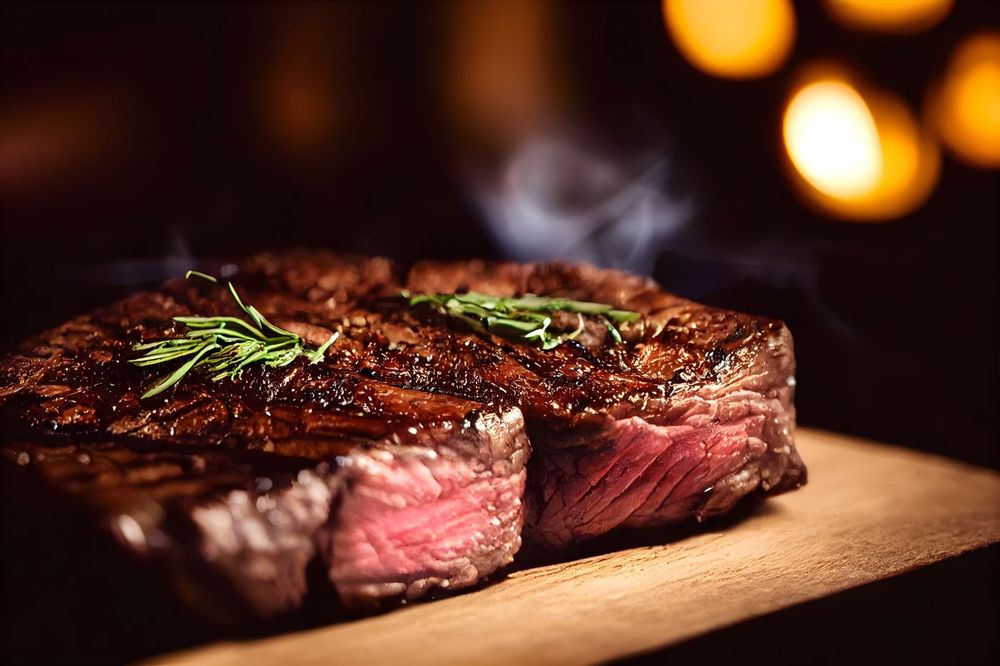
The rest period is not passive. It is the final phase of cooking, during which the moisture redistributes and the temperature equalizes into the outcome the cook was targeting. A steak rested for five minutes is a different piece of meat — moister, more evenly cooked, more cohesive — than the same steak cut immediately.
Professional cooks rest their meat in a warm environment — on a rack, loosely tented but not sealed, in a spot that is warm enough to keep the surface from cooling too rapidly. They know the length of rest required for the size of the cut: five minutes for a steak, ten to fifteen for a thick roast, up to thirty for something the size of a whole chicken. The rest is not improvised. It is part of the recipe.
The Sear Comes First or Last — Not Always First
Most home cooks sear first and finish in the oven — the assumption being that the sear seals in juices and the oven finishes the cooking. The first part of that assumption has been largely debunked; searing doesn’t seal in juices in any meaningful physical sense. What it does do is develop crust and flavor through the Maillard reaction.
What professional cooks have increasingly adopted — particularly for thick cuts — is the reverse: a low, gentle oven first to bring the meat to just below the target internal temperature, followed by a high-heat sear to develop the crust. This reverse sear approach produces a result that a traditional sear-first method struggles to match.
Because the interior of the meat is already at near-target temperature when it hits the searing surface, the sear can be done quickly and aggressively — producing a deeper, more developed crust in less time, with less risk of the gray band of overcooked meat just beneath the surface that a traditional approach often produces. The entire interior is pink and evenly cooked. The exterior is deeply browned. There is almost no gradient between the two.
For home cooks with thick cuts and the patience to plan ahead, the reverse sear is the most reliable path to restaurant-quality results from a home oven and a cast iron pan.
The Takeaway
Great meat cookery is temperature management — from the moment the protein comes out of the refrigerator to the moment it’s sliced and plated. The home cook who understands how thermal gradients affect even cooking, how carryover continues cooking after the heat is off, how different cuts require different targets, how the rest is as much a cooking phase as the sear, and how the order of searing and finishing changes the final result is working with the same knowledge base as a professional kitchen.
The thermometer is the tool. The understanding is the technique.
Both are available. Both make an immediate difference.