
You follow the recipe exactly.
Measure every ingredient. Mix according to instructions. Set your oven to the right temperature.
Then your cookies spread too thin. Your cake sinks in the middle. Your bread doesn’t rise the way it should.
You assume the recipe is bad or your oven is broken.
But the problem is usually simpler: your ingredients were the wrong temperature when you started.
Temperature matters in baking more than almost anywhere else in cooking. And most home bakers completely ignore it.
Room Temperature Isn’t a Suggestion
When a recipe calls for room temperature butter, eggs, or milk, that’s not a minor detail you can skip.
Cold ingredients don’t incorporate properly. They don’t emulsify. They create a batter or dough with an inconsistent texture that behaves unpredictably in the oven.
Room temperature ingredients blend smoothly and evenly. They create a uniform mixture that bakes consistently.
The difference isn’t subtle. It affects rise, texture, and final appearance.
Chefs and professional bakers plan ahead. They pull ingredients out an hour before they start. By the time they’re ready to bake, everything is at the temperature it needs to be.
Butter Is the Biggest Culprit
Cold butter doesn’t cream properly with sugar.
When you try to cream cold butter, you end up with chunks and lumps instead of a light, fluffy mixture. That fluffy mixture is what traps air—and that trapped air is what creates lift and tenderness in cakes and cookies.
Skip that step or do it with cold butter, and your baked goods turn out dense and heavy.
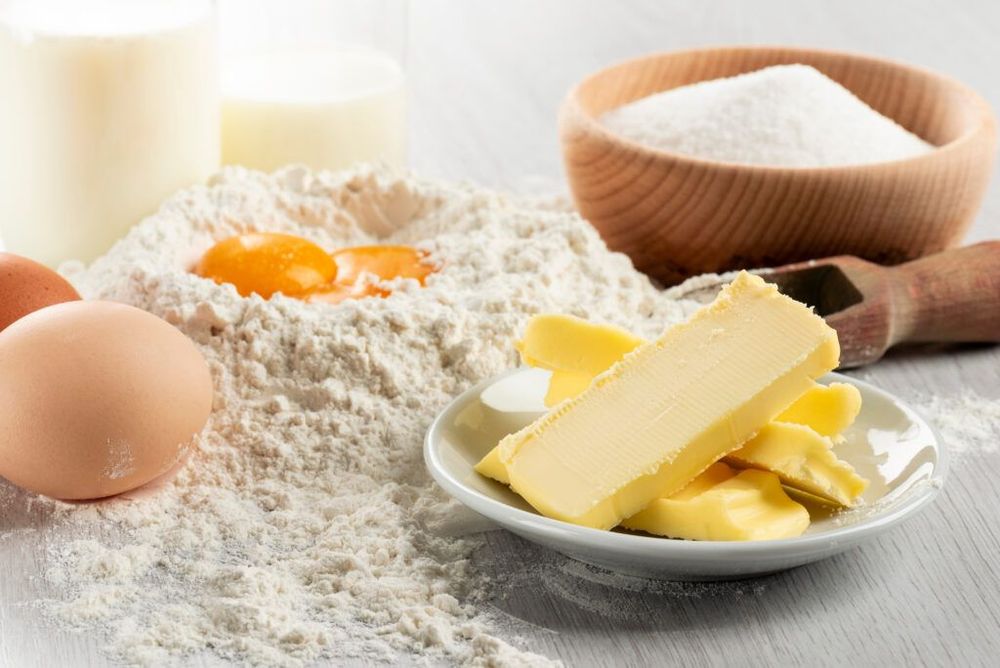
Room temperature butter should be soft enough to leave a fingerprint but still hold its shape. Not melted. Not greasy. Just pliable.
That specific texture is what allows it to incorporate air when beaten with sugar—and that’s the foundation of most baking.
Cold Eggs Don’t Emulsify
Eggs help bind fat and liquid together in batters.
But when eggs are cold, they don’t want to mix with room temperature butter. The butter seizes up. The batter looks curdled and broken.
You can still bake with it, but the final texture will be uneven. Some parts dense, some parts airy. Not the consistent crumb you’re aiming for.
Room temperature eggs blend seamlessly. They create a smooth, homogenous batter that bakes evenly from edge to center.
Five minutes in warm water brings cold eggs to room temperature. That’s all it takes.
Temperature Affects Fermentation
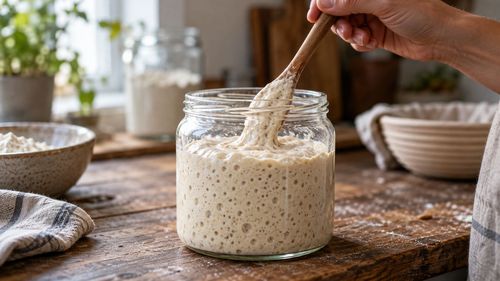
Bread dough is alive.
The yeast is constantly responding to temperature. Too cold and it barely works. Too hot and it works too fast or dies entirely.
Most bread recipes assume your ingredients and your kitchen are around 70-75°F. That’s the temperature range where yeast behaves predictably.
Use ice-cold water in your dough and the yeast will be sluggish. Your rise will take twice as long—or fail entirely.
Use water that’s too hot and you’ll kill the yeast before it has a chance to do anything.
Professional bakers control dough temperature obsessively. They know exactly what temperature their water should be based on the ambient temperature of their kitchen.
Home bakers often ignore this completely, then wonder why their bread turns out differently every time.
Melted Butter Behaves Differently Than Softened Butter
Some recipes call for melted butter. Others call for softened butter.
These aren’t interchangeable.
Melted butter creates a denser, chewier texture. It’s what you want in brownies or certain cookies.
Softened butter, when creamed, creates a lighter, more cake-like texture. It’s what you want in layer cakes and fluffy cookies.
Use melted butter when the recipe calls for softened and your texture will be wrong—not bad, necessarily, but different from what the recipe intended.
Temperature determines which version of butter you’re working with. And that determines the final result.
Dough Temperature Affects Rolling and Shaping
Try to roll out cold pie dough and it cracks and breaks.
Try to roll out warm pie dough and it sticks to everything and tears.
There’s a narrow temperature range where dough is pliable but still holds its shape. Too cold or too warm and it fights you.
Chefs chill dough when it gets too warm from handling. They let it rest at room temperature if it’s too cold to work with.
They’re constantly managing temperature to keep the dough in that workable zone.
Home bakers often try to force their way through, wrestling with dough that’s the wrong temperature and blaming themselves for the difficulty.
Oven Temperature Matters, But So Does Starting Temperature
Your oven might be set to 350°F, but if your batter goes in ice cold, it takes longer to heat through.
The outside starts cooking while the inside is still cold. You get uneven baking—edges that are overdone while the center is underbaked.
Room temperature batters heat evenly. The whole thing rises and sets at roughly the same rate.
This is especially important for cakes and quick breads, where even baking determines whether you get a level top or a domed, cracked mess.
Chocolate and Butter Need to Be Compatible Temperatures
Melting chocolate and butter together seems simple.
But if the butter is too cold when you add it to hot chocolate, the chocolate seizes into a grainy, broken mess.
If the butter is too warm, the mixture separates and becomes greasy.
Bakers bring both ingredients to similar temperatures before combining them. This ensures they melt together smoothly without breaking.
It’s a small adjustment that prevents a frustrating mistake.
Proofing Relies on Warmth
Dough rises because yeast produces gas, and gas expands with warmth.
A cold kitchen means slow proofing. Sometimes so slow that the dough over-ferments in spots before it rises properly overall.
Professional bakeries control ambient temperature. They have proof boxes set to exact specifications.
Home bakers work with whatever their kitchen temperature happens to be—often without realizing it’s affecting their results.
If your kitchen is cold, your dough needs more time or a warmer spot. If it’s hot, it needs less time or a cooler environment.
Adjusting for temperature isn’t optional. It’s the difference between dough that rises predictably and dough that’s a gamble every time.
You Can’t Rush Temperature
Softening butter in the microwave seems convenient, but it usually results in melted edges and a cold center.
Trying to bring eggs to room temperature in hot water works—but if the water is too hot, you partially cook the eggs.
Temperature adjustments take time. There’s no real shortcut that doesn’t risk compromising the ingredient.
Professional bakers simply plan ahead. They know what they’re baking tomorrow and pull their ingredients the night before or first thing in the morning.
That’s not a luxury. It’s discipline. And it’s the reason their results are consistent.
What You Should Do Differently
Read the recipe the day before. Check what needs to be at room temperature.
Pull those ingredients out an hour before you start baking. Set them on the counter and let them come to temperature naturally.
When a recipe calls for cold ingredients—like cold butter in pie crust—respect that too. Temperature specifications aren’t suggestions. They’re essential.
Start treating temperature as a measured ingredient, just like flour or sugar.
That shift in mindset is what separates frustrating baking from reliable baking.
The Takeaway
Baking isn’t forgiving the way other cooking is.
You can’t taste and adjust as you go. You can’t fix temperature problems once the batter is in the oven.
By the time you realize something’s wrong, it’s too late.
That’s why professionals obsess over temperature at every stage. They know that getting it right from the beginning is the only way to ensure a good result.
Home bakers often treat temperature as an afterthought—or ignore it entirely.
Then they wonder why their baking is unpredictable.
But it’s not mysterious. It’s not luck. It’s just temperature.
And now you know to pay attention to it.