
There is a moment that every eater recognizes.
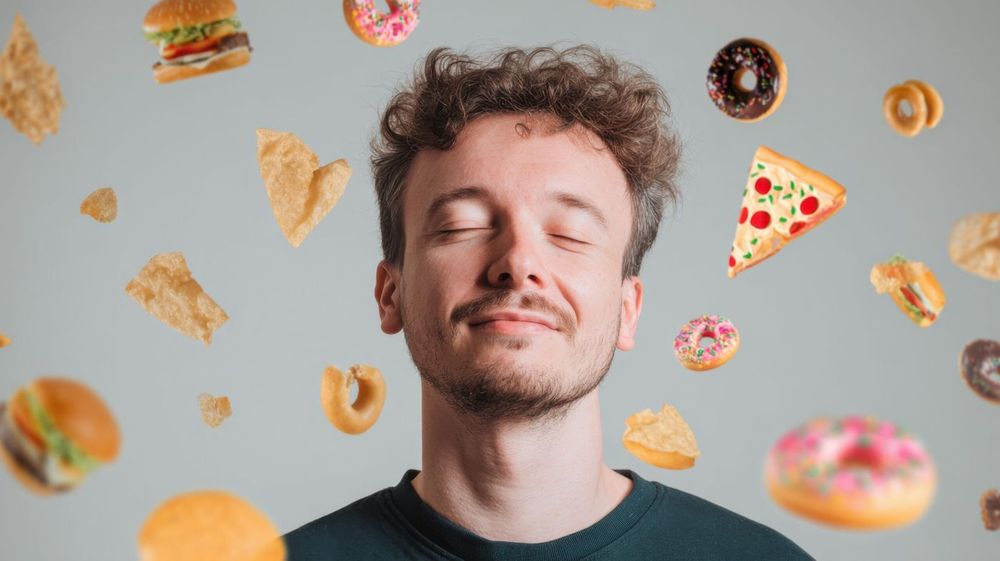
Not hunger exactly — or not just hunger. Something more specific than that. A pull toward a particular flavor, a particular texture, a particular combination of salt and fat or sweet and sour that feels less like a preference and more like a need. The craving that arrives not from the stomach but from somewhere harder to locate — that announces itself with a specificity that general hunger never does.
I need something salty. I need something cold. I need exactly this, right now, and nothing else will do.
Cravings are one of the most familiar experiences in eating and one of the least understood. They feel intensely personal — as individual and specific as a fingerprint — and yet they follow patterns that are recognizable across millions of people, that respond to predictable triggers, and that are shaped by forces most of us have never examined.
Understanding what cravings actually are — where they come from, what they’re responding to, and why they feel so urgent and so specific — doesn’t make them disappear. But it makes them more legible. And a craving that is understood is one that can be responded to more intelligently than a craving that is simply obeyed or resisted.
The Brain That Wants More Than Nutrients
The oldest theory of food craving — and the most intuitive one — is the nutritional deficiency hypothesis. The idea that cravings are the body’s way of signaling what it needs: that a craving for red meat indicates iron deficiency, that a craving for citrus indicates vitamin C deficiency, that a craving for salt indicates sodium imbalance.
This theory is appealing because it frames cravings as useful — as the body’s intelligent communication about its own needs. And there are specific cases where this logic holds. The intense salt cravings experienced by people with Addison’s disease — a condition that impairs the adrenal glands’ ability to regulate sodium — are a genuine signal of a genuine deficiency. The cravings for ice, clay, or other non-food substances experienced during iron deficiency anemia — a phenomenon called pica — reflect a real nutritional state.
But for most cravings, in most people, the deficiency hypothesis doesn’t hold up. The most commonly craved foods — chocolate, chips, pizza, ice cream — are not the foods one would expect a body to crave if it were signaling specific nutrient needs. And studies of people with documented nutritional deficiencies rarely find the specific cravings for deficiency-correcting foods that the theory predicts.
The body does have mechanisms for signaling nutritional states — hunger being the most obvious — but cravings appear to be driven primarily by a different system: the brain’s reward circuitry, which is activated by specific sensory and experiential properties of food rather than by the nutrients those foods contain.
The Reward System and the Foods That Hijack It
The brain’s reward system — the dopaminergic pathways that produce the sensation of pleasure and motivation — evolved to reinforce behaviors that were beneficial to survival. Eating calorie-dense food in an environment where calories were scarce was one of those behaviors. The brain that released dopamine in response to finding and consuming fatty, sweet, calorie-rich food was the brain that motivated its owner to seek more of those foods — a mechanism that was adaptive when calorie scarcity was the primary nutritional challenge.
In an environment of calorie abundance — which is the environment most people in the developed world live in — this same system responds to foods specifically engineered to activate it as powerfully as possible.
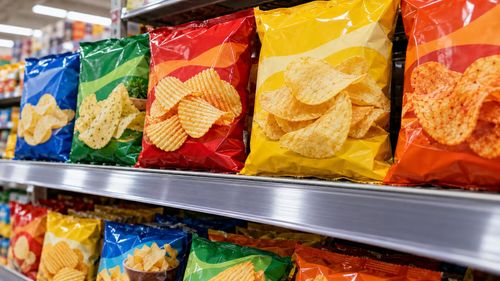
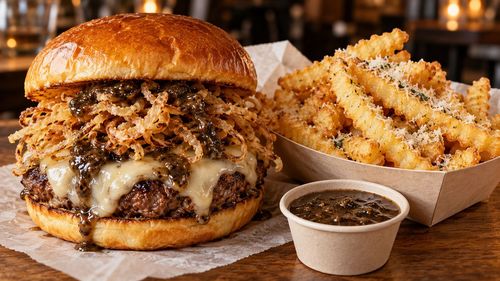
The combination of fat, sugar, and salt — the holy trinity of food engineering — activates the reward system more powerfully than any of those elements alone. This is not a coincidence. It is the result of decades of research by food manufacturers into the specific combinations that produce the strongest reward response, the most persistent craving, and the highest rate of consumption.
The term used in the food industry for the combination most likely to produce this response is “bliss point” — the specific ratio of sweet, salty, and fatty that maximizes pleasure without triggering the sensory-specific satiety that would cause the eater to stop. Foods engineered around the bliss point are not satisfying in the way that real food is satisfying. They produce a pleasure that peaks and subsides and immediately recreates the desire for more — a cycle that is, by design, difficult to interrupt.
Understanding this doesn’t immediately change the craving. But it does reframe it — from a personal weakness or a specific need to a predictable response to a specific kind of stimulus, which is a meaningfully different thing.
The Role of Memory and Emotion
If the reward system explains why certain foods produce cravings, it doesn’t fully explain the specificity of those cravings — why the craving is not just for something sweet but for this particular sweet thing, encountered in this particular combination with this particular texture and temperature.
That specificity is the contribution of memory.
The olfactory and taste systems have unusually direct connections to the hippocampus and amygdala — the brain structures responsible for memory formation and emotional processing. This is why food memory is so powerful and so specific: why a particular smell can transport a person to a specific moment in their past more completely than almost any other sensory trigger.
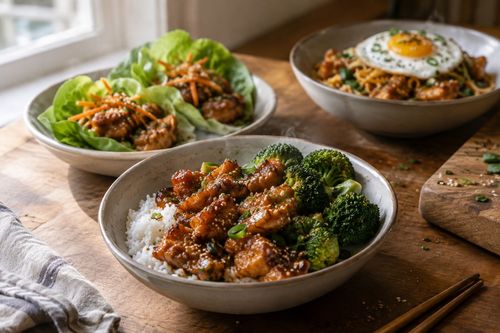
It is also why cravings are so often triggered by emotional states. The research on emotional eating — the tendency to seek specific foods in response to specific emotional conditions — consistently finds that the foods sought are not random. They are the foods most strongly associated, through memory, with the emotional states being sought. The person who craves pasta when stressed is not seeking carbohydrates in the abstract. They are seeking the specific comfort associated with pasta from a specific time and context — the meal that felt like safety, the food that accompanied a period of security or warmth.
This is not a pathology. It is the predictable operation of a memory system that encodes emotional and sensory information together, and that retrieves them together when either the emotion or the sensory trigger is encountered.
Hormones, Stress, and the Body’s Chemical Cravings
Beyond the reward system and the memory system, cravings are also shaped by the body’s hormonal state — by the chemical environment that hunger, stress, sleep deprivation, and other physiological conditions create.
Ghrelin — the hormone that signals hunger — rises before meals and falls after eating. But it also rises in response to stress and sleep deprivation, producing hunger signals that are disconnected from the body’s actual caloric needs. The person who is stressed or sleep-deprived experiences genuinely elevated hunger signals — not imagined hunger but chemically real hunger — that drive food seeking in ways that willpower alone is poorly equipped to address.
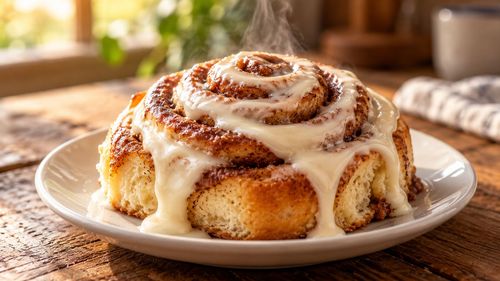
More specifically, stress elevates cortisol, which has been shown to increase cravings for high-calorie, high-fat, high-sugar foods specifically. The craving for comfort food during stress is not a psychological weakness. It is a hormonal response — the body seeking the specific caloric density and reward system activation that, in the context of an actual threat, would have been adaptive. In the context of a difficult work week, it is still chemically real even though the threat it evolved to address isn’t present.
Serotonin — the neurotransmitter associated with mood regulation — is influenced by carbohydrate consumption. The craving for carbohydrates during low mood or seasonal affective disorder reflects, in part, the brain’s attempt to elevate serotonin through food — a mechanism that is real and measurable, though the effect is modest compared to other serotonin regulation strategies.
The Craving That Changes When You Understand It
Here is the practical implication of everything that has been said about cravings and their origins: understanding a craving changes the relationship with it, even when it doesn’t eliminate it.
The person who recognizes that their afternoon craving for something sweet is driven by blood sugar fluctuation from an inadequate lunch is in a different position than the person who experiences the same craving as an inexplicable need. The first person can address the root cause — a more substantial lunch with more protein and fat — rather than simply responding to the symptom.
The person who recognizes that their craving for specific comfort food during stress is a hormonally driven response to elevated cortisol can decide how to respond to it with more information than the person who experiences it as a personal failing or an inexplicable impulse.
And the person who recognizes that their craving for a particular engineered snack food is the predictable result of its specific combination of fat, salt, and sugar — designed to maximize craving recurrence — is better positioned to evaluate whether satisfying that craving will actually satisfy them, or whether the design of the food guarantees that it won’t.
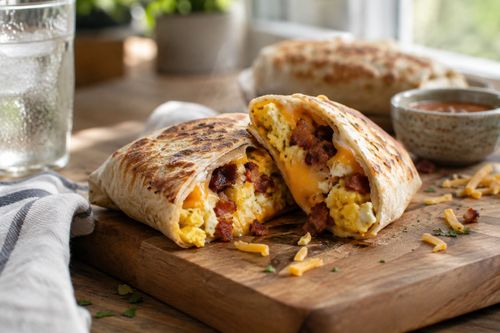
None of this is a prescription for ignoring cravings. Cravings are real, and the foods that satisfy them have genuine value — not just nutritional value but the psychological and emotional value that food carries when it is connected to memory, to comfort, to the specific pleasures of eating something that tastes exactly right at the right moment.
It is simply an argument for understanding cravings as something other than arbitrary impulses — for seeing them as the product of specific systems doing specific things in response to specific conditions, and for using that understanding to respond to them with more intelligence and more intention than pure reaction allows.
The Craving Worth Following
There is a category of craving that is worth distinguishing from the hormonally driven, memory-triggered, reward-system-activating cravings that this article has primarily addressed.
It is the craving that is specific to a genuine ingredient — the craving for a particular fruit at the peak of its season, the sudden desire for something acidic and bright after days of heavy, rich eating, the pull toward raw vegetables after a period of primarily cooked ones.
These cravings — less urgent than the others, more quiet, more specific to the quality of an ingredient rather than the activation of a reward circuit — are closer to the intuitive body wisdom that the nutritional deficiency hypothesis reaches toward, even if they don’t map cleanly onto specific nutrient needs.
They are worth listening to. The craving for brightness after heaviness, for freshness after richness, for something light after something dense — these are the body’s aesthetic responses to what it has been eating, as real and as worth heeding as any other signal it sends.
The cook who pays attention to these quieter cravings — who follows them toward the seasonal ingredient, toward the fresh and the bright and the specific — is cooking from a kind of embodied intelligence that is worth cultivating.
The Takeaway
Cravings are not arbitrary. They are the product of specific systems — the brain’s reward circuitry, the memory and emotion systems that encode food with feeling, the hormonal environment created by hunger and stress and sleep — responding to specific conditions in predictable ways.
Understanding them doesn’t eliminate them. But it changes the relationship with them — from mysterious impulses to be obeyed or resisted, to legible signals that can be responded to with intention.
Follow the quiet cravings toward the seasonal and the fresh. Understand the urgent ones as the product of systems that can be worked with rather than simply submitted to.
And eat the comfort food when you need it.
Just know what you’re actually hungry for.