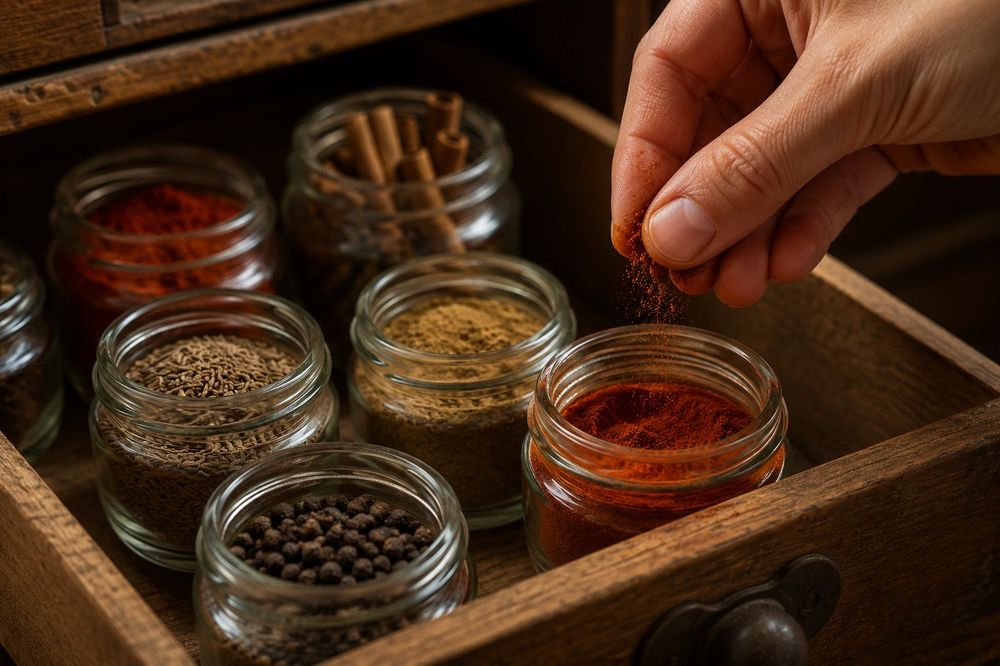

That jar of paprika in the back of the cabinet — the one that's been there since the last time someone made goulash, whenever that was — probably still looks fine. Same color, same smell when you stick your nose right up to it.
It's probably also doing almost nothing anymore.
Spices Don't "Go Bad." They Just Fade Away
Unlike fresh food, old spices rarely spoil in a way that makes them unsafe to eat. There's no mold, no bacteria growth, no expiration cliff.
What actually happens is slower and less obvious: the volatile aromatic oils responsible for flavor and scent evaporate gradually over time, especially once a container has been opened. A spice can be perfectly safe to use and still contribute almost nothing to a dish.
This is why old spices don't ruin a recipe outright — they just quietly fail to do their job.
Why Ground Spices Fade Faster Than Whole Ones
Grinding a spice dramatically increases its surface area, which speeds up the same evaporation process that eventually leaves a jar tasting like almost nothing.
A whole peppercorn, cinnamon stick, or cumin seed can hold onto its flavor compounds for years, protected by its intact outer structure. The moment it's ground, that protection disappears, and the clock starts running much faster.
Pre-ground spices typically lose noticeable potency within 6 months to a year. Whole spices, stored properly, can often last several years before the same decline sets in.
The Simple Test Almost Nobody Does
There's no need to guess whether a spice is still worth using. A quick test takes about five seconds.
Rub a small amount between your fingers, then smell it immediately. A spice that's still potent releases a noticeable, distinct aroma right away. One that's faded will smell faint, dusty, or close to nothing at all — and if it doesn't smell like much, it won't taste like much in the dish either.
This test is more reliable than checking a printed date, since storage conditions affect potency far more than time alone.
Why Storage Location Matters More Than People Think
The classic spice rack — mounted right next to or above the stove — is one of the worst possible places to keep spices, despite being one of the most common.
Heat and light both accelerate the breakdown of aromatic compounds. A spot near a warm stove or in direct sunlight can cut a spice's usable life significantly compared to a cool, dark cabinet a few feet away.
The most practical fix often has nothing to do with buying new spices — just moving the ones already in the kitchen to a better spot.
What to Actually Do About a Faded Spice Collection
A full spice cabinet overhaul isn't usually necessary. A more targeted approach works better.
Smell-test spices used most often first, since those are doing the most work in regular cooking
Buy whole spices and grind them fresh when a recipe allows for it
Buy smaller quantities more frequently instead of large jars that sit for years
Store spices in a cabinet away from the stove, oven, and direct sunlight
Faded spices aren't wasted money sitting in the trash. They're just quietly costing flavor every time they're used without anyone noticing why a dish tastes a little flat.
The Takeaway
A spice cabinet doesn't fail all at once. It fades slowly, jar by jar, in a way that's easy to miss because nothing looks wrong.
The fix isn't complicated or expensive — it's a five-second smell test and a slightly better storage spot.
Once you know what to look for, it becomes obvious just how much flavor has been quietly missing from dishes that seemed fine, but never quite tasted like they should.