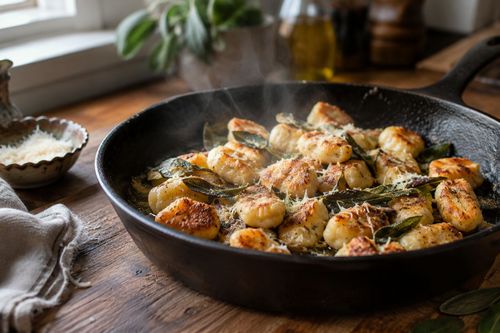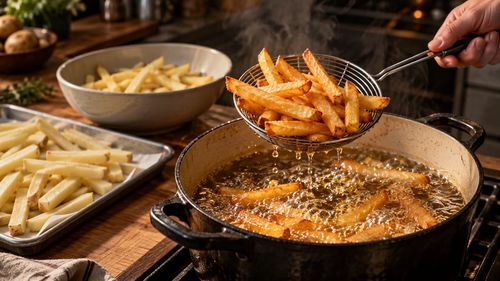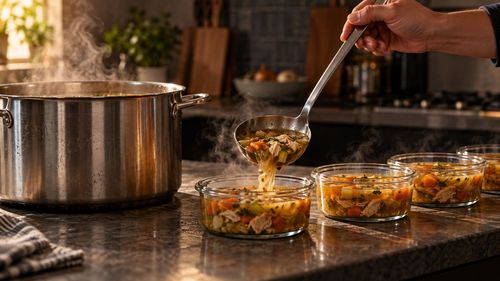

Walk down almost any residential street around dinnertime, anywhere in the world, and there's a good chance you'll catch it — that specific, unmistakable smell of something savory hitting hot oil. You don't need to see the kitchen to know exactly what's happening inside it.
That smell isn't one thing. It's actually a small handful of chemical reactions, repeated in kitchens on every continent, that the human nose has learned to recognize as "food is happening" regardless of what's actually in the pan.
The Trio Behind Almost Every "Cooking Smell"
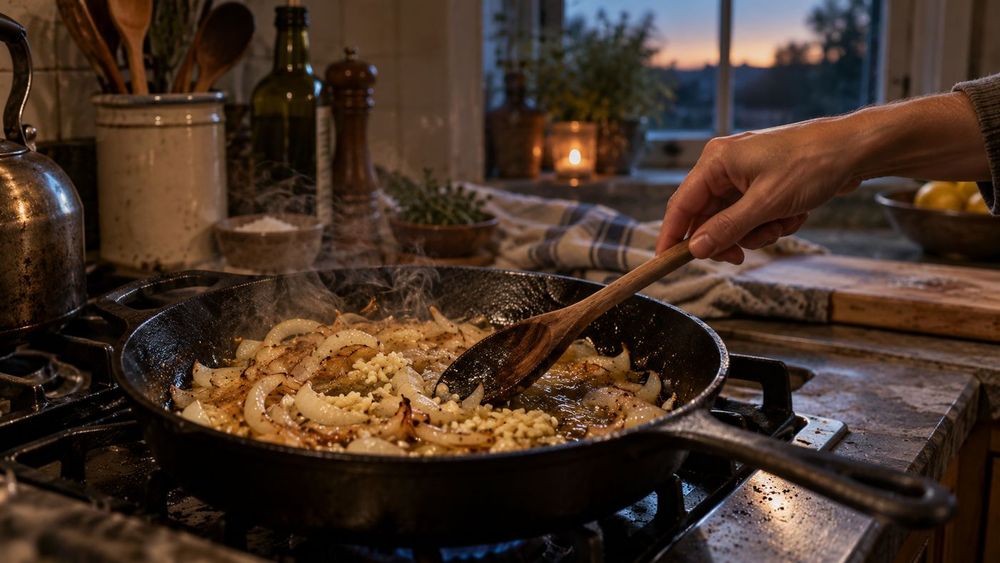
Onion, garlic, and some kind of fat sizzling together form the base of an enormous share of the world's savory dishes — from a French mirepoix to an Indian tadka to a Filipino sinigang.
When those ingredients hit heat, sulfur compounds break down and transform, releasing the specific aromatic molecules that read, almost universally, as "someone is making dinner." Different cuisines build wildly different dishes from there, but that opening smell is remarkably similar across cultures that have never influenced each other directly.
It's less a coincidence and more a shared discovery — different kitchens, centuries apart, arriving at the same aromatic starting point because the chemistry rewards it everywhere equally.
Why Smell Triggers Memory So Much Harder Than Taste Does
There's a reason a specific cooking smell can stop someone in their tracks decades after they last encountered it, in a way taste rarely manages on its own.
The olfactory system has a uniquely direct path to the brain's memory and emotion centers, bypassing some of the processing steps other senses go through first. This is part of why a smell can summon a specific kitchen, a specific relative, or a specific afternoon with a vividness that a photograph of the same scene often can't match.
Taste, by comparison, is partly built from smell anyway — a large percentage of what people perceive as "flavor" is actually aroma, sensed through the back of the throat while chewing.
Why Certain Smells Become "Home" and Others Don't
Not every food smell earns this kind of emotional weight. The ones that do tend to share a specific quality: repetition during childhood, in a place that felt safe.
A smell doesn't need to come from an elaborate or special dish to become someone's strongest food memory. It usually comes from whatever was cooked often, without ceremony, by someone who cooked it enough times that the smell became background noise — until it wasn't anymore, and became the thing that instantly means "home" decades later.
This is part of why the specific dish matters less than people assume. The frequency and the person behind it matter more.
What Happens When That Smell Shows Up Somewhere Unexpected
There's a particular kind of disorientation that comes from catching a childhood food smell somewhere completely out of context — a stranger's kitchen, a restaurant in another country, a hallway in an apartment building.
For a brief moment, the brain treats the smell as more real than the actual surroundings, triggering a flood of specific, detailed memory rather than a vague sense of familiarity. Psychologists sometimes describe this as more vivid and involuntary than memories triggered by sight or sound, precisely because of how directly smell is wired into memory.
It's part of why so many people can describe, in detail, the exact moment a random smell "brought them right back" to somewhere they hadn't thought about in years.
Why This Might Matter for How You Cook
Understanding this doesn't require doing anything differently in the kitchen. If anything, it's a reason to feel less pressure about it.
The dishes that end up mattering most to the people eaten with rarely require elaborate technique. What tends to matter is doing something often enough, and with enough presence, that the smell of it becomes attached to a specific feeling of being cared for.
The simplest weeknight dinner, repeated often enough, has a real chance of outlasting a special-occasion dish in someone's memory.
The Takeaway
Almost every culture has its own version of the smell that means "dinner is coming" — different ingredients, same underlying chemistry, same emotional shortcut wired directly into memory.
The specific dish someone grew up with isn't really what they're remembering when a smell catches them off guard years later. They're remembering the person who made it, and the fact that it happened again and again without needing to be special.
That's a strange kind of power for onions and garlic in hot oil to carry. And yet, in kitchens everywhere, they carry it anyway.