
You make pizza dough from scratch.
Follow the recipe. Measure the ingredients. Let it rise.
But when it comes out of the oven, something’s off.
The crust is dense instead of airy. Tough instead of chewy. It tastes like bread, not pizza.
You assume your oven isn’t hot enough. That you need a pizza stone or a special oven to make real pizza at home.
Sometimes equipment helps. But more often, the problem happens long before the pizza goes in the oven—during mixing, rising, or shaping.
You’re Adding Too Much Flour
Flour measurements are deceptive.
A cup of flour can weigh anywhere from 120 to 150 grams depending on how you scoop it. That variance is huge when you’re making dough.
Most home bakers add too much flour. The dough looks dry, so they keep adding more to make it workable.
The result is dense, tough crust that never develops the open, airy structure pizza is supposed to have.
Professional pizza makers weigh their ingredients. They know exactly how much flour they’re using because they measure by weight, not volume.
The dough should feel slightly sticky when it comes together. If it’s dry and stiff from the start, you’ve already added too much flour—and the final crust will suffer.
The Dough Isn’t Hydrated Enough
Great pizza crust has high hydration—meaning a higher ratio of water to flour than most bread doughs.
This creates an extensible dough that stretches easily and develops large, irregular air pockets during baking.
Home recipes often call for lower hydration because it’s easier to handle. The dough isn’t sticky. It doesn’t require much skill to shape.
But easy-to-handle dough doesn’t produce great pizza. It produces dense, breadlike crust.
Restaurants use doughs with 65% to 75% hydration. It’s wetter, stickier, harder to work with—but the final texture is incomparably better.
If your dough feels dry and tight, it’s probably not hydrated enough. More water creates better crust.
You’re Not Letting It Rise Long Enough
Most pizza recipes call for one or two hours of rising.
That’s enough for the dough to expand. It’s not enough for flavor to develop.
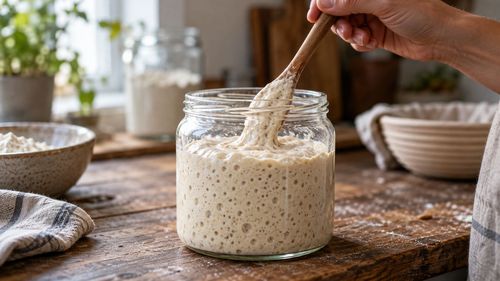
Real pizza dough ferments slowly—often 24 to 72 hours in the refrigerator.
During that extended fermentation, enzymes break down starches and proteins. The dough becomes more flavorful, more digestible, and easier to stretch.
Restaurants almost never use same-day dough. They make it days ahead because they know the difference in flavor and texture is enormous.
At home, people want pizza tonight. So they rush the rise and end up with dough that tastes flat and bready instead of complex and tangy.
The Dough Is Overworked
Kneading develops gluten, which gives dough structure.
But too much kneading creates a dough that’s tight and resistant. It fights you when you try to stretch it. It springs back instead of staying where you put it.
Chefs knead just until the dough is smooth and elastic—usually five to eight minutes by hand, less in a mixer.
Then they stop. They know that overworked dough produces tough crust.
Home bakers often keep kneading because they think more is better. Or they don’t knead enough and the dough never develops proper structure.
There’s a sweet spot. Too little and the dough is weak. Too much and it’s tight and tough.
You’re Rolling It Out With a Rolling Pin
Rolling pins compress dough.
They push out the air pockets that formed during fermentation. They create a dense, flat crust with no texture.
Pizza makers stretch dough by hand. They use gravity and gentle pulling to extend it without deflating the air bubbles.
This preserves the open crumb structure. The crust bakes up light and airy instead of dense and flat.
At home, people reach for a rolling pin because it’s faster and easier. But it ruins the texture you spent hours developing during fermentation.
Learning to hand-stretch dough isn’t difficult. It just requires practice. And it’s the only way to get proper pizza crust texture.
The Oven Isn’t Hot Enough
Home ovens max out around 500°F to 550°F.
Pizza ovens run at 700°F to 900°F.
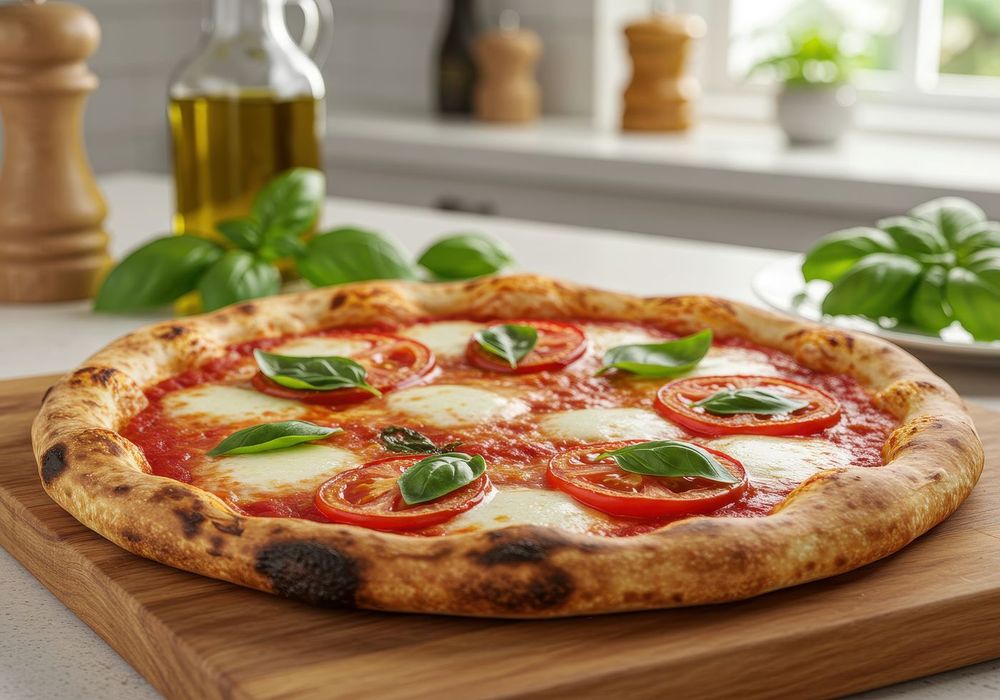
That temperature difference matters. High heat creates rapid oven spring—the dough puffs dramatically in the first minute of baking. It also creates charred spots and a crispy exterior while keeping the interior tender.
At lower temperatures, the dough bakes slowly. It dries out instead of puffing. The crust never develops that characteristic texture.
You can’t replicate a pizza oven at home. But you can maximize your oven’s potential by preheating it as hot as it goes for at least 45 minutes—not just until it beeps that it’s ready.
A pizza stone or steel helps, but only if it’s also preheated for that full time. The thermal mass needs to be saturated with heat.
You’re Using the Wrong Flour
All-purpose flour works for pizza. But it’s not ideal.
Pizza flour—often labeled as “00” flour or bread flour—has higher protein content. More protein means more gluten development, which creates chewier, more structured crust.
Restaurants use specific flours for specific styles. Neapolitan pizza uses finely milled 00 flour. New York pizza uses high-protein bread flour.
At home, people use whatever flour is in the pantry. Usually all-purpose, which has less protein and produces softer, less structured crust.
It’s not a dealbreaker. But if you want restaurant-quality crust, using the right flour makes a noticeable difference.
The Dough Is Shaped Too Early
Pizza dough needs time to relax after you portion it.
If you try to stretch it immediately after dividing, it fights back. The gluten is tight from being handled. It springs back every time you stretch it.
Chefs portion dough, then let it rest for 20 to 30 minutes before shaping.
This gives the gluten time to relax. The dough becomes extensible and easy to stretch without tearing.
Home cooks often skip this rest. They portion and immediately try to shape. Then they struggle with dough that won’t cooperate—and they blame their technique when the problem is just timing.
You’re Topping It Too Heavily
More toppings seem like more value. More flavor. More of everything good.
But heavy toppings weigh down the dough. They prevent it from rising properly in the oven. They create a soggy center that never crisps.
Restaurants use restraint. A light layer of sauce. Moderate cheese. A few carefully chosen toppings.
This allows the crust to cook properly. It stays crisp. The toppings don’t overwhelm the base.
At home, people pile on toppings until the dough can barely support them. Then they wonder why the center is raw and soggy while the edges are overcooked.
Less is more. Always.
The Dough Isn’t Brought to Room Temperature
Cold dough is stiff and difficult to stretch.
Trying to shape it tears the dough. You end up with thin spots that blow out in the oven and thick spots that stay raw.
Pizza makers bring dough to room temperature before shaping—usually an hour or two out of the refrigerator.
Warm dough is pliable. It stretches easily without resistance.
Home bakers often take dough straight from the fridge and try to work with it immediately. The dough fights them the entire time, and the final shape is uneven.
Patience solves this. Let the dough warm up. It’ll behave completely differently.
You’re Baking on a Cold Surface
Putting pizza dough on a room-temperature pan or a barely-preheated stone guarantees a soggy bottom.
The dough needs intense bottom heat to crisp properly. Without it, it steams and stays pale and soft.
Restaurants preheat their ovens and baking surfaces for extended periods. Everything is scorching hot before the pizza goes in.
At home, people preheat for ten minutes and think that’s enough. It’s not.
If you’re using a stone or steel, it needs 45 minutes to an hour of preheating. The thermal mass has to fully heat through.
That’s the difference between crispy, charred crust and pale, floppy crust.
What You Can Do This Weekend
Make your dough at least 24 hours ahead. Use bread flour if you have it. Measure by weight if possible.
Let the dough ferment in the refrigerator. Bring it to room temperature before shaping.
Preheat your oven as hot as it goes for at least 45 minutes. If you have a pizza stone or steel, preheat that too.
Stretch the dough by hand. Don’t use a rolling pin.
Top lightly—less than you think you should.
Bake until the crust is deeply browned and charred in spots.
That process produces pizza that actually tastes like pizza—not like flatbread with toppings.
The Takeaway
Homemade pizza crust fails for predictable reasons.
Too much flour. Not enough water. Insufficient fermentation time. Wrong shaping technique. Inadequate oven heat.
Every one of these problems is fixable. But you have to know they exist first.
Restaurants don’t make better pizza because they have secret recipes. They make better pizza because they understand dough—what it needs to develop flavor and texture, and what ruins it.
Home cooks often treat pizza dough like any other recipe. Follow the steps, hope for the best.
But dough is alive. It responds to time, temperature, and handling. Treat it right and it rewards you. Rush it or mishandle it and the final crust will always be disappointing.
Now you know what “treating it right” actually means.
And once you start doing these things, your pizza will finally taste the way you’ve been hoping it would.