
There is a question that food writers and curious dinner guests have been asking serious cooks for as long as serious cooks have existed.
If you could eat one last meal — if circumstances, real or hypothetical, reduced your final eating experience to a single choice — what would it be?
The question sounds morbid. It is, in practice, one of the most revealing questions in food — because the answer, more than almost any other food question, bypasses the performance of taste and the display of culinary knowledge and goes directly to what a person actually loves.
Not what they think they should love. Not what signals the right things about their relationship with food. Not what would impress the other people at the table or demonstrate the sophistication of their palate or reflect the values they want to project.
What they actually love. What they would choose, freely and finally, when nothing else matters.
The answers are almost never what you expect.
What the Last Meal Reveals
The famous answers to this question — the last meals described by chefs and food writers and notable eaters — share a quality that is immediately observable and that reveals something important about the relationship between food and meaning.
They are almost never elaborate.
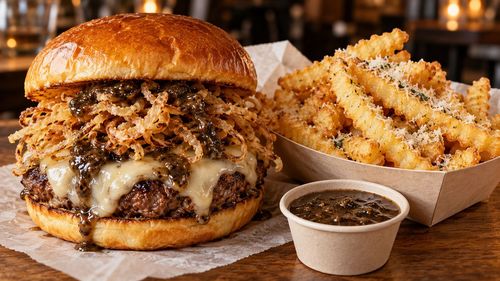
Anthony Bourdain, who had eaten at the finest restaurants in the world and who possessed one of the most informed and adventurous palates in food culture, gave versions of this answer that centered on simple French bistro food — a salade composée, a steak frites, a carafe of decent wine. Not the technically demanding preparations or the rare ingredients of the world’s greatest restaurants. The food of the neighborhood bistro eaten with pleasure and without ceremony.
Julia Child’s answer centered on French onion soup. The dish that she had encountered in France that had changed her relationship with food entirely — the preparation that represented not just a flavor but a moment of revelation, a before and after in a life’s relationship with eating.
The pattern repeats: when the performance pressure of the question is removed and the answer is allowed to be honest, the food that people choose is almost always the food with the deepest personal meaning. Which is almost never the most technically impressive food. Which is almost always the food of a specific memory, a specific person, a specific moment in a life.
The Food of the People We Have Lost
There is a specific category of food memory that the last meal question tends to surface — the memory of food made by people who are no longer alive.
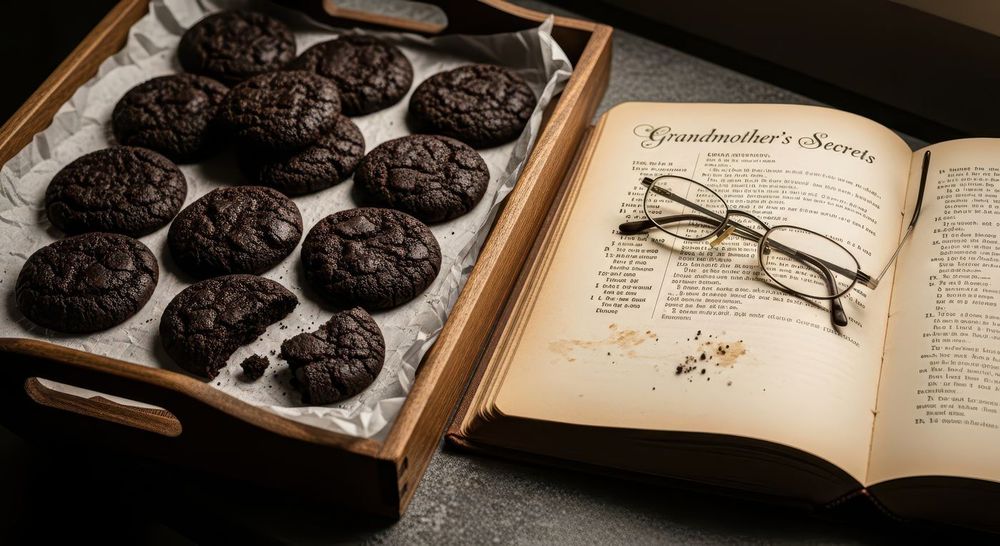
The grandmother’s dish. The parent’s specific preparation of something ordinary. The friend who made a particular thing that no one else has ever made quite the same way. The person who is gone now and whose food, more than almost anything else about them, is the thing that cannot be found anywhere else.
Food memory is the most powerful kind of memory the human sensory system produces — because the olfactory and gustatory systems have more direct connections to the brain’s memory and emotion centers than any other sensory modality. The smell of a dish associated with a person who has died is capable of producing a quality of grief and love simultaneously that no other sense quite generates.
This is why the food of the people we have lost is so specifically irreplaceable. It is not just that the dish tasted good — many dishes taste good. It is that the dish was made by a specific person whose specific hands, specific habits, specific small adjustments to a recipe that was nominally standard but was actually entirely personal, produced something that existed nowhere else in the world.
The grandmother’s recipe, written down and followed exactly, does not produce the grandmother’s dish. The knowledge that made it what it was — the feel of the dough, the judgment about when the sauce was ready, the specific generosity with salt or sugar that no written recipe captures — lived in the hands of the person who made it and cannot be fully transmitted by any other means.
This is one of the genuine losses that death produces. Not just the person but the food they made. The specific flavor that existed only at their table.
The Dish That Changed Everything
Beyond the food of specific people, the last meal question often surfaces a different kind of memory — the memory of the dish that changed the eater’s relationship with food entirely.
Every serious eater has one. The preparation that made them understand, for the first time, what food could be. That revealed, in a single bite, a depth and complexity and pleasure that they had not known was available in eating. That divided their eating life into before and after.
These transformative dishes are not necessarily elaborate or expensive. Often they are shockingly simple — a perfectly ripe tomato eaten in the right place at the right time. A bowl of ramen that arrived at the perfect moment of hunger after a long day. A piece of cheese encountered for the first time in the place that made it, among people who made eating it feel like a ceremony rather than a reflex.
The transformation they produced was not primarily about the food itself — though the food was genuinely extraordinary. It was about the encounter between the eater’s particular sensory state and emotional condition and the specific food at the specific moment. It was about readiness — the specific readiness that comes from genuine hunger, genuine openness, genuine presence at the table.
This is why these dishes are so difficult to recreate. The food can be found again. The specific readiness cannot be engineered. The transformation was produced by a convergence that cannot be deliberately assembled, only recognized when it occurs.
The Meal That Was Never About the Food
There is a third category of last meal answer that is perhaps the most honest of all.
The people who, when pressed to be entirely truthful, describe not a dish but a table — not a specific preparation but a specific gathering of people in a specific place at a specific time.
The meal in the garden of the house that has since been sold. The holiday dinner that the whole family attended before the family was reduced by time. The lunch on a Tuesday that had no occasion and no significance except that everyone happened to be there and the food was simple and good and nothing else was demanded of anyone.
These answers reveal the last meal question’s deepest truth: that the most memorable and most meaningful eating experiences are almost never primarily about the food.
They are about the people. About the specific quality of being together that a shared meal produces — the particular ease, the conversation that goes to unexpected places, the specific pleasure of being in a room with people who matter while food that is good enough is passed around and consumed without particular ceremony.
The food was the occasion. The meaning was the gathering.
This is what the last meal question keeps revealing, across decades of asking and answering: that food is not the point. It is the vehicle. The point is what happens when food gathers people together in the same place and invites them to stop whatever else they are doing and simply be present with each other.
The Cooking That This Implies
There is a practical implication of everything the last meal question reveals that is worth stating directly.
If the most meaningful meals are almost never the most technically accomplished ones — if the food that people would choose finally and freely is the food of specific memories and specific people rather than the food of culinary achievement — then the value of cooking well is not primarily aesthetic or technical.
It is relational.
The cook who makes the dish that will be remembered did not necessarily make it with extraordinary skill. They made it with extraordinary care — with the specific attentiveness to the people they were feeding that produced food that felt made for them rather than made to impress them.
This care is available in any kitchen, with any level of technical skill, with any set of ingredients. It is not a function of culinary training or natural ability. It is a function of paying attention to the specific people who will eat what you make and making the decisions — about what to cook, how to cook it, how to present it — that reflect that attention.
The dish that will be someone’s last meal memory does not exist yet. It is being made right now, in ordinary kitchens on ordinary evenings, by people who are simply trying to feed the people they love.
That is what the last meal question is really asking.
Not: what is your favorite food?
But: what do you love?
The Takeaway
The last meal question is the most honest question in food — the question that strips away the performance and the signaling and the display and gets to what a person actually values in eating.
The answers are almost always simple. They are almost always personal. They are almost always about a specific person or a specific moment rather than a specific preparation. And they almost always reveal that the most meaningful food experiences are the ones most fully charged with human connection.
Cook with that understanding.
Not to produce the technically perfect dish — though technique matters and skill is worth developing. But to produce the meal that carries the specific weight of genuine care for the specific people at the table.
The last meal worth eating is the one made with love for someone specific.
It always has been.