
There is a quality that certain summers acquire in memory that they did not have while they were happening.
The summer before a significant change — before a move, before a loss, before the end of something that had seemed permanent — becomes, in retrospect, a summer of particular vividness. The meals eaten that summer are remembered with a specificity that ordinary meals don’t achieve. The tomatoes that were simply August tomatoes at the time become, in memory, the best tomatoes of a life. The dinner table that was just Tuesday becomes, in retrospect, a specific and irreplaceable occasion.
This is not nostalgia in the pejorative sense — not the falsification of the past in service of the present’s discontents. It is the specific quality that significance gives to the ordinary — the way that knowing, even unconsciously, that something is changing or ending or about to become different, sharpens the attention that is brought to the present moment.
The meals of uncertain times are often the most vivid meals in anyone’s memory. Not because the food was better — though sometimes it was, prepared with the specific care that the awareness of impermanence produces. But because the attention that uncertainty generates is the same attention that makes food genuinely memorable.
What Food Does in Uncertain Times
There is a reason that humans reach for food when circumstances become difficult or uncertain — a reason that goes beyond the simple need for caloric fuel and that reveals something fundamental about the relationship between food and the human need for stability.
Food is one of the most reliable sources of continuity available in any life. The specific flavor of a dish associated with safety or comfort or belonging — the flavor that carries the memory of a time when things were certain — is one of the few genuinely reliable anchors that uncertain times provide.
This is not a psychological weakness. It is the specific wisdom of the body and the memory working together to provide what the mind and the circumstances cannot: a momentary experience of something that feels continuous and reliable and like itself regardless of what is happening in the larger context of the life surrounding it.
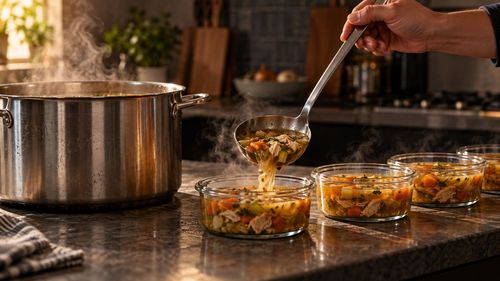
The grandmother’s soup made during a period of difficulty. The specific comfort food that appears in the kitchen when the news is bad. The meal that is made more carefully than usual because the care of making it is itself a form of control in a situation where control is otherwise absent — each of these is the food of uncertain times doing the specific work that food is uniquely capable of doing.
The Meal as an Act of Normalcy
In periods of significant disruption — the kind that reorient an entire life, that make the ordinary suddenly visible because it is threatened — the preparation and eating of a normal meal becomes an act with specific and significant meaning beyond its nutritional content.
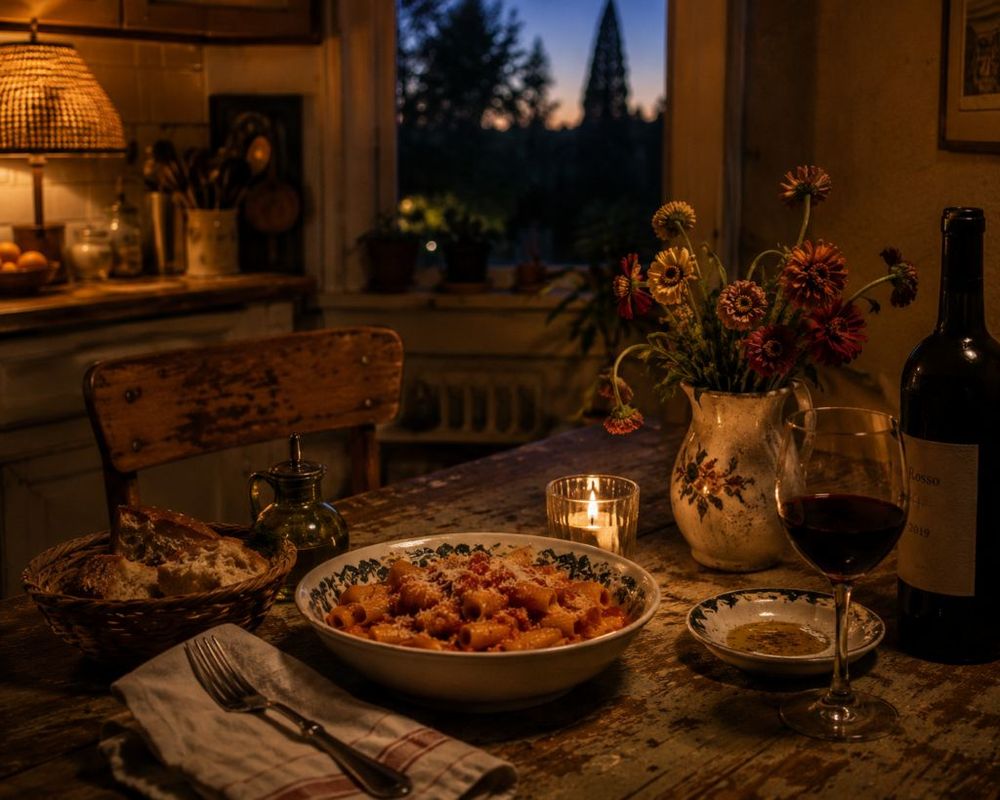
The act of cooking — of gathering ingredients, of applying technique, of producing from the available materials something that is good to eat — is an assertion that some things are still working the way they are supposed to work. That the tomatoes are still good and the olive oil is still flavorful and the pasta still cooks in the right amount of time in properly salted water. That the kitchen, at least, is a place where the expected outcome reliably follows from the right inputs.
This is why people cook when they are grieving. Why they bake bread during crisis. Why the first meal made in a new home — even before the boxes are unpacked, even with limited equipment and uncertain supplies — is one of the most significant meals in any period of transition. The cooking asserts normalcy. The eating confirms it, however temporarily.
The food writer Laurie Colwin — who wrote with particular insight about the relationship between food and domestic life — understood this quality of the ordinary meal as an act of civilized assertion. The properly set table, the carefully made dinner, the specific attention given to what is eaten and how — these are not trivial in uncertain times. They are the specific form that the refusal to be entirely undone by uncertainty takes in the domestic sphere.
The Recipes That Anchor Us
Every person who has cooked through a difficult period has a specific recipe — or a small collection of them — that functioned as an anchor during that time. A preparation that was made repeatedly because the making of it was reliable and the result was reliable and the reliability was what the uncertain period most specifically lacked.
These anchor recipes are not always the most sophisticated preparations. They are almost never the most impressive ones. They are the preparations that produce, reliably and without drama, something that tastes like itself — something that the person making it knows how to make and knows will work and knows will produce the specific result that is wanted.
The pasta e fagioli that a grandmother made through every difficult period of her life. The specific soup that appears in the kitchen every time things become hard, because the making of it and the eating of it are so deeply associated with the capacity to continue that the soup has become, over years of repetition, a form of resilience in edible form.
The cook who has developed these anchor recipes — who has, through the ordinary cooking of ordinary times, built a repertoire of preparations that are so well known and so reliably successful that they can be made in any emotional state without requiring the quality of attention that new preparations demand — has a specific culinary resource that uncertain times reveal as more valuable than any impressive recipe ever learned.
What Gets Cooked When the News Is Bad
There is a specific and recognizable pattern in what people reach for in the kitchen when the external world is difficult.
It is not the ambitious preparation. It is not the new recipe. It is not the technically demanding dish that requires focused, anxious attention at every stage.
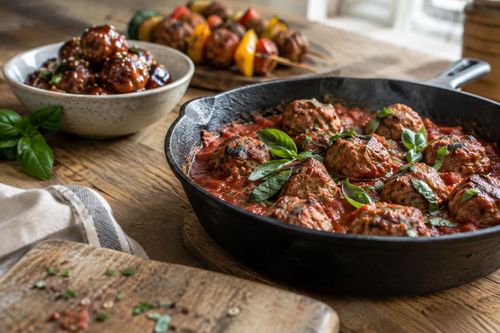
It is the braise. The soup. The grain cooked simply with stock and aromatics. The thing that requires initial preparation and then turns itself over to time — that can be put on the stove or in the oven and then left, requiring only occasional attention, during the period when the cook needs to be near the kitchen without being consumed by it.
The specific quality of the low-and-slow preparation — its tolerance for imprecise attention, its improvement with time, its specific ability to fill the house with a smell that is itself comforting regardless of what the finished dish will taste like — makes it the most appropriate cooking for difficult times. The braise does not require the cook to be fully present. It requires the cook to be approximately present — which is often the most that can be asked during periods of genuine difficulty.
And the smell that the braise produces during its long cooking — the aromatics softening in fat, the liquid reducing and concentrating, the specific combination of heat and time and good ingredients that fills a house in the way that nothing else does — is itself a form of comfort that operates before any food is consumed. The smell of something good cooking is the olfactory assertion of the same normalcy that the cooking asserts.
The Table as Refuge
The dinner table during uncertain times is not just a place to eat. It is a place where the people gathered around it can, for the duration of the meal, be primarily at the table rather than primarily in the difficulty.
This is not denial. It is the specific wisdom that the table has always offered — the understanding that the meal creates a container for human presence that the rest of life does not provide, a specific bounded time and space in which the primary obligation is to eat and to be with the people eating alongside you.
The table during uncertain times is also the place where the specific human need for acknowledgment — the need to be seen, to have one’s experience witnessed by people who share it — is met most naturally and most completely. The conversation that happens over a meal is different from the conversation that happens in other contexts — slower, more likely to go to genuine depth, more likely to produce the specific quality of exchange that people most need when things are hard.
The food on the table during these conversations is not incidental. It provides the occasion and the rhythm — the shared focus on something immediate and sensory that gives the conversation somewhere to land between the moments of genuine exchange. The passing of the bread. The serving of the soup. The small domestic acts that distribute attention across the physical and the conversational simultaneously, producing a quality of ease that the pure conversation without food rarely achieves.
Cooking for Others as an Act of Love
When the uncertainty affects not just the cook but the people the cook feeds — when the difficult period is shared rather than individual — the cooking takes on an additional significance that is worth naming directly.
Cooking for people who are going through something hard is one of the most direct and most genuine expressions of care available in any relationship. Not because the food solves anything — it doesn’t. But because the act of cooking for someone — of thinking about what they need and what would bring them specific pleasure and spending the time and the attention to produce it — communicates something that words often cannot.
It communicates: I see you. I am here. You are worth this effort.
The specific food that is cooked in this spirit carries this communication in its making as much as in its eating — and the person who receives it knows, whether or not they can articulate it, that they are eating something that was made with the specific attention that care produces.
This is why the food brought to a grieving household — the casserole left on the porch, the soup dropped off with a note, the specific dish made because it was the one the recipient loved and the giver wanted them to have it — is so specifically meaningful. Not as nutrition. As the most direct possible expression of: I am thinking about you. I wanted to do something. This is what I can do.
The Summer That Will Be Remembered
The summer that is happening right now — this specific August, with its specific tomatoes and its specific heat and its specific quality of light and its specific gathering of people at specific tables — is the summer that will be remembered in whatever terms the circumstances that follow it determine.
If the circumstances that follow are stable and unremarkable, this summer will be remembered as a pleasant summer — one of many, distinct in its specific sensory details only to the extent that attention was brought to them while they were happening.
If the circumstances that follow are significantly different — if this summer turns out to be the last summer before something changed — it will be remembered with the specific vividness that significance gives to ordinary moments. The meals of this summer will be remembered. The specific quality of the light at the outdoor table will be remembered. The specific taste of the August tomatoes, which were simply August tomatoes at the time, will be remembered as the best tomatoes of a specific and irreplaceable summer.
This is not a reason for anxiety. It is a reason for presence — for the specific quality of attention that makes the ordinary meal an occasion worth remembering regardless of what comes after.
Every summer is the last summer before something changes. Every August table is the table that will be remembered when circumstances have made it specific.
The tomatoes are on the table right now.
Eat them with attention.
The Takeaway
The food of uncertain times is not different from the food of certain ones — not in its ingredients or its technique or its specific preparations. It is different in the quality of attention it receives and the quality of meaning it carries.
Cook the anchor recipe. Make the braise that fills the house with smell. Set the table when it would be easier not to. Eat with the people who matter, at the actual table, with the actual food, in the actual summer that is happening right now.
The circumstances will be what they will be.
The table, tended with care, is always something that was worth setting.