
There is a specific moment that arrives every year in the last week of July or the first week of August — different for each cook, different for each climate, but recognizable when it comes.
It is the moment when the abundance of summer stops feeling infinite and starts feeling finite.
The tomatoes are still perfect. The peaches are still extraordinary. The corn is still at its best. Nothing has declined. Nothing has peaked and passed in the way that the final weeks of a season inevitably bring. But something has shifted — a quality in the light, a drop of a few degrees in the morning air, the specific awareness that the farmers market vendor who mentioned the apple crop wasn’t talking about something far away.
This is the moment that the serious summer eater has been both anticipating and dreading since April. The moment when summer’s abundance transitions from simply being there — available, unhurried, extending indefinitely ahead — to being a resource with a known end.
The cook who notices this moment and responds to it correctly does something different from the cook who doesn’t notice or who notices and does nothing. They cook with a specific quality of intention that ordinary abundance doesn’t produce — the intention of someone who knows that the thing they are cooking with will not be available in this form much longer, and who wants to do right by it in the time that remains.
The Tomato You Haven’t Eaten Yet
There are tomato preparations that every summer cook intends to make and that the abundance of the season paradoxically makes easy to defer — because the tomatoes are always there, always at their best, always available for tomorrow or next week or whenever the specific preparation feels like the right one for the moment.
The last days of summer are the moment when the deferred preparations become urgent.
The panzanella — the Tuscan bread salad made from stale bread and peak-season tomatoes and red onion and basil and good olive oil and vinegar — is one of the most specific and most perfect expressions of the late summer tomato. It requires the tomato to be at its peak and it requires the willingness to let stale bread absorb the tomato’s juice until the bread has become something entirely different from bread and the tomato has given everything it has to the preparation. The result is one of the most satisfying summer dishes in any culinary tradition — but it is specifically a late summer dish, made from the surplus and the excess of a season that has been generous beyond any single day’s need.
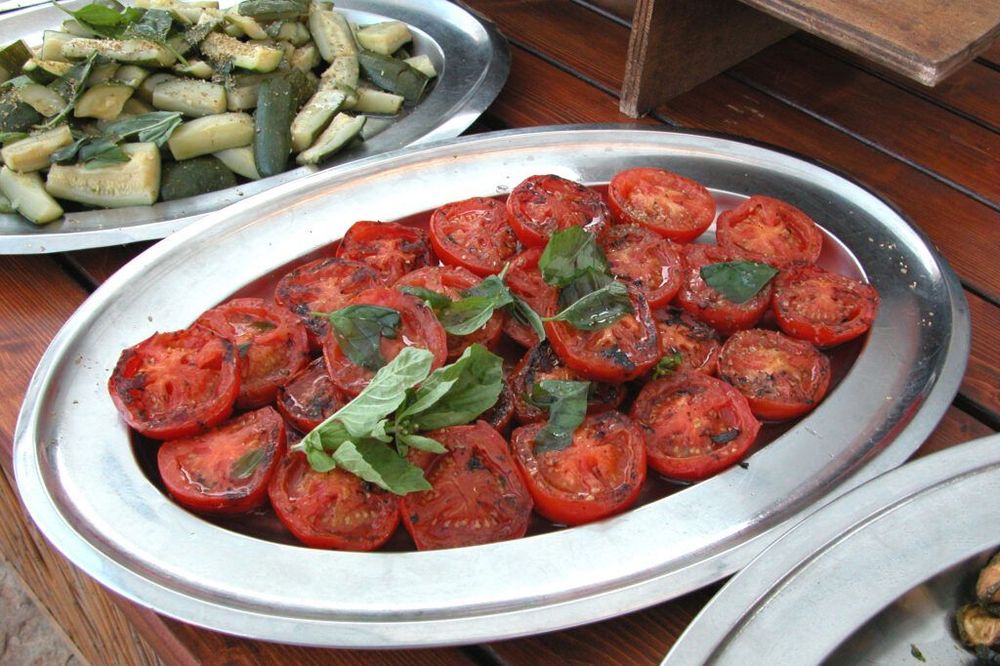
The pomodori al forno — the oven-roasted tomatoes that concentrate into something more intensely tomato than the raw fruit — should be made in the last days of the season in quantities that fill the freezer. The specific intensity of the flavor that peak-season tomatoes produce when roasted slowly cannot be reproduced from winter tomatoes regardless of the technique — the quality of the raw fruit is the foundation on which the roasting produces its result, and the foundation only exists during the weeks when the tomato is genuinely what it should be.
And the simple thing — the tomato sliced thick and eaten with nothing but salt and oil and bread — should be eaten every day in the last week of the season, with the specific quality of attention that knowing it will not be available next month produces. Not with grief or with the specific melancholy of anticipated loss, but with the genuine presence that the last days of something good deserve.
The Corn Before It’s Memory
Corn’s transition from peak to past peak is more rapid than any other summer vegetable — measured in days rather than weeks, affected by every hour of storage after harvest.
The cook who is paying attention in late July eats corn differently than the cook who is not paying attention. They eat it more often, more simply, with the awareness that the specific sweetness of perfect corn — the sweetness that is the product of the sugars that convert to starch the moment the ear is picked — is available for a window that closes faster than anticipated.
The corn preparation that most honors the peak-season ear is the preparation that requires the least from the cook: corn cooked directly in boiling salted water for four minutes and eaten immediately, with butter and salt, standing at the counter if necessary because the distance from stove to table might cost it the specific temperature and the specific sweetness that make this moment what it is.
But the last days of corn season are also the moment for the preparations that use it in its most concentrated form — the corn soup that extracts every bit of flavor from the stripped cobs as well as the kernels, the corn succotash that combines it with the other summer vegetables that are also at their peak, the corn pudding that uses it in a form that holds its flavor through the cooking.
The stripped cob that remains after the kernels have been removed should not be discarded. Simmered in water for thirty minutes with a small amount of salt, it produces a corn stock of remarkable sweetness and depth — the liquid foundation for the corn soup that is one of the great preparations of the late summer kitchen.
The Peach at Its Last Perfect Moment
Of all the summer fruits, the peach is the one most urgently associated with the specific quality of its peak — because the window of peak peach is narrower than almost any other, and because the peach that has passed its peak is so specifically and so completely less than what it was at its best.
The peach eaten at its peak — at the specific moment of maximum sugar and maximum juice and maximum fragrance — is one of the most perfect eating experiences available in any season. It requires nothing. It is complete. The cook’s only obligation is to recognize the moment and honor it by eating the peach as it is.
But the peaches of late summer that cannot all be eaten in this pure form — the flat of peaches purchased from the farmers market because the price reflected the season’s abundance and the flavor was exactly right — require action before the moment of peak passes into overripeness.
The peach jam made from these peaches — cooked with sugar and lemon until thick, stored in jars in the refrigerator — is a direct translation of the season’s flavor into a form that holds for weeks. The specific intensity of peak-season peach jam, spread on toast in September or October, is a reminder of what August tasted like that no commercial jam can provide.
The roasted peach — halved, pitted, placed cut-side down in a hot pan with butter until caramelized, finished with a splash of something — is the transformation that takes the peach from a fruit that is best raw into something that is specifically better cooked, that produces a depth of flavor through the caramelization of its own sugars that no amount of cooking skill applied to an out-of-season peach could replicate.
And the grilled peach — placed cut-side down on a hot grill until marked and slightly softened, served alongside something savory — is the late summer preparation that most specifically honors the intersection of the peach and the outdoor cooking that defines the season.
The Herbs Before the First Frost
The herb garden that has been producing through the summer is approaching the end of its most productive period — and the specific preparations that preserve the herb’s flavor for the coming months deserve the attention and the effort that the closing of the season’s window makes urgent.
The basil that has survived the summer and that is now, in the final warm weeks, producing at its most generously — before the cooler nights that will begin to signal its decline — is the basil for the large batch of pesto that will serve as the primary reminder of summer through the winter months.
The pesto worth making in late July or early August is made from basil at the specific peak of its essential oil concentration — the moment just before the plant would flower if not prevented — and processed with good pine nuts and aged Parmigiano and the best olive oil available. Made in quantity, frozen in portions covered with a thin layer of olive oil to prevent oxidation, it is the single most concentrated form of summer herb flavor available in any preserved preparation.
The herb salt — made by processing fresh herbs with coarse salt in a food processor until combined, then spread to dry — is the least technical and most broadly applicable herb preservation available. Any combination of herbs can be used, and the resulting salt is a specific and vivid seasoning for finished dishes through the months when fresh herbs are unavailable or less flavorful.
The Gratitude That Late Summer Cooking Requires
There is an attitude toward cooking that the last days of summer specifically invite — one that is worth naming directly because it represents a relationship with food and with the season that is worth cultivating beyond these specific weeks.
Gratitude.
Not the performed gratitude of a social grace or a dietary philosophy, but the specific, genuine appreciation of something excellent that will not be indefinitely available — the quality of presence that the awareness of impermanence produces in any relationship with something worth having.
The cook who eats the last summer tomatoes with genuine gratitude for what the season provided — who brings to the last week of peak produce the specific quality of attention that the awareness of its ending invites — is eating in a way that produces a quality of pleasure that abundance without awareness cannot.
This is the gift that seasonality gives to the attentive eater: not just the flavors themselves, but the specific quality of appreciation that their impermanence produces. The strawberry in June is more vivid than it would be if strawberries were available year-round — not because the strawberry has changed but because the eater who knows it will not last much longer tastes it more fully than the eater who assumes it will always be there.
The last days of summer are the most concentrated expression of this quality — the moment when the season’s gifts are at their fullest and the awareness of their passing is at its most present.
Cook in this awareness. Eat in this awareness.
It makes the food taste more completely like itself.
What Comes After
The transition from summer to autumn is not a loss in the culinary sense — it is a transition, and what comes after has its own gifts.
The first apples of the autumn. The squashes and the root vegetables that develop sweetness through the cold. The hearty greens that frost improves. The return to the slow-cooked preparations that the heat of summer makes unappealing and the cool of autumn makes welcome. The specific pleasure of the first soup of the season, made from autumn vegetables, served on the first evening that felt genuinely like a fall evening.
These pleasures are genuine. They are worth anticipating. They are their own form of abundance — different in character from summer’s abundance but equally generous in what they offer to the cook who pays attention.
But they require that summer be fully inhabited first.
The transition is better when the season that precedes it has been completely lived — when every peak-season tomato has been eaten or preserved, when the peaches have been roasted and jammed, when the corn has been eaten at the counter still hot from the pot, when the pesto has been made and frozen and the herb salt is in the jar on the counter.
The cook who arrives at the first week of September having fully inhabited the summer’s abundance arrives with a specific quality of satisfaction — the satisfaction of having paid attention to something that deserved it, of having used well what the season provided, of having been present in the kitchen and at the table when the season’s gifts were at their best.
That satisfaction is part of what autumn tastes like.
The Takeaway
The last days of summer are not a time for elegant cooking or technical ambition. They are a time for attention — for the specific quality of presence that the awareness of something excellent and impermanent produces.
Eat the tomato. Make the pesto. Buy the flat of peaches and roast half of them and jam the rest. Eat the corn standing at the counter while it’s still perfect. Cut the herbs before they bolt and make something with them that lasts.
And sit at the table as often as possible during these last weeks — outside if the evening allows it, with people who matter, with the specific quality of attention that the season’s ending deserves.
Summer will come back next year.
But this summer — this specific abundance, this specific combination of ingredients at this specific moment of quality — will not.
Eat it.
All of it.