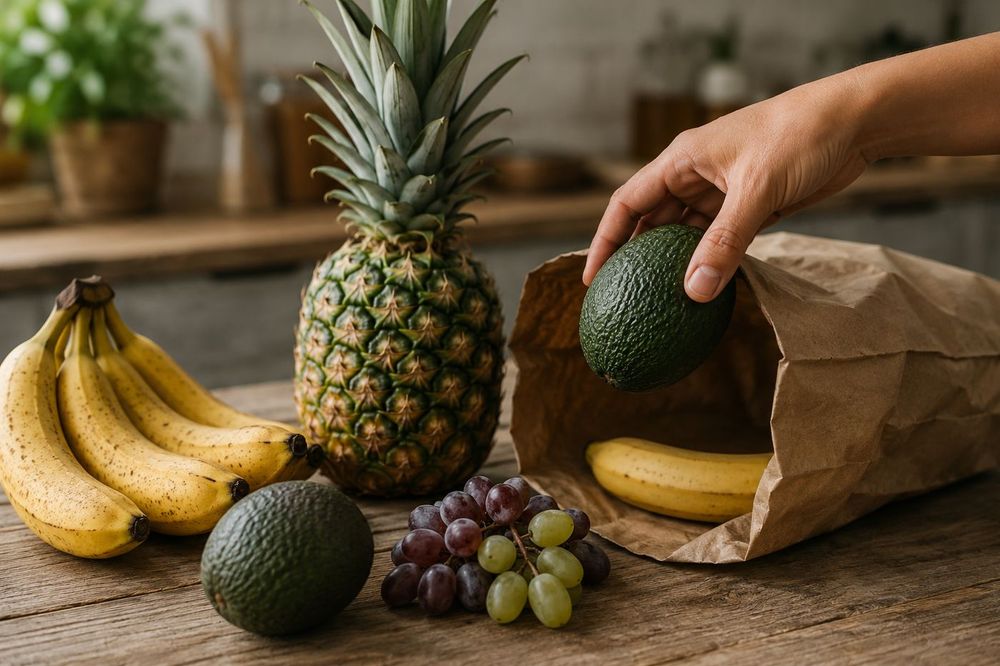

Bananas turn from green to yellow on the counter with zero effort. Leave a pineapple sitting next to them for the same week, and it stays exactly as hard and sour as the day it was bought.
That's not bad luck or a bad pineapple. It's biology, and it splits nearly every fruit into one of two very different categories.
The Gas Behind the Whole Thing
Some fruits continue ripening after harvest because they produce a plant hormone called ethylene, a gas that triggers the chemical processes responsible for softening, sweetening, and color change.
Fruits capable of this are called climacteric fruits. Once picked, they keep generating ethylene and keep ripening, sometimes dramatically, even with zero further connection to a plant or tree.
This is why a rock-hard avocado can turn perfectly soft on the counter in a few days without doing anything at all.
The Fruits That Simply Can't Do This
Non-climacteric fruits don't produce meaningful ethylene after harvest, which means whatever ripeness they had at picking is essentially the ripeness they're stuck with.
Citrus, grapes, pineapple, strawberries, and cherries all fall into this category. They might soften slightly or change color a little from handling, but they won't get sweeter or riper sitting on a counter — because the internal process that would make that happen simply isn't running.
A pineapple bought underripe will stay underripe. There's no waiting it out.
Why This Matters More at the Grocery Store Than People Realize
Knowing which category a fruit falls into changes how it should actually be shopped for.
Climacteric fruits — bananas, avocados, peaches, tomatoes, mangoes — can reasonably be bought underripe and left to finish at home, which is part of why grocery stores often stock them slightly green or firm.
Non-climacteric fruits need to be judged at the moment of purchase, since there's no second chance coming. A pineapple's ripeness the day it's bought is the best it's ever going to get.
The Trick That Speeds Up Climacteric Fruit
Because ethylene is a gas, it builds up and concentrates in enclosed spaces — which is the entire logic behind a classic kitchen trick.
Placing a banana or avocado in a paper bag traps the ethylene it's already producing, surrounding the fruit with more of the gas than it would encounter sitting out in the open. That concentrated exposure speeds up ripening noticeably, sometimes cutting the wait time by a day or two.
Adding an already-ripe banana or apple to that bag speeds things up even further, since it contributes extra ethylene into the same enclosed space.
Why Ethylene Can Also Work Against You
The same gas that ripens a banana can prematurely age fruits and vegetables sitting nearby that would rather stay firm longer.
Leafy greens, broccoli, and non-climacteric fruits stored too close to high-ethylene producers like bananas or apples can wilt, yellow, or spoil faster than they should. This is part of why produce drawers sometimes seem to sabotage themselves — one enthusiastic banana quietly aging everything around it.
Separating high-ethylene producers from ethylene-sensitive produce is a small habit that noticeably extends how long a full produce drawer stays in good shape.
The Takeaway
Not every fruit is playing by the same rules after it leaves the plant. Some keep changing. Others are already finished, whether anyone realizes it or not.
Knowing the difference means fewer disappointing pineapples and fewer bananas that seem to take forever — because both outcomes were actually predictable the whole time.
The counter isn't neutral ground. For some fruit, it's still an active kitchen.