
There is a way of eating that was, for most of human history, not a lifestyle choice.
It was simply reality.
You ate what was growing. You ate it when it was ready. And when it was gone — when the last of the summer tomatoes had been eaten or preserved, when the root cellar was running low, when the orchard was bare — you waited. You ate something else. You learned, over generations, to build a cuisine around the rhythm of what the land produced and when it produced it.
Seasonal eating was not a philosophy. It was the only option available.
And then, over the course of the twentieth century, it became optional. Refrigerated shipping, global supply chains, greenhouse growing, and controlled atmosphere storage made it possible to eat almost anything at almost any time of year. The tomato in January. The strawberry in February. The asparagus in November. Availability became the norm, and the seasons — as a meaningful organizing principle of what to eat and when — faded from most people’s awareness.
What faded with them was something worth recovering.
What a Seasonal Ingredient Actually Is
The word seasonal has been used often enough in food marketing that it has lost some of its precision. A menu that describes a dish as “featuring seasonal ingredients” may mean something specific and meaningful — or it may mean very little at all.
A genuinely seasonal ingredient is one that is harvested at the natural peak of its growing cycle in the region where it was produced, and consumed close enough to that harvest that its quality reflects the moment of peak ripeness.
This definition has several important implications.
Seasonality is regional. The asparagus season in California begins earlier than it does in the mid-Atlantic states. The apple harvest in New Zealand occurs in the Southern Hemisphere’s autumn — which is the Northern Hemisphere’s spring. An ingredient that is seasonal in one place may be out of season in another, and an ingredient imported from the opposite hemisphere to be available year-round is not, in any meaningful sense, a seasonal ingredient in the place where it’s being consumed.
Seasonality is brief. The window of peak quality for many of the most prized seasonal ingredients is measured in weeks rather than months. The white asparagus season in Germany is celebrated partly because of its brevity — it arrives, it is eaten with urgency and attention, and it disappears. The Vidalia onion season. The first-of-the-season Dungeness crab. The brief window when local corn is so sweet it barely needs cooking. These windows exist everywhere, for every growing region, for every climate. The cook who knows them eats in a completely different way than the one who doesn’t.
Why Seasonal Food Tastes Better — the Science
The flavor superiority of seasonal produce is not a romantic notion. It has a concrete scientific basis that explains why a tomato in August and a tomato in January are not the same food in any meaningful sense.
Flavor in fruits and vegetables is produced by sugars, acids, and volatile aromatic compounds that develop during ripening on the plant. The process of ripening — triggered by ethylene gas produced by the plant itself, regulated by temperature and light — is complex and sequential. The compounds that make a peach taste like a peach, a tomato taste like a tomato, a strawberry taste like a strawberry develop in a specific order and require the full duration of the natural ripening process to reach their peak concentration.
When fruit or vegetables are harvested before they are fully ripe — as is standard practice for produce that must travel long distances — this process is arrested. The ethylene-triggered ripening that occurs during shipping and storage is a biochemically different process from ripening on the plant. It produces the color change and the textural softening that signal ripeness to the eye and the hand, but it does not fully replicate the flavor compound development that occurs during genuine vine or tree ripening.
This is why a January strawberry looks like a strawberry, feels like a strawberry, and tastes like almost nothing. The visual and textural signals of ripeness are present. The flavor is not — because the volatile aromatic compounds that produce strawberry flavor never fully developed.
A strawberry picked ripe and eaten within a day or two of harvest is a completely different sensory experience — not marginally better, but categorically different.
The Calendar of Peak Seasons
Understanding which ingredients are at their peak and when is knowledge that previous generations inherited through proximity to the land and that most contemporary cooks have to deliberately acquire.
In most temperate climates, the broad outlines of peak seasonality follow a recognizable pattern.
Spring brings the first tender vegetables of the year — asparagus, peas, fava beans, ramps, spring onions, the first strawberries, young lettuces and greens that have been building sweetness through the cold. These are ingredients defined by delicacy and freshness, by the quality of just-emerged newness that is their particular seasonal character.
Summer is the season of abundance — of nightshades at their peak, of corn and stone fruit and berries, of fresh herbs growing with abandon, of the tomatoes that justify the entire wait. This is the season that makes the argument for seasonal eating most eloquently and most immediately. A summer tomato needs nothing. It is the argument for itself.
Autumn brings the shift toward depth and density — winter squash, root vegetables, apples and pears, the last of the peppers, the beginning of the brassicas. The flavors become richer and more complex, appropriate for the longer cooking that autumn naturally gravitates toward.
Winter is the season of storage and preservation — of roots and tubers, of hearty greens like kale and Brussels sprouts that are actually improved by frost, of citrus that peaks in the cold months, of preserved and fermented things that summer produced and time has transformed.
Each season has its logic. Each produces ingredients that are suited to the cooking that the weather naturally invites.
The Practice of Eating Seasonally Today
Eating seasonally in the contemporary world doesn’t require rejecting the global food system or refusing to buy anything that wasn’t grown locally. It requires a shift in orientation — from “what do I want to cook?” to “what is actually good right now?”
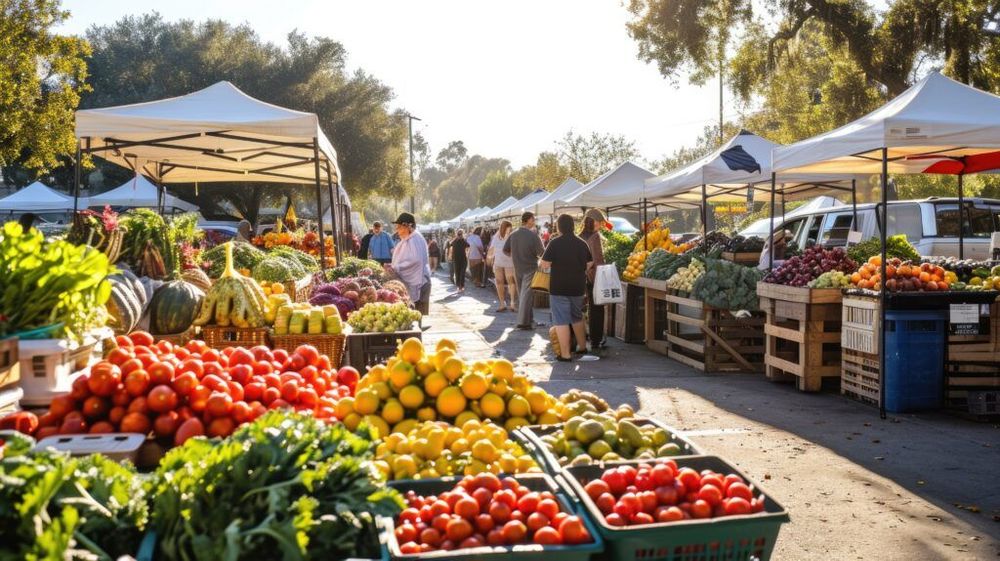
The farmers market is the most direct path to this orientation — a place where seasonality is not a marketing concept but a physical reality, where the selection changes weekly based on what is actually ready, and where the vendor who grew the food can tell you what is at its peak today and what is coming next week.
But seasonal awareness can be applied to any shopping environment. The home cook who knows that asparagus season has arrived doesn’t need a farmers market to seek it out — they can find local or regional asparagus at a well-stocked grocery store, at a price that reflects the abundance of the season, and eat it at the moment of its best quality rather than twelve months later when it has traveled from the other side of the world.
The practical habit is simple: let the season lead. Build the week’s cooking around what is genuinely good right now rather than around a fixed set of recipes that require specific ingredients regardless of their seasonal status. Cook asparagus in spring because spring asparagus is extraordinary, not because asparagus appears on a recipe being followed. Cook tomatoes in August because August tomatoes need almost nothing done to them, not because a recipe calls for tomatoes in November.
What Seasonal Eating Gives Back
There is something beyond flavor that seasonal eating restores — a quality of attention to food and to time that the year-round availability of everything quietly erodes.
When a food is available always, it carries no particular significance. The tomato in January and the tomato in August are the same object, purchased in the same aisle, prepared in the same way. The absence of contrast flattens the experience.
When a food is available for six weeks a year and then gone, it carries the weight of its own brevity. The first asparagus of spring tastes partly like asparagus and partly like the winter that preceded it. The last tomatoes of September taste partly like tomatoes and partly like the summer that is ending. The pleasure is sharpened by the awareness that this moment is specific and will not last.
This is not nostalgia. It is a fundamentally richer relationship with food — one in which what is on the plate is connected to where it came from, when it was grown, and the particular moment in the year that made it possible.
The cook who eats this way eats better food. They also eat more meaningfully — with an awareness of the calendar, the land, and the particular pleasure of something that is extraordinary right now and will be gone before long.
The Takeaway
Seasonal eating is not a dietary restriction or a political position. It is a practice — the habit of paying attention to what is genuinely good right now and building the meal around that, rather than around what is merely available.
It produces better-tasting food because peak-season ingredients are measurably superior to out-of-season ones. It produces more economical shopping because peak-season ingredients are typically more abundant and less expensive. And it produces a relationship with food that is richer, more attentive, and more connected to the world that grows it.
The seasons are still there. They’re just waiting to be noticed again.