
There is a particular kind of eating experience that happens only in one place.
Not because the recipe is secret. Not because the technique is guarded or the ingredients are restricted to a specific region. But because something about the combination of place, producer, climate, tradition, and the accumulated knowledge of the people who have been making this thing for generations produces a result that cannot be fully replicated anywhere else — no matter how carefully the method is followed or how closely the ingredients are sourced.
These are the foods that tell you where you are.
Not just in the sense that they are regional specialties — though they are that. In the deeper sense that eating them, in the place that produced them, creates an experience of location that is as specific and as irreplaceable as standing in a landscape and looking at it. The food is the place. The taste is the geography.
Every serious traveler who loves food has had this experience. The cheese that was revelatory in the mountain village where it was made and merely good when brought home. The bread that tasted like a specific morning in a specific city and like nothing else since. The olive oil pressed from a specific grove on a specific hillside that produces a flavor that no other oil — however excellent — replicates.
Understanding why this happens — and what it means for how we eat and travel and think about food — is one of the more interesting questions in the world of food.
Terroir Beyond Wine
The concept of terroir — the idea that the character of an agricultural product reflects the specific conditions of the place where it was produced — originated in wine. French winemakers observed that grapes grown in different parts of the same region, under what appeared to be similar conditions, produced wines with distinctly different characters. The soil composition, the slope of the land, the microclimate, the specific microbial environment — all of these contributed to a flavor profile that was irreducibly specific to a particular place.
This idea has since migrated far beyond wine — into cheese, olive oil, coffee, chocolate, honey, salt, and virtually every other agricultural product that reflects its growing environment in the final flavor of the finished product.
Terroir in cheese is perhaps most dramatically illustrated by the mountain cheeses of the Alps. Comté — the great French mountain cheese made in the Jura — has a flavor profile that reflects, in ways that cheesemakers and researchers have documented with some precision, the specific mix of grasses and wildflowers that the cows graze on in the high summer pastures. Wheels made from summer milk have a complexity and depth that winter milk, when the cows are eating hay, doesn’t produce. The flavor of the cheese is a record of the pasture at the moment of milking — a kind of edible archive of a specific place at a specific time.
Honey is perhaps the most transparent expression of terroir available to most eaters — because honey is, essentially, a concentrated record of the flowers blooming within the foraging range of the hive at the moment of production. Single-origin honeys from specific regions have flavor profiles so specific to their source that experienced tasters can identify not just the region but the season and the dominant floral source from a blind tasting.
The Foods That Can Only Be Made There
Beyond terroir — the influence of place on the character of an agricultural ingredient — there are foods whose character depends on something more specific: the particular microbiological environment of a place, which cannot be transported and cannot be replicated.
Roquefort cheese — made only in the caves of Combalou in southern France — depends for its distinctive character on Penicillium roqueforti, the mold that occurs naturally in those specific caves and that produces the characteristic blue veining, the specific flavor compounds, and the particular texture of genuine Roquefort. The cheese has been made there since at least the eleventh century — a thousand years of interaction between this specific mold, this specific climate, and the milk of the Lacaune sheep that graze the surrounding causses.
The mold can be cultured and introduced elsewhere. The cheese made with it elsewhere is blue cheese — and it may be excellent blue cheese — but it is not Roquefort. Something in the specific interaction of the cave environment, the local microbial community, the particular characteristics of the milk, and the accumulated knowledge of the people who have been making it for a thousand years produces a result that cannot be fully extracted from the place that produced it.
The same is true of Parmigiano-Reggiano — produced only in a specific region of northern Italy, from the milk of specific cows fed specific diets, aged in specific conditions that reflect the temperature and humidity of the Po Valley. The designation protects not a recipe but a place — because the cheese is the place, in a sense that the protected designation exists to recognize.
The Market as a Geography Lesson
The most efficient way to understand the food of a place is to spend time in its market.
Not the restaurant. Not the tourist-oriented food street. The market where local people buy what they cook — where the producers who grew the food are often present alongside it, where the seasonal availability of ingredients is displayed in the most literal possible way, and where the variety of products reflects the specific agricultural character of the surrounding region.
The market in Lyon tells you that you are in a city that takes offal seriously, that produces extraordinary charcuterie, that has a specific relationship with cream and butter that the nearby Provence market — with its olive oils and fresh herbs and dried lavender — does not share. The market in Oaxaca tells you that you are in a region of extraordinary corn culture, of seven distinct mole traditions, of cheese made in a style that exists nowhere else in Mexico. The market in Istanbul tells you that you are at a crossing point between European and Asian culinary traditions, that the city has a specific relationship with fish that reflects its position on two seas, that the spice trade routes that once passed through here left a permanent mark on the flavor profile of the local kitchen.
The market is the food biography of the place. Reading it carefully — walking every stall before buying anything, asking what is in season, noticing what is abundant and what is rare — produces an understanding of a region’s food culture that no restaurant meal, however excellent, can fully provide.
The Meal That Cannot Be Recreated
There is a specific kind of disappointment that every serious food traveler has experienced.
They ate something extraordinary in a specific place. They found the recipe, or they reverse-engineered it, or they asked the person who made it to explain what was in it. They came home and made it — carefully, with as much attention to the original as possible, with ingredients sourced as closely as the available supply chain allowed.
And it was good. Sometimes very good. But it was not the thing they ate in the place where they ate it.
Part of what was missing was terroir — the specific character of the ingredients in their place of origin. Part of what was missing was the microbiological environment that gave the product its specific character. Part of what was missing was the knowledge of the producer — the accumulated, embodied understanding of how this specific thing is made in this specific place — that no recipe fully captures.
And part of what was missing was the context. The air of the morning. The particular light. The fact of being somewhere specific and knowing it. The meal in the place is not just the food. It is the entire experience of being there — and the food, inseparable from that experience, carries a meaning that the same food in a different context cannot.
This is not a failure of cooking or of memory. It is evidence of something important: that food, at its best, is not just fuel or pleasure but a form of encounter with a place and its people. The attempt to recreate it is worthwhile — and will produce something good — but the original was irreplaceable because it was specific.
What This Means for How We Travel
The implication of all of this for the traveler who loves food is direct: the most valuable food experiences available in any destination are the ones most deeply embedded in their place of origin.
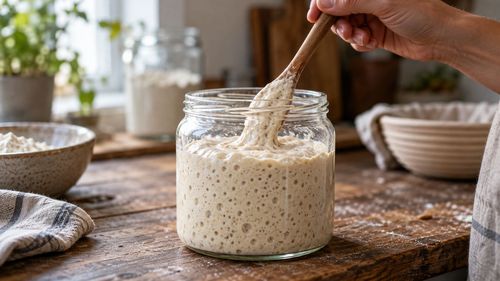
Not the famous restaurant — though that may be wonderful. The cheese bought at the farm at the edge of the appellation, where the farmer explains the difference between summer and winter milk. The bread from the bakery that has been using the same starter for three generations. The olive oil pressed from trees that have been growing on a specific hillside for centuries. The wine from a producer who can show you the specific plot that produced it.
These experiences are not always easy to find. They require research, flexibility, and the willingness to prioritize food as a primary reason for going to a place rather than an enjoyable addition to a trip organized around other things.
But they produce something that no other travel experience provides: the particular understanding of a place that comes from eating its food in the place that made it, made by the people whose knowledge produced it, at the moment in the year when it is at its best.
That understanding is worth seeking.
The Takeaway
The foods that tell you where you are are the foods most worth eating — not because they are always the most technically accomplished or the most elaborately prepared, but because they carry something that cannot be extracted from the place that produced them.
Seek them out when you travel. Give them the attention they deserve when you find them. And understand that the attempt to recreate them at home, while worthwhile, is also a different thing — a translation rather than the original, valuable in its own right but not the same.
The original was in the place.
And the place, tasted through its food, is one of the most direct ways of knowing it.