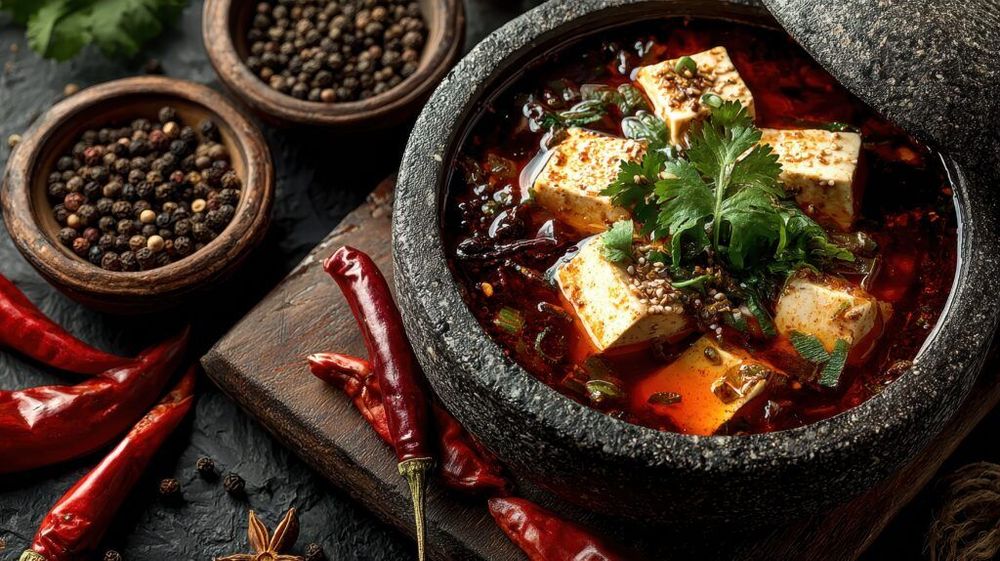

There are flavors that everyone reaches for and almost nobody names.
Not salt. Not sweet. Not bitter or sour or the increasingly familiar fifth taste, umami. These five basic tastes have been described, studied, and discussed extensively — they have become part of the common vocabulary of food conversation, the framework through which most people understand why food tastes the way it does.
But there are other flavors — other sensory experiences that food produces — that are just as real, just as sought-after, and just as consequential for whether a dish satisfies or falls flat, that exist outside this framework and that most people experience constantly without ever having the language to describe them.
The warmth that spreads through the chest after a sip of something spiced. The cooling sensation of mint that has nothing to do with temperature. The particular puckering quality of an unripe persimmon or a strong cup of tea. The richness that coats the mouth and lingers. The effervescence that makes sparkling water feel more refreshing than still water of identical temperature.
These are not tastes in the technical sense. They are something else — a set of sensory experiences that the flavor system produces, that shape the pleasure of eating as significantly as any of the five basic tastes, and that the vocabulary of food rarely accounts for.
The Burn That Isn’t Heat
The sensation produced by capsaicin — the compound responsible for the heat of chili peppers — is one of the most pursued and most misunderstood in food.
It is not, technically, a taste. Capsaicin does not bind to taste receptors. It binds to pain receptors — specifically TRPV1 receptors, which normally respond to temperatures above approximately 109°F and to acidic conditions. When capsaicin binds to these receptors, it produces a sensation that the brain interprets as heat — because the same receptor that registers actual heat is registering the chemical signal of capsaicin.
This is why chili heat feels like physical heat even though no actual temperature change has occurred. The brain is receiving the signal it normally associates with heat from a chemical trigger rather than a thermal one.
What makes capsaicin remarkable — and the source of both the appeal and the complexity of chili heat — is that it produces not just the initial burn but a cascade of physiological responses. The pain receptor activation triggers the release of endorphins — the body’s natural pain-response compounds — which produce a mild euphoria that experienced chili eaters recognize and pursue. It increases salivation, which enhances the perception of other flavors. And it produces the sweating and the raised heart rate that make a genuinely spicy meal a full-body experience rather than merely a taste one.
The different types of chili heat — the immediate, front-of-mouth burn of certain Mexican chilis, the slow-building, throat-warming heat of Sichuan cuisine, the sharp, nose-affecting heat of fresh jalapeños versus the deep, fruity warmth of ancho chilis — reflect different capsaicin concentrations, different related compounds, and different patterns of receptor activation. Each produces a distinct experience that experienced chili eaters navigate with the same kind of vocabulary that wine drinkers apply to the different qualities of tannin or acid.
The Cool That Isn’t Cold
Menthol — the compound responsible for the cooling sensation of mint — is the exact inverse of capsaicin, and it operates through the same receptor system by the opposite mechanism.
TRPM8 — the cold receptor that normally responds to temperatures below approximately 77°F — is activated by menthol without any actual temperature change. The brain receives the signal it normally associates with cold, and the result is the cooling sensation that mint produces even in a warm cup of tea.
This is why mint feels cooling regardless of the temperature of the food it accompanies. The menthol is triggering the cold receptor chemically — producing a sensation of cool that is real in the sense of being genuinely perceived, even though it is not real in the sense of reflecting an actual temperature.
The cooling effect of mint makes it uniquely useful in contexts where the perception of coolness enhances the experience — hot weather, rich food, spicy preparations where the mint provides a counterpoint sensation to the heat. The raita that accompanies Indian curry. The mint that appears in Middle Eastern salads and preparations. The mojito and the mint julep. Each of these uses mint not just as a flavor but as a sensory counterpoint — a cooling sensation that changes the experience of what surrounds it.
The Pucker of Astringency
Astringency — the drying, puckering, slightly gripping sensation produced by tannins in red wine, in strong tea, in unripe fruit — is another sensory experience that falls outside the five basic tastes and that shapes the pleasure of eating and drinking in ways that are often discussed without being named.
Tannins bind to proteins — including the proteins in saliva. When tannins bind to salivary proteins, they cause those proteins to aggregate and precipitate, reducing the lubricating quality of saliva and producing the characteristic dry, gripping sensation on the palate and tongue that wine drinkers call “tannic” and tea drinkers call “strong” and that the eating of an unripe persimmon produces so dramatically as to be almost painful.
Astringency is not inherently unpleasant — in fact, a certain degree of astringency is desirable in many contexts, providing a textural contrast to richness, a structural backbone to flavor, and the specific quality that makes certain wines and teas satisfying in a way that smoother alternatives are not.
What makes astringency interesting as a flavor dimension is its interaction with fat and protein. The same mechanism by which tannins bind to salivary proteins — reducing lubrication, increasing grip — is modified when fat or protein is present in the food being consumed alongside a tannic substance. The fat coats the palate and intercepts some of the tannin binding, softening the astringency and producing the more integrated, more pleasurable experience that a tannic red wine achieves alongside a fatty piece of beef.
This is the chemical explanation for one of the most reliable principles in food and drink pairing — and it is a sensory dimension that operates entirely outside the framework of the five basic tastes.
The Coat of Fat
Fattiness — the specific sensory experience produced by fat in food — has been proposed as a sixth basic taste, and while the science is still developing, the sensory experience it describes is real and significant in ways that the existing vocabulary of taste doesn’t fully capture.
Fat does not just add flavor — it produces a specific tactile experience. A piece of food with significant fat content coats the mouth differently than a lean one. It lubricates, it clings, it persists on the palate after swallowing in a way that produces the sensation of richness that people seek in certain contexts and find overwhelming in others.
The specific sensation of fattiness — distinct from the flavors that fat carries, which can include everything from the nuttiness of browned butter to the fruitiness of good olive oil — is what distinguishes a full-fat yogurt from a fat-free one at the level of mouthfeel, what makes a well-marbled piece of beef more satisfying than a lean one even when the flavor compounds are similar, and what makes certain preparations — a properly emulsified sauce, a well-made hollandaise — produce a specific pleasure that their leaner alternatives cannot replicate.
The management of this sensation — how much fat to use, when to add it, how to emulsify it versus leaving it separated, when the richness is desirable and when it is excessive — is one of the primary skills in professional cooking, even though the sensory experience it is managing rarely gets named directly.
The Tingle of Sichuan Pepper
Among the most distinctive flavor sensations available in any cuisine, the numbing-tingling quality produced by Sichuan pepper — called málà when combined with chili heat in Sichuan cooking — is perhaps the most difficult to describe to someone who has not experienced it.
Sichuan pepper contains a compound called hydroxy-alpha-sanshool, which activates tactile sensors in the mouth rather than taste or pain receptors. The result is a low-frequency vibration sensation — described variously as tingling, buzzing, numbing, or electric — that has no equivalent in Western culinary experience and that fundamentally changes the way all other flavors are perceived when it is present.
The numbing quality of sanshool reduces the sensitivity of pain receptors — which is part of why Sichuan cuisine can be intensely spicy without being overwhelming to experienced eaters. The numbness from the Sichuan pepper modulates the capsaicin burn of the chili, producing the specific málà balance — simultaneously numb and burning, cooling and hot — that defines Sichuan flavor and that has no equivalent in any other cuisine.
The tactile dimension of Sichuan pepper — the fact that it operates on touch sensors rather than taste or pain receptors — makes it genuinely different in kind from the other flavor sensations discussed here. It is producing a sensation of touch in the mouth, not a sensation of temperature or taste or pain. And that tactile dimension changes the entire eating experience in ways that the vocabulary of flavor struggles to fully account for.
Effervescence and the Perception of Freshness
The sensation of carbonation — the tingling, slightly biting quality of sparkling water, champagne, or any carbonated beverage — is another sensory experience that operates partly outside the taste system and that significantly affects the pleasure of eating and drinking.
Carbon dioxide dissolved in liquid activates the same acid-sensing taste receptors that detect sourness, which is part of why sparkling water tastes slightly different from still water of identical composition. But carbonation also activates tactile sensors — the bubbles produce a mechanical stimulation of the mouth that contributes to the freshness and liveliness that sparkling beverages have and that their still counterparts lack.
This mechanical stimulation increases salivation, which enhances the perception of flavor. It produces a physical sensation of effervescence that the brain associates with freshness and vitality. And it interacts with the other flavors present — accentuating sourness, providing contrast to sweetness, cutting through richness in a way that still beverages cannot.
The specific pleasure of a sparkling wine alongside rich food, of a cold carbonated water alongside a spicy meal, of the effervescence that makes a good champagne feel more celebratory than a still wine of equivalent quality — all of these reflect the sensory dimension of carbonation operating in ways that the five basic tastes don’t capture.
The Takeaway
The flavor experience of food is richer and more varied than the vocabulary of the five basic tastes suggests. Capsaicin heat, menthol cool, tannin astringency, fat coating, Sichuan tingle, carbonation effervescence — each of these is a distinct sensory experience that shapes the pleasure of eating as significantly as salt or sweet or umami, and each is worth understanding as a tool available to the cook and the eater.
The cook who understands that chili heat releases endorphins knows why a dish that seems too spicy is nevertheless satisfying. The one who understands that astringency is softened by fat knows why a tannic wine and a fatty cut of meat improve each other. The one who understands that mint produces a cooling sensation through receptor chemistry rather than temperature knows why it belongs alongside spice and alongside richness.
The flavors everyone reaches for but nobody names are worth naming.
They are the reason so much food tastes the way it does.