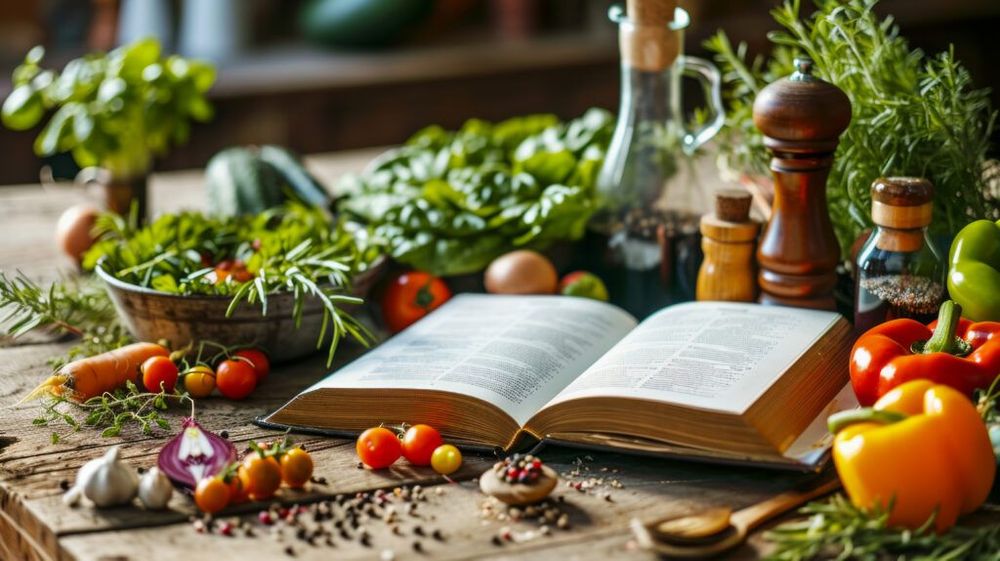

There is a specific kind of book that does something to the person who reads it that cannot be undone.
Not a book that teaches a technique or provides a collection of recipes — though those books have genuine value and belong in any serious cook’s library. A book that changes the relationship with food itself. That shifts the way the reader thinks about what cooking is and what it is for, about where food comes from and what it means, about the relationship between the plate and the person and the culture and the history that produced both.
These books are rarer than recipe collections and less immediately practical. They do not tell you how to make a specific dish. They tell you something about why the dish matters — about the human story behind the ingredient, the political history embedded in a cuisine, the ecological reality of what feeding a population actually requires, the specific cultural knowledge that makes a food tradition more than a collection of recipes.
The cook who has read widely in this category — who has engaged with food writing as literature rather than as instruction — is a different cook than the one who has not. Not more technically skilled necessarily, but differently oriented. More curious. More connected to the larger stories that food carries. More capable of understanding why the food on the plate is what it is and how it came to be there.
These are some of the books that most completely produce that transformation.
MFK Fisher and the Literature of Appetite
Mary Frances Kennedy Fisher was not the first person to write about food as literature — as a subject deserving the same serious, humane attention that any significant human experience deserves. But she was, in the English language, the person who most completely established that it was possible to do so.
Fisher’s books — beginning with Serve It Forth in 1937 and continuing through The Art of Eating, The Gastronomical Me, and the others that followed — treat food as a lens through which human experience can be fully examined. Her essays about food are essays about hunger, about pleasure, about loneliness, about war and its effects on the table, about the specific pleasure of eating alone and the specific comfort of eating in company.
Her prose is extraordinary — precise and warm and often funny in ways that serious food writing rarely achieves. Her subject is food but her real subject is always the human being in relation to food — the specific ways that what we eat reflects who we are and what we need and how we are getting through the particular circumstances of our lives.
W.H. Auden said that Fisher’s books were the finest writing about food in English. The specific reason for this distinction is not her recipes, which appear only occasionally in her work, but her understanding that food writing at its most serious is human writing — that the table is one of the primary sites where human experience is organized and expressed and worth examining with all the attention that any significant human experience deserves.
Michael Pollan and the Food We Don’t Think About
Michael Pollan has written several books about food and food systems that have each produced specific and significant shifts in how many people understand what they eat — but The Omnivore’s Dilemma, published in 2006, is the one that most completely reshaped the conversation about the American food system.
The book traces four meals to their origins — a McDonald’s meal traced to the industrial corn system, an organic meal traced to the industrial organic system, a pastoral meal traced to a small Virginia farm, and a foraged meal traced to what the author gathered himself — and uses each meal as a lens through which the specific mechanisms of food production are examined in detail.
What the book reveals is not primarily a moral argument about how people should eat, though the moral implications are present throughout. It is a factual account of what the industrial food system actually does — how corn pervades the American diet in forms that are invisible at the level of the meal, how the organic label has been colonized by the same industrial logic it was created to resist, what a genuinely sustainable food system looks like at the farm level.
The reader who finishes The Omnivore’s Dilemma does not necessarily change everything about how they eat — though some do. What they change is how they think about what they eat, which is the more durable and more significant transformation. The person who understands where their food actually comes from occupies a fundamentally different relationship with it than the person who doesn’t.
Diana Kennedy and the Politics of Authenticity
Diana Kennedy spent decades in Mexico, learning the regional cooking traditions of a country whose cuisine was, in the Anglo-American food world, almost entirely misrepresented — reduced to the Tex-Mex approximations that had developed in the border regions and that bore little relationship to the extraordinary complexity and regional diversity of Mexican cooking.
Her books — The Cuisines of Mexico, The Art of Mexican Cooking, and the others that followed over fifty years — documented with extraordinary precision the specific regional traditions, the specific local ingredients, the specific techniques that made each region’s cooking distinct and that had never been systematically recorded in English.
What made Kennedy’s work significant beyond its documentary value was the specific understanding of authenticity that runs through it — the insistence that Mexican cooking was a sophisticated culinary tradition deserving the same serious scholarly attention that French or Italian cooking received, and that understanding it required going to the specific places where it existed rather than observing it from the outside.
Her books changed how a generation of Anglo-American food writers and cooks thought about Mexican cuisine — and more broadly, changed how the food world thought about the cuisines of cultures that had been treated as exotic rather than as sophisticated culinary traditions with their own logic and their own history.
Wendell Berry and the Land Behind the Plate
Wendell Berry is not primarily a food writer. He is a farmer, a poet, and an essayist whose primary subject is the relationship between human beings and the land they depend on — and the specific ways that industrialization has damaged that relationship.
But food — the most direct expression of the human relationship with land — runs through all of his writing, and the essays collected in Bringing It to the Table and the arguments made in The Unsettling of America provide the most morally serious account of what industrial agriculture has done to American farming culture and to the ecological systems that farming depends on.
Berry’s argument is not against technology or against modernity but against the specific kind of relationship with land that industrial agriculture creates — one in which land is treated as a resource to be extracted from rather than a community to be tended, in which the knowledge accumulated by generations of careful farmers is replaced by the instructions of corporate agricultural systems, in which the farm is no longer a place that supports a community but an industrial operation that happens to involve soil.
The cook who has read Berry brings to the food choices they make a specific moral seriousness about the relationship between the meal and the land that produced it — an understanding that is not guilt-producing but genuinely orienting, a framework for thinking about what the choices available in the contemporary food system actually mean.
Ruth Reichl and the Memoir of Eating
Ruth Reichl’s memoirs — Tender at the Bone, Comfort Me with Apples, Garlic and Sapphires — use food as the primary organizing principle of a life story in a way that is both more personal and more universally resonant than most food writing achieves.
Tender at the Bone traces Reichl’s food education through childhood and young adulthood — through a mother whose relationship with cooking was memorably catastrophic, through a series of formative eating experiences that shaped her palate and her understanding of what food could be, through the relationships that were defined and expressed through cooking and eating.
The specific quality that makes these books more than food memoir — more than the pleasant genre of a writer describing meals they have eaten — is Reichl’s understanding that food is always about something else. The food in her books is never just food. It is the expression of a relationship, a period in a life, a specific moment of recognition or comfort or transformation. The meals she describes are memorable not because they were technically impressive but because they were meaningful — because they were doing something in the life of the person eating them that the food alone cannot explain.
Samin Nosrat and the Book That Teaches Rather Than Prescribes
Salt, Fat, Acid, Heat — discussed in these pages before in the context of books that change how a cook thinks rather than just what a cook makes — deserves inclusion in any list of food books that have genuinely changed the relationship between readers and their kitchens.
What Nosrat accomplished with this book is something that most food writing doesn’t attempt: a genuine theory of cooking. Not a collection of techniques or a set of recipes but an argument about what cooking actually is — about the fundamental principles that, once understood, allow the cook to produce good food from any combination of ingredients in any culinary tradition without reference to any specific recipe.
The book’s structure — organized around four master elements rather than around cuisines or courses or techniques — produces a reader who understands cooking differently at the end than at the beginning. Not more knowledgeable in the sense of knowing more facts or more recipes, but differently oriented — equipped with a framework for understanding what any given cooking decision is actually doing rather than simply whether it matches a recipe’s specification.
The Cookbooks That Are Literature
Beyond the books that are explicitly about food culture or food history or the food system, there is a category of cookbook that functions as literature — that transmits, through its recipes and its headnotes and its photography and its overall sensibility, a complete understanding of a culinary culture that is not available from any other source.
Claudia Roden’s A Book of Middle Eastern Food. Paula Wolfert’s The Cooking of the Eastern Mediterranean. Yotam Ottolenghi and Sami Tamimi’s Jerusalem. These are books that are simultaneously recipe collections and cultural documents — that provide access to culinary traditions in their full complexity and their historical depth and their human specificity.
The cook who has spent serious time with these books understands the culinary traditions they document in a way that is different from the understanding produced by eating at restaurants that serve food from those traditions. The book provides the history, the context, the internal logic of the tradition — the understanding of why the dishes are what they are and how they relate to each other and to the culture that produced them.
The Takeaway
The cook’s library is not simply a collection of recipes. It is a collection of perspectives — on food, on culture, on land and history and the human relationships that organize themselves around the table.
Reading widely in this library produces a cook who is differently oriented than the cook who has read only recipes — more curious, more connected to the larger stories that food carries, more capable of understanding what the food on the plate means beyond its immediate sensory qualities.
The books worth reading are the ones that change something — that shift a perspective or reveal something previously invisible or produce the specific quality of understanding that makes subsequent eating and cooking richer and more resonant.
These are some of those books.
The rest are waiting to be discovered.