
After searing a steak or browning chicken, there's usually a layer of dark, stuck-on residue left clinging to the bottom of the pan. Most instincts say scrub it off before it burns or ruins the next step.
That residue is called fond, and scraping it into the trash is, in a lot of cases, throwing away the most flavorful part of the entire dish.
What Fond Actually Is
Fond forms through the same Maillard reaction responsible for a good sear or a crusty loaf of bread — proteins and sugars breaking down under high heat and recombining into new, intensely flavorful compounds.
Those compounds concentrate right where the food made contact with the hot metal, which is exactly why fond tastes so much more intense than the meat or vegetable it came from. It's not burnt food. It's the most concentrated flavor in the pan, stuck to the bottom instead of sitting on the plate.
Why Deglazing Exists As a Technique
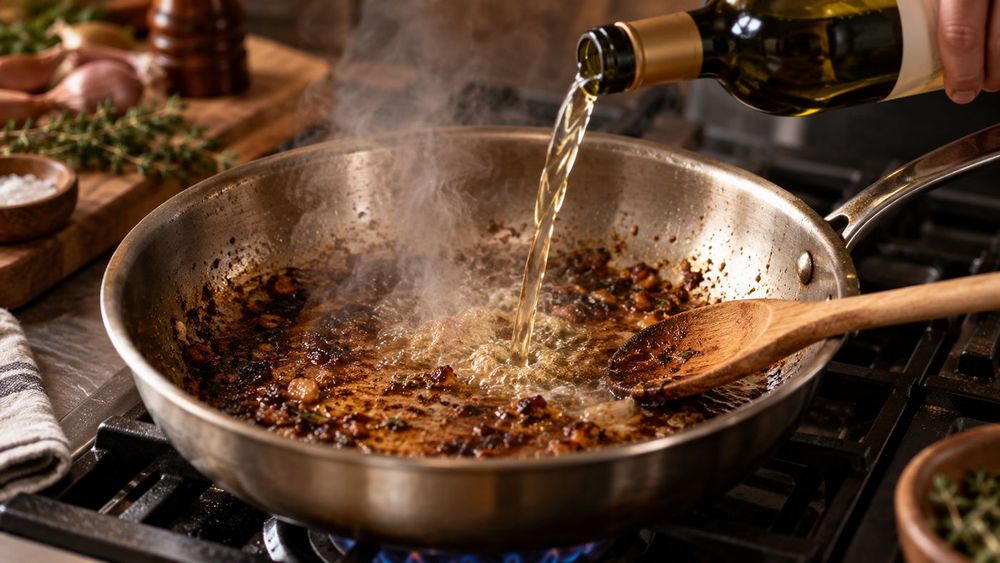
Deglazing means adding liquid — wine, stock, even water — to a hot pan and scraping up that stuck-on fond as the liquid simmers and loosens it.
The liquid dissolves those concentrated flavor compounds, turning the empty pan into the base of a sauce in a matter of minutes. This is the entire secret behind pan sauces that taste far more complex than the short ingredient list and short cook time would suggest.
Skipping this step doesn't just waste the fond. It usually means whatever sauce follows tastes noticeably flatter than it could have.
Why the Right Pan Matters More Than People Realize
Nonstick pans are specifically engineered to prevent food from sticking, which sounds appealing but works directly against fond formation.
Stainless steel and cast iron allow just enough sticking to build a real fond, especially once the pan is properly preheated and the food isn't crowded or moved too soon. This is part of why professional kitchens rely heavily on stainless and cast iron for anything meant to build a pan sauce afterward, reserving nonstick for delicate items like eggs where sticking is never the goal.
The Line Between Fond and Burnt
Fond and burnt residue can look similar to an untrained eye, but they behave very differently once liquid hits the pan.
Proper fond is deep brown and dissolves into the deglazing liquid relatively easily, turning it a rich color as it loosens. Burnt residue is closer to black, tastes bitter, and often refuses to dissolve the same way — a sign the pan got too hot for too long rather than developing flavor correctly.
If a deglazed sauce tastes bitter instead of rich, the fond crossed into burnt territory before the liquid ever went in.
How to Actually Use Fond on a Weeknight
None of this requires restaurant technique or extra ingredients most kitchens don't already have.
After searing meat, remove it from the pan and pour in a splash of wine, stock, or even water
Scrape the bottom of the pan firmly with a wooden spoon as the liquid simmers
Let it reduce slightly, then finish with a pat of butter for richness and shine
Pour the finished sauce directly over the meat that created it
What started as five minutes of extra effort usually turns a plain seared protein into something that tastes deliberately composed.
The Takeaway
Fond isn't a cleaning problem to deal with before the next step. It's flavor that's already been built and is just waiting to be reclaimed.
The habit of scraping it straight into the sink is, in a lot of kitchens, a habit of throwing away the best part of the meal by accident.
A splash of liquid and a few minutes of scraping is usually all it takes to get it back.