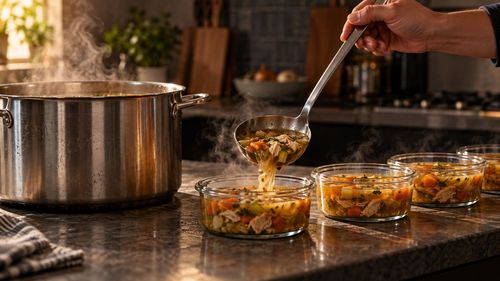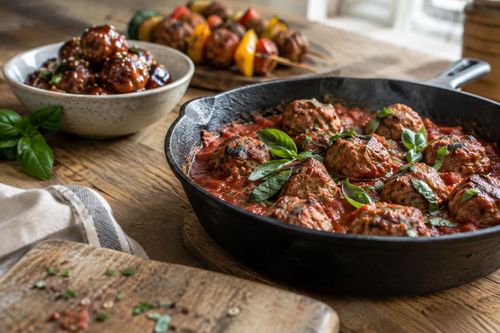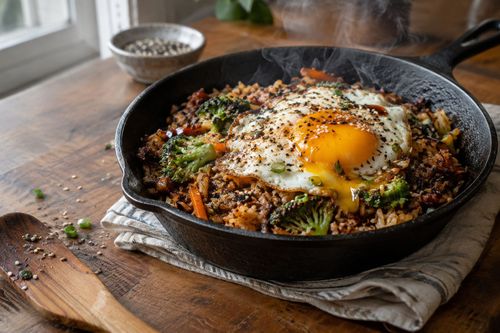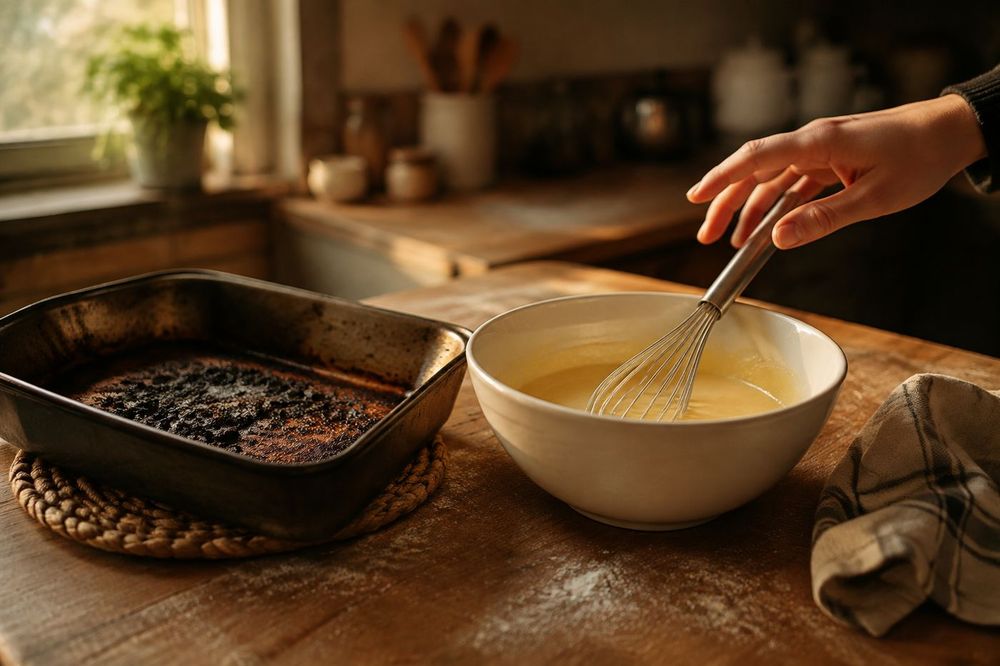

There's a version of learning to cook that gets left out of most cookbooks and cooking shows — the version where things go wrong first, often badly, before anything starts going right.
Ask people who genuinely love cooking how they got there, and very few describe a smooth start. Most describe a specific disaster. A ruined dinner. A smoke-filled kitchen. Something inedible that somehow became the turning point instead of the reason they quit.
Why Failure Teaches Faster Than Instruction
A recipe can tell you what to do. It can't fully explain what "too hot" smells like, or what a sauce looks like right before it breaks, or how fast a pan of garlic goes from fragrant to bitter.
Those lessons tend to arrive only one way — by missing the moment once, badly enough to remember it. The burnt batch of caramel, the seized chocolate, the chicken that went from raw to leathery somewhere in the middle without any warning. Each mistake quietly installs a kind of instinct that no amount of careful reading ever quite manages to.
This is part of why experienced cooks often struggle to explain exactly how they know something is ready. The knowledge didn't come from being told. It came from getting it wrong first.
The Myth of the Naturally Gifted Cook
It's tempting to assume some people are just born with better instincts in the kitchen. Mostly, they've just failed in more specific, memorable ways.
Someone who never burns rice hasn't necessarily mastered rice. They may have simply burned it enough times early on that the smell of "almost done" became unmistakable. The instinct looks like talent from the outside. From the inside, it usually looks like a specific bad afternoon that never happened again.
Confidence in a kitchen is rarely the absence of mistakes. It's usually just an accumulation of very specific ones, each one closing off a way to get something wrong in the future.
Why Repeating the Same Mistake Matters More Than Avoiding It
There's a difference between a mistake that teaches something and one that just happens once and gets forgotten.
Cooking the same dish repeatedly, even after failing at it, tends to build skill far faster than moving on to something new after every setback. The second attempt at a soufflé teaches something the first attempt physically couldn't, because the first attempt is what created the specific problem to solve.
This is part of why home cooks who stick with a small handful of dishes, cooking them again and again, often end up more capable than people who've tried dozens of recipes exactly once.
What Changes After the First Real Disaster
There's often a noticeable shift after someone's first genuinely bad kitchen failure — not toward giving up, but toward a kind of calm that wasn't there before.
Burning a dish stops feeling catastrophic once it's happened and the world has, in fact, continued. That first real failure tends to lower the stakes on every attempt afterward, making room for the kind of relaxed experimentation that actually leads to better cooking.
People who are afraid to fail in the kitchen tend to stay rigid, following instructions exactly and never developing a feel for what they're doing. The people who've already failed, and survived it, tend to loosen up.
How to Use This If You're Still Early On
None of this is really an argument for being careless. It's an argument for expecting some failure and treating it as information instead of a verdict.
A few ways to actually use this:
Cook the same dish more than once, especially if it goes wrong the first time
Pay attention to what a mistake looked, smelled, or sounded like right before it happened
Resist the urge to abandon a dish permanently after one bad attempt
Treat kitchen disasters as data, not evidence of a lack of ability
The goal isn't to fail on purpose. It's to stop treating failure as proof that cooking isn't for you.
The Takeaway
Almost nobody who loves cooking today got there without ruining something significant along the way. The dish that burned, the sauce that broke, the dinner that had to be scrapped entirely — those moments aren't separate from learning to cook. They usually are the learning.
The next kitchen disaster isn't necessarily a sign to stop. It might just be the specific, memorable mistake that quietly makes everything after it a little easier.