
There is a persistent and damaging myth in food culture that eating well is expensive.
That the good ingredients cost more. That the healthy diet requires a premium grocery budget. That the choice between eating cheaply and eating well is a real choice — a trade-off that people with limited resources must make, accepting one at the expense of the other.
This myth has enough truth in it to be convincing. Certain good ingredients do cost more. Grass-fed beef is more expensive than conventional. Organic produce carries a premium. The farmers market is not always cheaper than the supermarket.
But the myth misidentifies what eating well actually requires. It conflates the luxury end of good eating — the premium ingredients, the artisan products, the markers of food culture status — with the foundational requirements of genuinely nourishing, genuinely satisfying, genuinely delicious food.
Those foundational requirements are not expensive. They never have been.
The cuisines that produce the most flavorful, most nourishing, most deeply satisfying food in the world — the cucina povera of southern Italy, the rice and bean traditions of the Caribbean and Latin America, the legume-based cooking of South Asia, the vegetable-forward cuisines of East and Southeast Asia — were developed by people who had very little. They are the product not of abundance but of constraint — of cooks who learned to extract maximum flavor and maximum nourishment from the least expensive ingredients available.
That knowledge is available to anyone willing to learn it.
The Ingredients That Have Always Been Cheap and Always Been Good
There is a category of ingredient that has sustained human populations for thousands of years precisely because it combines low cost, long shelf life, high nutritional density, and significant culinary flexibility.
Dried legumes — beans, lentils, chickpeas, split peas — are perhaps the most nutritionally complete and most consistently undervalued category of food available in any grocery store. A pound of dried lentils, which costs less than two dollars in most markets and yields several meals when cooked, provides complete protein when combined with grains, significant dietary fiber, iron, folate, and a range of other micronutrients in concentrations that make them among the most nutritionally dense foods available at any price.
Their culinary flexibility is equally significant. The same dried chickpea is the foundation of the Indian chana masala, the Middle Eastern hummus and falafel, the Catalan chickpea stew, the Provençal socca, the Sicilian panelle. The same lentil is the dal of South Asian cooking, the lentilles du Puy of French bistro cuisine, the Moroccan harira, the Egyptian kushari. The same black bean is the feijoada of Brazil, the rice and beans of Cuba, the refried beans of Mexico.
These are not poor imitations of more expensive dishes. They are the dishes — the ones that the great cooking traditions of the world built around the least expensive legume available, because the legume was what there was and the cooks who worked with it were exceptional.
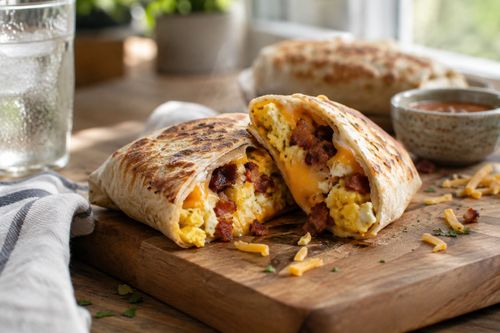
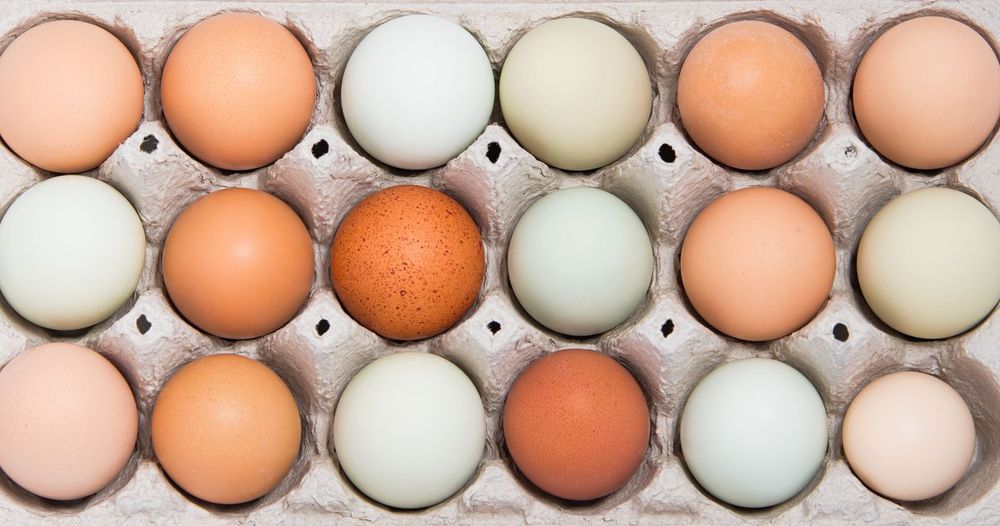
Eggs — perhaps the single most nutritionally complete food available, containing every amino acid the body requires along with vitamins D, B12, and choline — cost less than twenty-five cents each in most markets and can be prepared in enough distinct ways that they could appear at every meal for a week without repetition.
Whole grains — rice, oats, farro, barley, cornmeal — are among the most economical calorie sources available and, in their whole form, among the most nutritionally complete. A bag of rolled oats provides weeks of breakfasts for a few dollars. A bag of rice provides months of meal foundations.
Cabbage. Carrots. Onions. Garlic. Potatoes. The vegetables that cost the least are, in most cases, the ones with the longest culinary histories and the widest range of applications — the ones that the cooking traditions of the world have spent centuries learning to use well because they were the ones always available.
The Technique That Multiplies Value
The ingredient that costs very little and is cooked well produces better food than the ingredient that costs more and is cooked carelessly.
This is the fundamental truth about cheap cooking that the myth of expensive good food obscures. The cooking — the technique applied to the ingredient — multiplies its value in ways that no amount of spending on premium ingredients can compensate for if the technique is absent.
A properly caramelized onion — cooked low and slow in a small amount of fat until sweet, dark, and complex — costs almost nothing and adds a depth of flavor to any dish it enters that no expensive ingredient can replicate. An improperly cooked steak — seared without sufficient heat, not rested, served before its time — represents a significant expense for a mediocre result.
The investment that produces the greatest return in cheap cooking is not in the ingredients. It is in the technique applied to them.
The technique of building flavor from aromatics — the onion, the garlic, the celery and carrot that form the mirepoix and the soffritto and the Holy Trinity of Cajun cooking — is the foundation of cheap cooking done well. These are the least expensive vegetables available in any market, and they form the flavor base of virtually every cuisine in the world because experienced cooks discovered that they produce, when properly cooked in fat, a complexity and depth that makes everything added afterward taste better than it would without them.
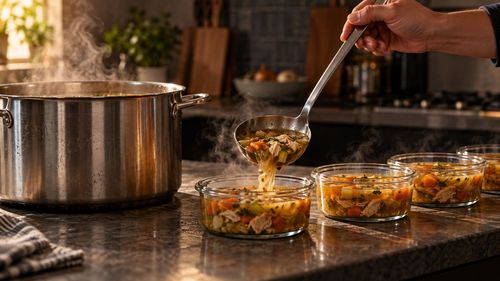
The technique of long, slow cooking — braises, stews, soups — transforms the toughest, cheapest cuts of meat into the most flavorful and tender preparations available. The short rib, the pork shoulder, the lamb shank — these were, historically, the cuts available to people who could not afford the premium parts. The techniques developed to cook them transformed their toughness into tenderness and their connective tissue into gelatin, producing dishes with a richness and complexity that the expensive cuts, cooked quickly, cannot match.
Slow cooking is cheap cooking — not just because it uses inexpensive cuts but because the long, low heat requires less energy than high-heat techniques and produces better results from inferior ingredients.
The Pantry That Makes Cheap Cooking Possible
The difference between a home cook who eats well on a limited budget and one who doesn’t is often the pantry — the collection of shelf-stable ingredients that make it possible to produce a complete, satisfying meal from whatever fresh ingredients are available or affordable at any given moment.
A well-stocked pantry doesn’t require a large upfront investment. It requires a gradual accumulation of the ingredients that appear most frequently in the broadest range of dishes — bought in modest quantities, replenished as used, maintained as a permanent collection rather than purchased specifically for individual recipes.
The pantry that enables cheap cooking well includes: dried legumes in variety, whole grains, canned tomatoes, olive oil or another good cooking fat, a range of dried spices and herbs, soy sauce or fish sauce or another fermented umami source, vinegar, dried pasta, and the aromatics — onions, garlic, carrots, celery — that last long enough in a cool place to always be available.
With these ingredients on hand, a cook can produce an extraordinary range of satisfying meals from whatever protein or fresh vegetable is affordable or available — because the pantry provides the flavor infrastructure that makes simple, inexpensive ingredients taste complete.
The cook who buys specific ingredients for specific recipes and has nothing left over when the recipe is done is not building a pantry. They are shopping episodically, which is the most expensive and least efficient way to maintain a home kitchen. The cook who builds and maintains a pantry is creating a system — one that makes cheap cooking possible at any moment, without planning, from whatever is there.
The Cuisines That Mastered Cheap
The most instructive models for eating well on limited resources are not the inventions of contemporary frugal food writing. They are the great cuisines of the world developed by people who had very little and learned to cook extraordinarily from almost nothing.
The cucina povera — the cooking of the poor — of southern Italy is perhaps the most celebrated example. Developed in the impoverished regions of Calabria, Sicily, Campania, and Puglia by people who had limited access to meat, dairy, and premium ingredients, it produced a cuisine built on bread, pasta, legumes, vegetables, olive oil, and preserved fish that is now recognized as one of the most flavorful and nutritionally sophisticated in the world.
The bread that was too stale to eat became panzanella, ribollita, and acquacotta. The pasta that remained after a meal was fried until crisp and seasoned with cheese and pepper. The vegetable trimmings went into the soup. The offal that the wealthy discarded became the deeply flavored preparations — the trippa, the lampredotto, the coratella — that define the street food traditions of Italian cities.
Nothing was wasted. Everything was transformed. The constraint of poverty produced a creativity and a thoroughness with ingredients that abundance rarely generates.
The same pattern appears in the rice and bean traditions of the Caribbean and Latin America — cuisines developed by people with very limited resources that produced, through the combination of legume and grain, a complete protein and a deeply satisfying meal. In the dal and roti traditions of South Asia. In the congee and simple vegetable preparations of East Asian cooking. In the tagine traditions of North Africa, where small amounts of preserved meat flavor large quantities of vegetables and legumes.
These are not cuisines that aspire to be something other than what they are. They are cuisines that have mastered what they have — and in doing so, have produced some of the most satisfying and most nourishing food available at any budget.
The Myth and Its Cost
The myth that eating well is expensive has a cost that extends beyond the household budget.
It discourages people with limited resources from investing in cooking skill — from learning the techniques that would allow them to eat well on what they have, because the myth suggests that what they have isn’t sufficient to eat well at all.
It directs culinary attention and culinary aspiration toward the expensive and the premium, away from the inexpensive and the ordinary — toward the luxury ingredient and away from the technique that transforms the humble one.
And it misrepresents what good food actually is — defining it by the cost of its ingredients rather than by the quality of the cooking and the satisfaction of the eating.
The reality is simpler and more accessible than the myth suggests. Good food requires good technique more than good ingredients. The cheapest ingredients in any grocery store have sustained civilizations and produced extraordinary cuisines. The pantry that enables good cheap cooking is buildable on any budget. And the cuisines that best demonstrate what eating well actually means were developed by people who had almost nothing.
The Takeaway
Eating well on almost nothing is not a compromise. It is a skill — one of the most valuable skills in any kitchen, developed over centuries by the cooks whose constraints produced the world’s most honest and most nourishing food.
Buy the dried legumes. Build the pantry. Learn to caramelize an onion and braise a cheap cut and make a pot of soup from whatever is there. Study the cuisines of people who made the most of the least.
The best food was never the most expensive food.
It was always the most carefully cooked.