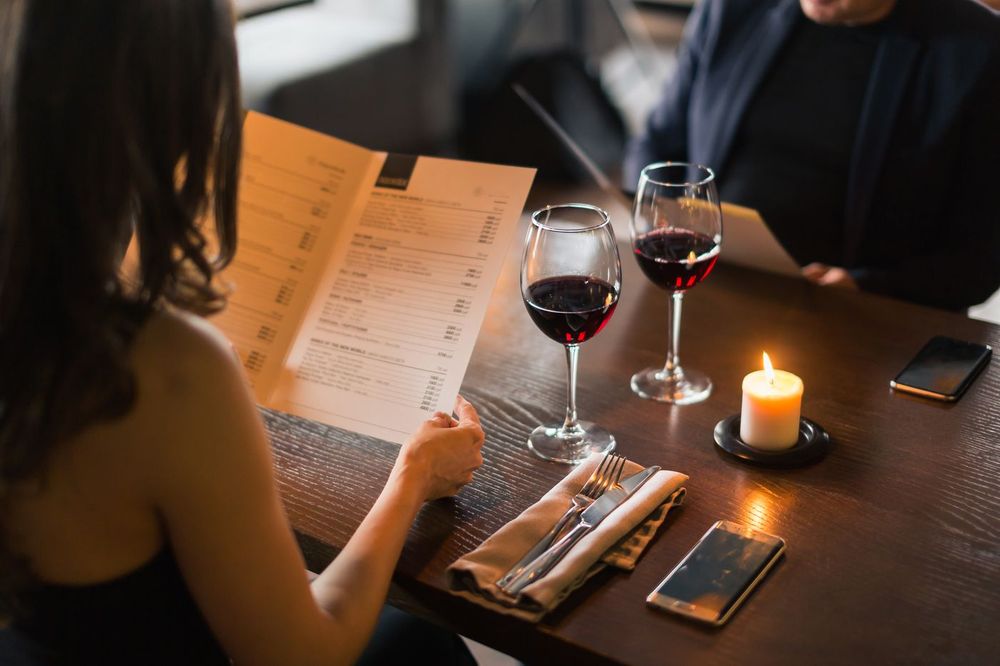

Most people read a restaurant menu the way they read a text message.
Quickly. Functionally. Looking for what they want, skipping what they don’t, making a decision and setting it down.
But a restaurant menu — particularly at a serious establishment — is one of the most information-dense documents in the food world. Every word on it was chosen deliberately. Every dish placement was considered. Every description was written to produce a specific response. And behind the menu itself, the choices that shaped it reveal something about the kitchen producing it that most diners never think to look for.
Professional cooks, food writers, and experienced restaurant industry veterans read menus differently. What they see when they look at the same document most diners skim through in ninety seconds tells them almost everything they need to know about the restaurant before the first dish arrives.
Menu Length Is a Quality Signal
The first thing an experienced diner notices about a menu is how long it is.
A menu with forty dishes is not a sign of generosity or variety. It is a sign of a kitchen that is either extraordinarily large and well-staffed — which most restaurants are not — or one that is relying heavily on pre-prepared, frozen, or low-skill components that don’t require significant labor to produce. A kitchen with a focused, skilled team cooking seriously from scratch cannot execute forty dishes well during a busy service. The physics of kitchen capacity don’t allow it.
The menus that serious food people trust most are the short ones. Eight to twelve dishes, sometimes fewer. A menu that length signals a kitchen that has thought carefully about what it can do exceptionally well rather than broadly about what it can offer to everyone. It signals fresh ingredients purchased in quantities that will be used before they degrade. It signals a team that has practiced these specific dishes enough to execute them consistently.
When a menu shrinks seasonally — dishes disappearing and new ones appearing as ingredients come in and out of peak availability — that is one of the strongest quality signals a menu can send. It means the kitchen is cooking with what’s actually good right now rather than with what’s available year-round regardless of quality.
The Descriptions Reveal the Kitchen’s Confidence
Menu language is a deliberate communication — and the confidence, or lack of it, in that language tells an experienced reader a great deal about the kitchen behind it.
A menu description that lists every component of a dish in detail — “pan-seared halibut with lemon beurre blanc, haricots verts, fingerling potatoes, micro herb salad, and crispy capers” — is a kitchen that wants the diner to understand what they’re getting before it arrives. This kind of transparency is common in serious restaurants because those kitchens are confident in their execution and want guests to appreciate the thought behind each component.
A menu that relies heavily on evocative but vague language — “inspired by,” “artisanal,” “hand-crafted,” “elevated” — without specific descriptions of what the dish actually contains is often obscuring a lack of specificity in the kitchen itself. The language is doing the work that the food should be doing.
The presence of specific sourcing language — a farm name, a region, a producer — is another confidence signal. A kitchen that names its beef supplier or identifies the specific variety of apple in a dish is making a claim that can be verified and is betting on the quality of that sourcing to speak for itself. Vague sourcing language — “locally inspired,” “sustainably sourced” — without specifics is meaningfully different.
Dish Placement Is a Deliberate Persuasion Strategy
The physical layout of a menu is not neutral. It is designed — by the restaurant, often with the help of menu engineering consultants — to direct attention toward specific dishes and away from others.
The upper right corner of a two-page menu is where the eye lands first — and where most restaurants place their highest-margin dishes. The bottom left is where attention goes last — where dishes that need to be on the menu for completeness but that the kitchen would prefer not to sell in high volume often appear.
The first and last items in any category tend to be ordered more frequently than those in the middle — a phenomenon called the primacy and recency effect — which is why the dishes a kitchen is proudest of, or most profitable on, often appear at the top and bottom of each section.
Boxed or highlighted dishes, items with photographs in casual restaurants, dishes marked with symbols or special callouts — all of these are directing attention toward specific items for reasons that may have more to do with margin than quality. An experienced diner notices what’s being emphasized and asks why before defaulting to what the menu wants them to order.
The Verbs Tell You How the Kitchen Cooks
One of the most specific things an experienced reader looks for on a menu is the cooking verbs — and what they reveal about the techniques the kitchen employs.
“Braised,” “confit,” “roasted,” “seared,” “cured,” “fermented,” “smoked” — these are technique-forward descriptions that signal a kitchen doing real cooking work with actual methods that require skill and time.
“Served with,” “accompanied by,” “finished with” — these are assembly descriptions. They tell you that components are being combined rather than cooked together, which is a different level of kitchen work.
A menu that is rich in technique verbs and specific in its descriptions of cooking methods is a menu from a kitchen that wants you to know how the work is being done — because the work is worth knowing about. A menu that describes dishes in terms of their components without mentioning technique is describing a plate, not a dish.
The Sides and Supplements Tell a Different Story
The structure of a menu — what’s included with a dish and what costs extra — reveals a great deal about how a restaurant thinks about its food and its guests.
A serious kitchen that builds complete, thoughtful plates typically includes everything the dish needs to be whole. The protein, the sauce, the starch, the vegetable — all considered together, priced together, arriving as one coherent thought.
A menu that prices everything separately — protein only, sides additional, sauces supplemental — may be doing so for genuine culinary reasons, giving the diner flexibility to build their own plate. But it may also be a revenue structure that obscures the true cost of a complete meal and that fragments the kitchen’s cooking into components rather than dishes.
The supplement section of a menu — truffles, foie gras, wagyu additions — tells an experienced diner about the kitchen’s relationship with luxury ingredients. When supplements appear on an otherwise modest menu, they often signal a kitchen that is aware of the psychological pull of premium ingredients and is using them as revenue drivers more than as culinary statements. When they appear on a menu that already reflects a kitchen working at a high level, they are more likely to be genuine enhancements.
The Takeaway
A menu is a document worth reading carefully — not for what it says, but for what it reveals.
Menu length signals kitchen capacity and confidence. Description language reveals transparency or its absence. Dish placement reflects deliberate persuasion. Cooking verbs communicate the level of technical work happening behind the pass. The structure of what’s included and what costs extra tells you how the restaurant thinks about the relationship between food and the guest.
The next time a menu arrives at the table, it’s worth a second read.
Not for what you want to order.
For what the kitchen is telling you about itself — before you’ve tasted a single thing.