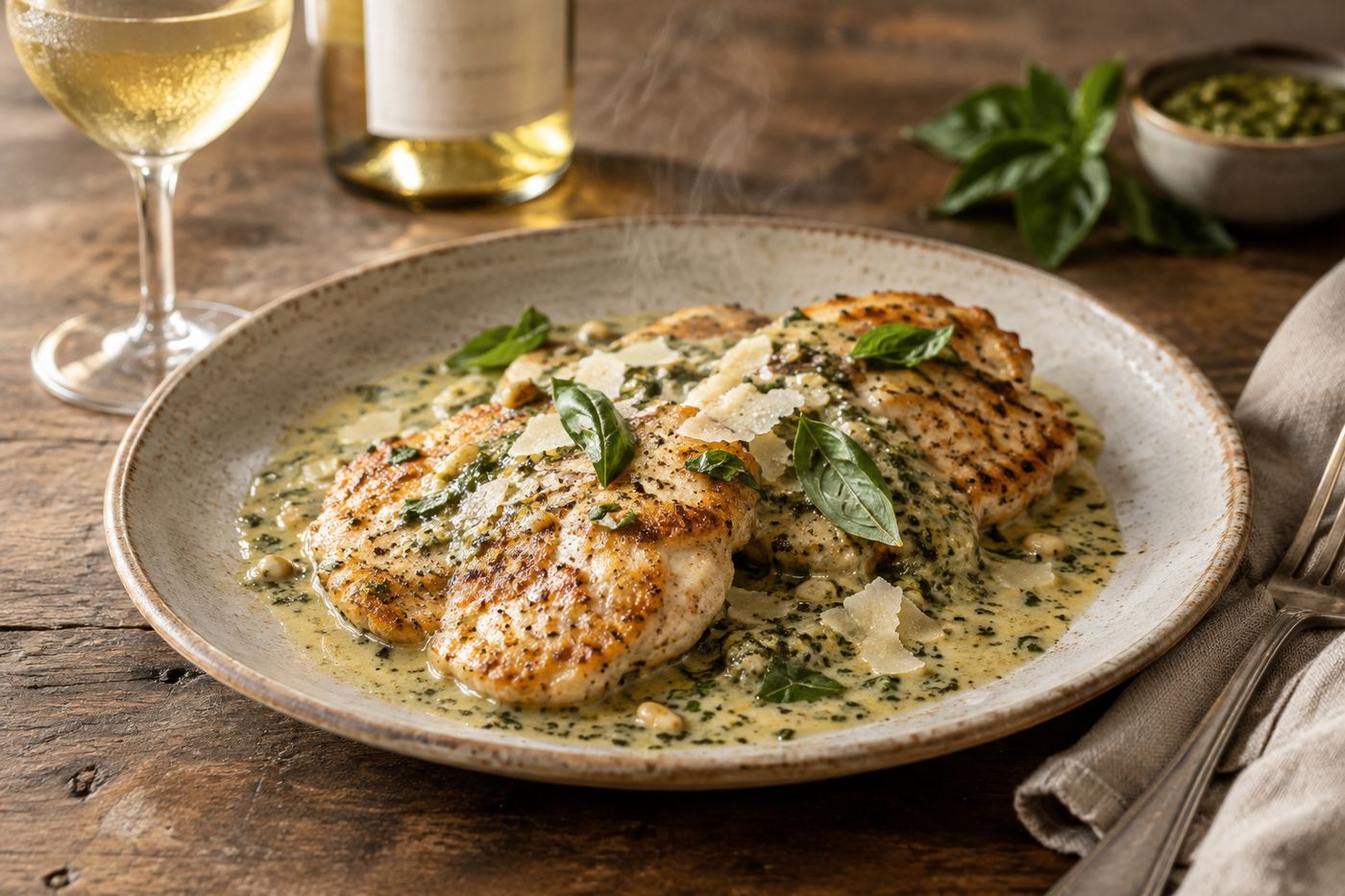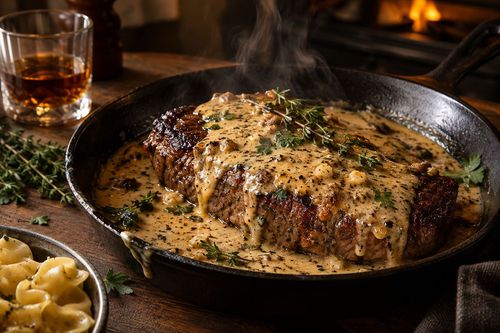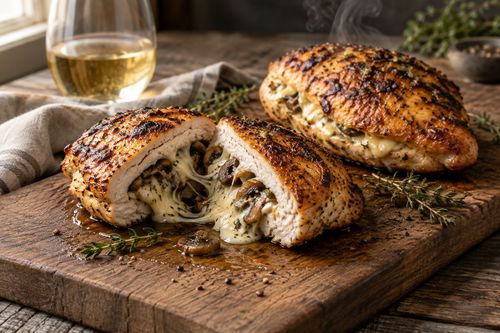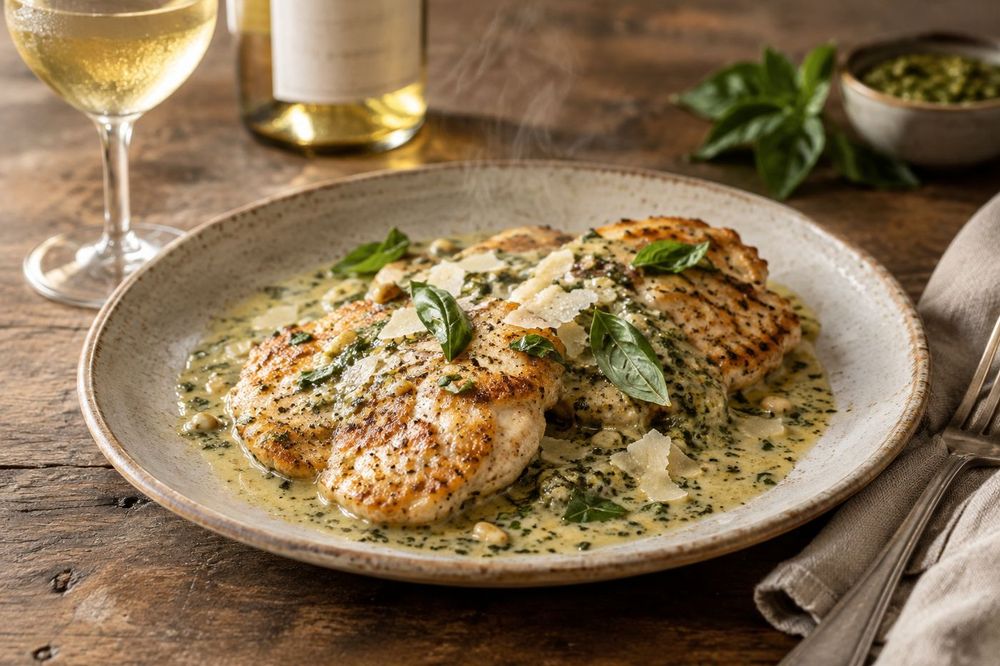



There's a particular satisfaction in watching a simple protein transform into something restaurant-caliber through nothing more than heat, reduction, and a thoughtful sauce structure. Chicken cutlets in creamy wine pesto sauce is exactly that kind of dish — technically approachable, but built on principles that reward precision. The pounded cutlet cooks fast and evenly, the pan fond becomes the backbone of the sauce, and the wine does double duty: deglazing agent and flavor amplifier.
What draws me to this recipe isn't complexity — it's efficiency of technique. Every step earns its place. The sear builds a Maillard-driven crust, the wine lifts the browned bits into solution, and the pesto and cream marry into an emulsion that clings rather than pools. It's a dish that demonstrates how a handful of well-executed steps outperform a long ingredient list.
This is also a genuinely versatile weeknight-to-dinner-party recipe. It scales cleanly, holds well for a few minutes off heat while you finish a side, and the sauce itself is a template you can adapt with different herbs or cheeses once you understand why it works.
Midweek is the right moment for a dish like this — substantial enough to feel like an occasion, but not so involved that it demands your entire evening.
The Inspiration Behind This RecipeThis dish sits at the intersection of two culinary traditions: the classic French pan sauce and the Italian pesto tradition. Rather than choosing one lane, it borrows the reduction technique from French cuisine and the basil-pine nut-parmesan flavor base from Ligurian cooking, then unifies them with cream — a bridge ingredient that smooths the acidity of the wine and the sharpness of the pesto into something cohesive.
The result is a sauce that reads as familiar but tastes distinct — proof that fusion doesn't require novelty for its own sake, just an understanding of how flavor compounds interact.
A Brief History of the Pan Sauce TechniquePan sauces emerged from the French mother sauce tradition, specifically as an offshoot of deglazing practices developed in professional kitchens to extract maximum value from a single cooking vessel. The technique relies on fond — the browned proteins and sugars left behind after searing — which contain concentrated flavor compounds unlocked only through the addition of liquid and heat.
Wine became the deglazing liquid of choice in French and Italian kitchens alike because its acidity cuts through fat and its alcohol content, once cooked off, leaves behind aromatic esters that plain stock cannot replicate. Pairing this reduction with a fresh pesto is a more modern adaptation, reflecting how contemporary home cooks blend regional techniques without deference to strict tradition.
Why This Cooking Method WorksPounding the chicken to an even thickness solves the central problem of cooking cutlets: uneven doneness. A uniform thickness means the exterior sears to golden-brown at the same rate the interior reaches safe internal temperature, avoiding the common pitfall of a burnt crust over undercooked meat.
Deglazing with wine while the pan is still hot dissolves the fond via both mechanical agitation and chemical solubility — alcohol is an excellent solvent for the fat-soluble flavor compounds trapped in those browned bits. Reducing the wine before adding cream also drives off harsh alcohol notes, leaving only concentrated acidity and fruit character, which balances against the richness of the dairy.
Flavor Profile: What to ExpectThis dish delivers a layered, harmonious profile rather than a single dominant note.
- Savory depth from the browned chicken fond anchoring the sauce
- Bright acidity from the reduced white wine cutting through richness
- Herbal complexity from basil pesto's grassy, slightly peppery notes
- Nutty undertones from pine nuts and parmesan in the pesto base
- Silky richness from the cream, which unifies every element into one cohesive bite
The overall effect is indulgent but balanced — nothing overpowers, because the acid-fat-herb ratio is carefully calibrated.
Tips for Making the Best Chicken Cutlets in Creamy Wine Pesto SauceA few technical details separate a good version of this dish from a great one.
- Pound cutlets to an even ½-inch thickness for consistent cooking
- Pat chicken completely dry before searing to maximize browning
- Use a dry white wine with enough acidity to balance the cream — avoid anything sweet
- Reduce the wine by at least half before adding cream to concentrate flavor and cook off harsh alcohol
- Stir pesto in off direct heat at the end to preserve its fresh basil color and aroma
- Sauvignon Blanc — crisp acidity mirrors the wine reduction in the sauce
- ★ Pinot Grigio — light body and citrus notes complement the pesto without competing
- Unoaked Chardonnay — adds a touch of richness that echoes the cream
- Vermentino — herbal, slightly saline character that ties directly to the pesto
- Dry Rosé — offers a fruit-forward contrast for those who prefer more body
The Pinot Grigio earns the star for its ability to match the dish's acidity precisely without overshadowing the pesto's herbal notes.
Serving Suggestions and Side PairingsA simple starch is essential here — the sauce is rich enough that it doesn't need embellishment, just something to absorb it. Buttered egg noodles, garlic mashed potatoes, or a light orzo all work well. For vegetables, roasted asparagus or sautéed green beans provide textural contrast without competing flavors.
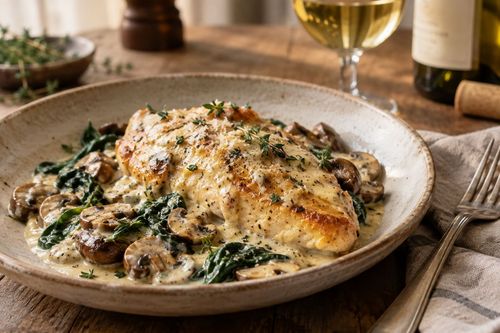
If you're building out a full midweek spread, this pairs surprisingly well alongside our Creamy Tuscan Chicken Orzo from a previous Wine Wednesday — both share that cream-forward, herb-driven profile, making them a natural rotation pair rather than a repeat.
Storage, Reheating, and Make-Ahead TipsStore leftovers in an airtight container in the refrigerator for up to 3 days. Reheat gently over low heat on the stovetop, adding a splash of cream or chicken stock to loosen the sauce, which will thicken as it cools. Avoid microwaving at high power, as it can cause the cream sauce to separate. The pesto component is best made fresh or stirred in just before serving if prepping components ahead.
Why This Recipe Deserves a Spot in Your Wine Wednesday RotationThis dish exemplifies what accessible luxury looks like on a Wednesday night — technique-driven enough to feel special, forgiving enough to execute confidently after a long day. It rewards attention to detail without demanding professional skill, which is exactly the balance a great midweek recipe should strike.